GEA needs you: Apply for the paid social media internship

GEA SOCIAL MEDIA Internship

You will be working in a fast-paced, intellectually demanding environment where the primary goal is to enhance visibility of GEA activities through the website, twitter, Facebook and any other relevant social media platforms.

The core duties for the post include:

  1. Creating content for the Gender and Education Website: http://www.genderandeducation.com
  2. Creating content and providing support for managing GEA Twitter @GenderAndEd
  3. Creating content and providing support for managing Facebook Gender and Education Association https://www.facebook.com/groups/164123763599032/
  4. Providing social media and web support for GEA events and conference


Click here for more details about the role

This internship will cover up to 10 hours per month at £15 per hour for 6 months. You will liaise with GEA Executive Member for Social Media Dr Jessica Gagnon Jessica.Gagnon@port.ac.uk content for the website. You will produce a brief report for the billable hours and send to GEA treasurer (covered presently by Claire Maxwell c.maxwell@ucl.ac.uk ) who will pay you monthly.

To Apply

Submit a CV and brief covering letter detailing your interest in the internship and the skills you have that make you suited to the responsibilities of the post to Dr Jessica Gagnon Jessica.Gagnon@port.ac.uk by 28th April 2017


Conference Announcement: Educating ‘Agenda’


GEA are excited to announce an upcoming conference in Wales: Educating ‘Agenda’ – Supporting Young People In Making Positive Relationships Matter. With equality, diversity, children’s rights and social justice at its heart, AGENDA enables young people to speak out on gender and sexual injustices and violence through their own and others’ change-making practices. It’s an affirmative, ethical-political and creative approach to learn about and change deeply entrenched and complex issues.

.

Wednesday 5 July 2017

CARDIFF UNIVERSITY

University Hall Conference Centre

09:00 – 14:30

ABOUT THE EVENT

This is primarily a conference for teachers and students, but all practitioners who work with children are welcome to attend the morning session. All participants will receive a free copy of the resource. Refreshments and lunch will be provided.

The aim of the event is to:

  • Showcase how AGENDA has been inspiring young people to raise awareness of gender and sexuality issues in their schools.
  • Demonstrate and provide training on how AGENDA can be embedded in whole school approaches to healthy relationships and sexuality education from experts in the field.
  • Offer bespoke workshops to students and teachers on how to use AGENDA
  • Invite teachers and students to become AGENDA ambassadors.


There is a small registration fee for adult participants of £15.


For more details, the programme for the day and how to book a place, please see the attached document.

EDUCATING AGENDA 2017

C2C: My current research is my teaching and my teaching is my current research

This post is part of our new Countdown to Conference (C2C) series. Are you attending conference? We would love to feature a brief blog post from you too! Visit our main Countdown to Conference page for details!

C2C: My current research is my teaching and my teaching is my current research
by  Dr Zoe Charalambous

My attendance at the Gender and Education Conference will immensely benefit my students by undoubtedly advancing my professional and academic development. I have been “chased after” by students in halls asking me when the “Genderisms” club will run again. Being a teacher at a private school, and in a traditional patriarchal Greek society, (though nowadays in a not so salient way), it is difficult to be granted the time and space to help bring awareness to gender issues.  My attendance at the Conference will provide me with the academic possibility of an articulation of my efforts as a feminist teacher, with the support and knowledge of other feminist teachers and researchers in order to generate more collaborations and funding to keep this project going. This “teaching project” goes beyond our generation, this generation and affects all generations. Within/across and through borders of what can be generated within/across and through gender. I will be informed and further educated by attending the conference in a manner that will provide me with further “armoury” and openness to advocate for my efforts at running a feminist club in my school and at bringing awareness, even at school level.  Exchanging ideas with other feminist teachers will most certainly help me develop professionally as a teacher and potentially find new, both academic and pedagogic, resources with which to continue my teaching/work/generation of “Genderisms.”

Some initial concrete goals I have set upon my return from the conference are:

a) a presentation for the faculty with regards the content I have accessed and the exchanges I have had informing them of recent approaches with regards gender and education
b) a re-submission of a proposal to conduct research with a school in London and New York designing a feminist unit of teaching in our curriculum with the goal to unite/share and create knowledge within/across and through borders,
c) a re-organization of the club Genderisms forging new connections with students from other schools in the world via classroom connections and other media, such as using our Facebook page : AC GENDERISMS (https://www.facebook.com/acgenderisms/ (run by my students).

My current research is my teaching and my teaching is my current research as I navigate a world of having to carefully “name” a club, “explain myself” as a feminist teacher in Greece and negotiate delicate borders of understanding and acceptance in my classes.  I think that without knowing I have been helping generate a generation/generations of generative feminism.

My current research is my teaching and my teaching is my current research as I navigate a world of having to carefully “name” a club, “explain myself” as a feminist teacher in Greece and negotiate delicate borders of understanding and acceptance in my classes. I think that without knowing I have been helping generate a generation/generations of generative feminism. Since November 2014, I teach English Literature and language at Anatolia College high school, an International private school in Northern Greece. My pedagogic stance connects to my previous doctoral research and my feminist orientation vis-à-vis feminine creativity.

My doctoral research between 2011 and 2014 focused on the concept of a non-directive pedagogy of Creative Writing in Higher Education using a Lacanian psychosocial methodology. In a simple formulation, I was wondering how it might pedagogically affect student/writers to have their assumptions about their writing abilities questioned via in-class writing interventions.  In a broader context, however, my thesis explored a way to investigate fantasies of subjectivities and their disruption (or interference with) using the whole enigmatic research project and setting – as an intervention inherent in the investigation, aimed at disrupting or shifting fantasmatic attachments. This constitutes an approach to exploring fantasy that has not, as far as I am aware, been used in other psychosocial projects.  Parts of the analysis used Bracha Ettinger’s theory of the matrixial object to begin to conceptualize moments in the creative process where a shift of fantasy – a shift in the way a student/writer would write- occurred.  Thus, metaphorically, my w(a)ndering began from an interest in the phallus/discourse to be born again in the primordial space of womb: a wondering for what (my) desire is…

Having explored a non-directive pedagogy at Higher Level Education during my PhD research I have been very keen to consider how such an approach might work at a secondary education level and what it might mean to facilitate discussions that shift students’ assumptions about their learning. I have found, both via my daily teaching experience and from student feedback, that ambiguity in providing answers at the age of 16 is not well-received. It makes teenagers much more uncomfortable than adults.  On the other hand, it has been this very “faith” in ambiguity and enigmatic facilitation that helped initiate the beginnings of a club called “Genderisms” at Anatolia College.  The club has ran for two years in an attempt to generate awareness about gender issues in multiple ways: research gender attitudes via questionnaires and interviews (student-led), educating students about sociological research methods and discussions/explorations of key texts in the feminist field. My teaching integrates and embodies the above approaches in one of the English Literature thematic units I have created. My contribution at the conference would be key in generating an impetus at my school and in Northern Greece to help me address this research more officially.

Finally, starting from this year I began to help organize the annual TeAch conference, a conference for teachers which runs at Anatolia every year. I am currently working on the call for proposals, which will include the issue of gender in education in the broader theme of “Education for Active Citizenship.”

If you are attending conference, let us know on Twitter using the hashtag: #GEAconf2017

Statement From GEA


We have learned with concern about proposed legislation that would make it impossible or impracticable for the Central European University to continue its operations in Budapest.

We would like to express our admiration for Central European University and its Department of Gender Studies that has pioneered in promoting studying gender and education in the region and beyond. 

Our support and solidarity with those academics whose work is under threat. We therefore ask, respectfully but in the strongest possible terms, that your government withdraw this legislation.

C2C: Connections and new directions

This post is part of our new Countdown to Conference (C2C) series. Are you attending conference? We would love to feature a brief blog post from you too! Visit our main Countdown to Conference page for details!

C2C: Connections and new directions
by  Nicole Christen

Attending the Gender and Education Conference will benefit my academic development by adding to my knowledge of the research that exists at the intersection of gender and education, and the new directions that are being explored. For the sake of ensuring that my research is based on a rich, theoretical foundation, this knowledge is imperative. Furthermore, professionally speaking, as my goal is to establish a research career at the nexus of education (digital learning ecologies and informal learning), gender, and capacity development, I want to connect with and build relationships with others in the field.

My research is highly applicable to the theme of generative feminism and the concept of borders. Through a sequential mixed design strategy, that applies both quantitative and qualitative methodologies, I will describe and analyse the digital learning ecologies of Canadian entrepreneurs (who pursue entrepreneurship within the context of motherhood). The primary research goal it to explore how these entrepreneurs scaffold and develop their digital learning ecologies for capacity development through informal learning. The expectation, as a result of the multidimensional and pragmatic nature of this study, is to deliver educational recommendations, guidelines, strategies, and actions regarding the development of digital learning ecologies for informal learning and, ultimately, for capacity development.

If you are attending conference, let us know on Twitter using the hashtag: #GEAconf2017

C2C: On teaching, research, and activism

This post is part of our new Countdown to Conference (C2C) series. We would love to feature a brief blog post from you too! Visit our main Countdown to Conference page for details!

C2C: On teaching, research, and activism
by  Briony O’Keeffe

Attendance at the GEA conference will offer me the opportunity to gain exposure to a broad array of academic research around gender and education, and to contemplate how to best use that research ‘on the ground’. In short, the key themes of the conference – to work through temporal, spatial, material and disciplinary borders – make the attendance of practicing teachers at the event critical.

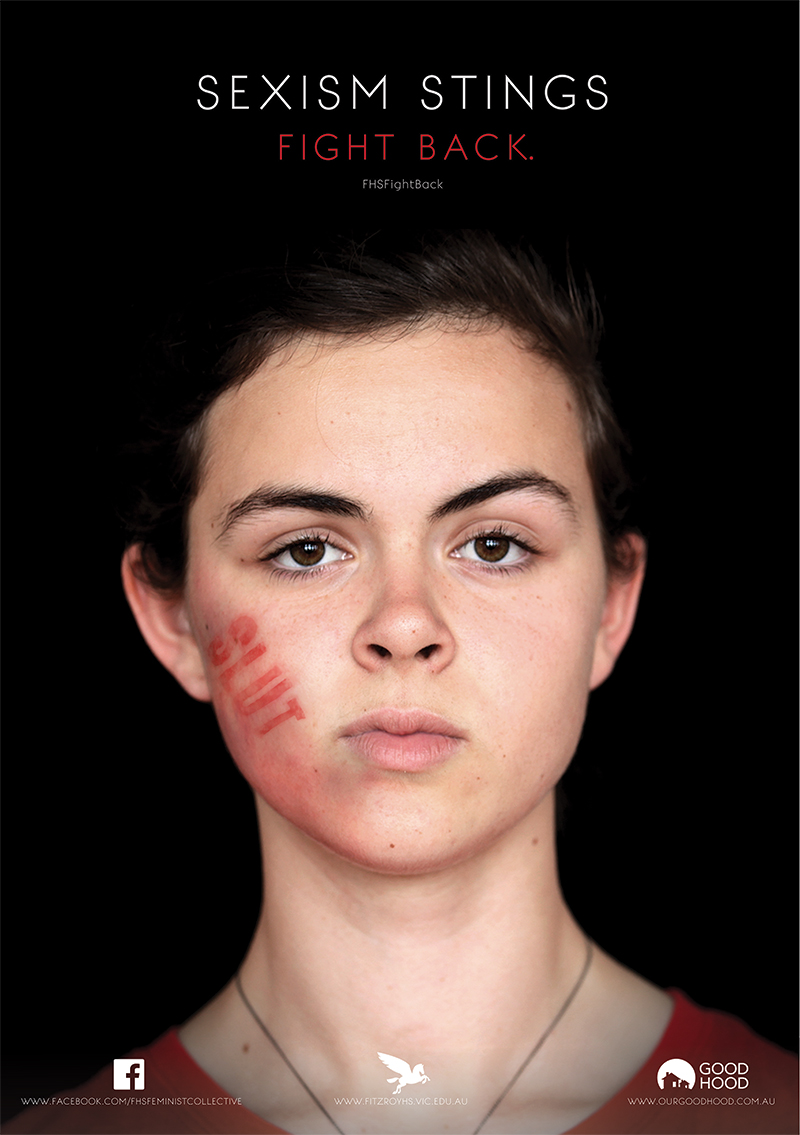
In 2013 I founded a Feminist Collective group at Fitzroy High School in Melbourne, Australia, alongside my students. It very quickly transformed into a timetabled subject, which I continue to teach twice a week for 90 minutes. As a consequence of the class – and informed directly by the activist mentality within it – I wrote a feminist teaching resource for secondary school educators entitled ‘Fightback: Addressing Everyday Sexism in Australian Schools’. The resource is intended to provide educators with a set of tools to address issues ranging from systemic sexism to masculinist language to the discourses surrounding young women’s bodies, with the ultimate goal of addressing the gendered norms that underpin the very high rates of violence against women in Australia.

My research does not occur within a traditional academic setting, but informs my daily practice in the classroom, which is inarguably a critical site within which to explore, theorise and implement cutting edge research on gender and education. Though I am not currently undertaking a PhD (one of the consequences of taking time off to have a child) I participated in a research project in 2016 with Deakin University researchers examining the efficacy and relevance of Sex Education for secondary school students. That project was undertaken in partnership with my Feminist Collective class. In 2017 Deakin University has sought funding to extend that research, with myself as a co-researcher working alongside Dr. Deborah Ollis and Dr. Leanne Coll to explore how sexuality education can have an impact on reducing the rates of violence against women. Drs Ollis, Coll and myself have submitted an abstract for the conference relating to our collaboration in 2016.

My current teaching practice suffers somewhat from existing within a vacuum. Though it’s possible to access research, it’s difficult to engage directly with academics. This is a consequence of geography, but also of finances: there is little to no funding available for teacher practitioners to attend conferences, and women working part-time in the teaching system are further disadvantaged. Attendance at the GEA conference will enable me to establish ongoing collaborative relationships with others working in this field and to give the research presented a practical application by reflecting on how to embed it in my daily teaching practice. That practicality also extends to the work I am doing as a key member of the Education Committee of a proposed Women’s Museum for Victoria, Australia, where I am responsible for writing and curating curriculum content. The need to remain fluid, flexible, and critically informed whilst writing that curriculum is key: I see the conference as an important stepping-stone in terms of continuing my personal theoretical journey with regard to feminist educational theory.

In addition, Fitzroy High School has recently been awarded leading school status with regard to implementing state-mandated curriculum focused on reducing violence against women, the impending implementation of which was one of the outcomes of the recent Victorian Royal Commission into Family Violence. I have been invited to sit on the committee overseeing the whole-school approach to ‘Respectful Relationships’ curriculum this year, and can see a clear connection between that role and future pathways in terms of my career – I am interested in exploring opportunities both within and outside the classroom with regard to demanding equity in educational policy and practice, and the conference will allow me the opportunity to consider ‘where to next’ in terms of addressing what the GEA identifies as the ‘fissures that persist and enfold between practice, policy, theory and activism’.

If you are attending conference, let us know on Twitter using the hashtag: #GEAconf2017

C2C: My first GEA conference

This post is part of our new Countdown to Conference (C2C) series. We would love to feature a brief blog post from you too! Visit our main Countdown to Conference page for details!

C2C: My first GEA conference
by Dr Jessica Gagnon

The first GEA conference I attended was in Melbourne in December 2014. It was my first conference outside of my home country (the United States) and outside of the country in which I was pursuing my PhD (the United Kingdom).  I was in the analysis and writing up phase of my PhD at the University of Sussex.  As a first generation student from a working class family, attending any academic conference still makes me feel a little bit anxious. For me, academic conferences are one of the spaces where imposter syndrome rears its head — where I feel out-of-place and insecure about whether I’m “good enough” to be a part of academia. Belonging in academia was at the heart of my GEA presentation too, since my presentation was titled, “People like me: The university experiences of the daughters of single mothers in the UK”.

The GEA conference was one of the best I attended while I was a PhD student. The keynote addresses were engaging, the individual presentations covered a range of research topics from global perspectives, and I met some amazing fellow researchers at all levels of their careers (from master’s research students through to more senior level academics). The conference organisers were warm and friendly, which was refreshing in comparison to some of the cold and unwelcoming experiences I’ve had at other academic conferences.

I had the opportunity to get to know some of my fellow conference attendees, but the one thing I wish I had done during my time at the GEA conference in Melbourne was be a bit more bold and take the opportunity to introduce myself even more.

If you’re attending GEA conference this year for the first time, feel free to message me by Jessica.Gagnon@port.ac.uk or Twitter @Jess_Gagnon I am happy to talk about GEA conference with you.

If you are attending conference, let us know on Twitter using the hashtag: #GEAconf2017

Launch of the International Writing with Impact Network, March 2017

This event held at the Sheffield Institute of Education, Sheffield Hallam University, on 10th March, marked the official launch of the international writing with impact development network for doctoral students and emerging researchers (I-WIN). The network was set up in October 2016 by Carol Taylor, Professor of Gender and Higher Education, and Rachel Handforth, a PhD student, both of whom work in the Sheffield Institute of Education at Sheffield Hallam University. The network has been funded by the Gender and Education Association. To find out more about the I-WIN network please go to our website.

Carol and Rachel wanted to set up a network which would focus on writing development for emerging researchers, addressing the pressures that newer researchers face in trying to ‘establish’ themselves in their field. The network provides web-based support on writing with impact, offering advice, support and resources on writing with impact across a range of different writing genres.

The aims of the network are:

  1. To develop an international, interdisciplinary network of doctoral and emerging researchers working on gender and education with a focus on writing with impact;
  2. To provide structured support in skills development across a range of writing formats, through providing advice and expertise from researchers;
  3. To empower doctoral students and emerging researchers to develop their confidence and academic writing skills;
  4. To provide a platform for participants’ skills sharing and support.
Professor Carol Taylor and Rachel Handforth welcome delegates to the launch event


Delegates from institutions across the country, as well as researchers based at Sheffield Hallam University, attended the launch. We were fortunate enough to be joined by two external guest speakers, Dr Victoria Showunmi from the UCL Institute of Education and Dr Emily Henderson from the University of Warwick, both of whom are also members of the Gender and Education Association.


After a brief welcome from Carol and Rachel, Dr Victoria Showunmi gave a presentation entitled “The personal is still political! Writing with impact about intersectionality and troubling the ‘gender’ in gender and education“. She discussed some of her narrative research about young black women and their experiences of education, and reflected on being asked to present her research to the House of Commons. In doing so, she highlighted the different ways that we can consider the impact that our writing has, and the importance of sharing research outside of the academic community.

Professor Carol Taylor then offered practical advice on writing journal articles with impact. Drawing on her experience as co-editor of the journal Gender and Education, she discussed the increasing necessity of academic writing beyond the thesis for both doctoral students and emerging researchers. Professor Taylor conveyed the difficulties many academics face in balancing the demands of academic performativity with the love of writing. She emphasised the importance of setting aside time to write, getting the opinion of critical friends on first drafts, and crucially, not stopping work on an article until it is finished, by which she meant that it is in the best and most developed state you can get it in before you submit it to a journal!

In the afternoon, three emerging researchers discussed their approaches to writing with impact within a showcase of newer researchers’ work. Rachel Handforth discussed her use of blogs as a platform for reflecting on her doctoral research on the career aspirations of women PhD students, highlighting how her personal blog had enabled her to connect with other researchers and make links with relevant organisations. She also discussed the importance of using media outlets to promote research, and the impact of this beyond the academy.

Dr Joan Healey, Senior Lecturer in Occupational Therapy at Sheffield Hallam University, reflected on her writing since completing her doctorate. She discussed writing her first single-authored article from her thesis, she talked about how she dealt with reviewer feedback, and detailed her plans for a co-authored article with her doctoral supervisor, Professor Carol Taylor. Joan finished by reflecting on the challenges of balancing full-time work with her desire to write papers from her thesis.

Dr Emily Henderson, Assistant Professor in the Centre for Education Studies at the University of Warwick, presented some of the writing she had done since finishing her PhD. She drew on post-structural theory to reflect on the way in which different forms of writing are ascribed different levels of value within the academy, and how this distinction can be seen as gendered. Dr Henderson made the important distinction between writing (which is administrative and managerial) and writing (which is about writing with passion about one’s research) to argue that the way in which certain forms of writing are valued over others is not helpful.

Dr Emily Henderson discusses the work she has done since working at the University of Warwick after completing her doctorate.

So far, the network has hosted online events with key academics in the field of gender and education.  The event on collaborative writing with impact included a Telegram-enabled conversation between Dr Jonathan Wyatt from the University of Edinburgh, Carol and Rachel; our blog writing with impact event featured the work of Dr Emily Danvers from the University of Sussex; and using social media with impact was based around the work of Professor Yvette Taylor from the University of Strathclyde and Professor Deborah Gabriel from Bournemouth University.

There are a number of upcoming online events that the I-WIN network will be hosting, including writing book reviews with impact, writing peer reviews and writing book chapters.


We are also looking to develop the network further in the future. We would like to hear from you if you are interested in contributing to the future of the network. If you have ideas for future events, if you would like to collaborate in running one of the upcoming events, or if you have ideas about how to make the network more international, please get in touch with Carol Taylor C.A.Taylor@shu.ac.uk

UK Poverty

UK children from jobless households more likely to experience poverty and be out of work as adults

Children from disadvantaged families in the UK are more likely to have lower education, be out of work and experience poverty in adult life than their peers in other European countries, apart from Ireland and Belgium, according to new research from the UCL Institute of Education (IOE).

The study, which was carried out by researchers from the Department of Social Science at the IOE in collaboration with the University of Bath, has been released in a working paper on Friday 10 March.

This is the first research to compare the long-term effects of social disadvantage, as captured by growing up in in a jobless household, across European countries. The study looked at two large date samples involving over 60,000 people in 16 countries.

The study used the commonly used indicator of social exclusion, the experience of a jobless household at age 14/15, to capture the experiences of childhood deprivation. The researchers looked at the link between this and education, worklessness and poverty in adulthood across countries.

In the UK, Belgium and Ireland, there appears to be a strong association between childhood deprivation and all three outcomes. In these countries, children who live in a jobless household at 14 are 16 to 25 percent more likely to be at risk of poverty compared to those with an employed parent.

In other countries, such as Finland, Greece and Denmark, there is no difference in the risk of adult poverty for those children from jobless compared with working households.

The impact on education outcomes was particularly marked in the UK where boys growing up in a jobless household are likely to get around one year of schooling less than those who have a working parent, while for girls it is almost two years less.

Dr Lindsey Macmillan,who led the research, said:

“What is most striking is that in the UK the likelihood of experiencing social disadvantage in childhood and this reproducing itself in adult life is particularly high. There is no reason to assume that this should automatically be the case as it is not in many of the other European countries that we looked at where growing up in a jobless household did not necessarily predict adult worklessness or poverty in adult life.”

There were strong links across countries between the effects of childhood deprivation on outcomes for men. In countries where children from jobless households had less education, they also tended to be more likely to be in poverty and workless as adults. In countries where there was a weaker association between childhood disadvantage and education, there were also weaker links with adult outcomes.

For women, the picture is less clear. The researchers found that there was a weaker link between education differences  resulting from childhood disadvantage; adult poverty, and in particular, differences in adult joblessness, as a result of childhood disadvantage for women.

The difference between the genders may be explained by the different choices available, said Dr Macmillan.

“In most countries there is typically only one main life course for men: education into employment. For women, there are alternative options: for example, it may be more common in some cultures to choose motherhood and marriage after education, rather than employment.”

From 2000, the proportion of people living in a jobless household became a key indicator of poverty and social exclusion used by the European Union. Since 2005, this has been extended to include the proportion of children (0 – 17 year olds) living in such households.  This is due to the likely impact on their access to health, housing, education, justice and other private services such as culture, sport and leisure, as well as lack of role models.  Therefore, experiencing a jobless household in childhood is viewed as a marker of disadvantage with potential long-term effects on those children.

The two data sources used were the EU-SILC (European Survey of Income and Living Conditions) and PISA (Programme for International Student Attainment).

CfP – GEA Conference 2018

With preparations well underway for our upcoming 2017 conference (for details, please see here), we now turn our attention to gearing up for June 2018.

The Gender and Education Association are pleased to announce that their next international conference will be held in June 2018. The GEA executive committee welcome proposals to host their long-standing international conference from higher education institutions across national contexts and from conference teams spanning a variety of academic disciplines, theoretical backgrounds and fields.

The deadline for submission will be 31st May 2017. We welcome proposals from across international contexts.

For guidance on how to apply to be a host for our 2018 conference, please see here: Biennial 2018 CfP

For an application form, please see here GEA Conf App Form 2018