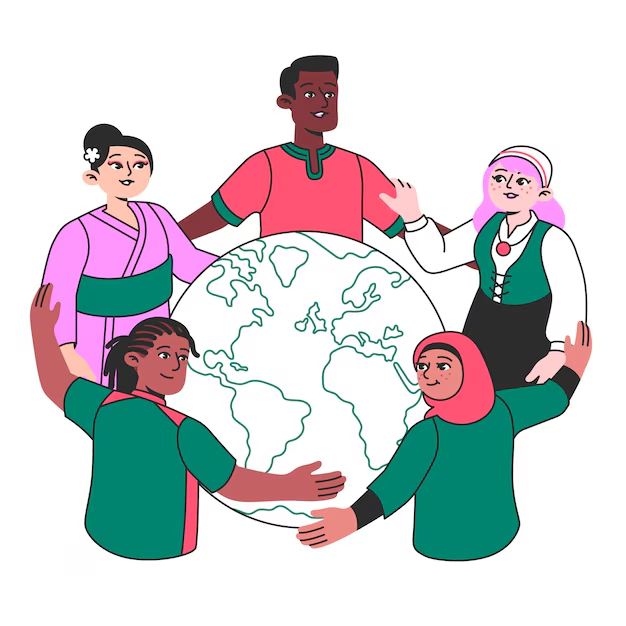
people around a globe

Collaboration, communication and connection: Reflections on the politics of carrying out international feminist research

By Tamsin Hinton-Smith, University of Sussex; Fawzia Mazanderani, University of Sussex; Nupur Samuel, O.P. Jindal Global University; Anna CohenMiller, Nazarbayev University; and Ruth Goodman, University of Sussex 

In January 2021 as an interdisciplinary team of feminist academics from participating universities in five countries, we embarked on a research project seeking to interrogate and increase gender inclusion and sensitivity in the focus and approach of higher education teaching in universities across five participating countries: India, Morocco, Kazakhstan, Nigeria, and UK. Set against the backdrop of the Covid-19 pandemic and with technology as the only bridge between us, our journey as a research team was not always smooth. In this blog we reflect on the challenges faced as a research team and our developing learning from being part of the research process. Gender on the Higher Education Learning Agenda Internationally is a 2-year British Academy funded research project funded as part of the Global Challenges Research Fund, with a central focus on equitable collaborative partnership between global north and global south countries to advance the Sustainable Development Goals.  

Reflections on the research journey 

The formal research design from the outset focused around online survey and interview data collection with university students and staff across partner institutions. However, as we undertook this research underpinned by principles of equitable collaboration, as feminist researchers we became increasingly aware of the need to focus more on reflecting on the research process and challenges within this, alongside the substantive focus.   

Through our mutual reflections on our research journey, four themes emerged: communication styles and expectations, our sense of connectedness, the embodied and emotional dimensions to carrying out the research, and ethical considerations in terms of where power sat across countries and individuals. 

We hope this blog provides interest to anyone concerned with the promotion of more equitable ways of researching collaboratively across intersections of gender, ethnicity, country context and academic seniority. 

Complex communication 

The research took place during the Covid-19 pandemic and so communication, and the majority of data collection, took place online. With all aspects of the research being conducted remotely, the ‘digital divide’ became apparent with inequalities arising both in access to internet but also confidence and experience using technical tools. Internet access and power outages compromised some colleagues in participating fully in all online meetings resulting in frustration and compromising opportunities for people to have their voices heard.  

 
Research outputs were translated into local languages to support equity of access of research insights. However, reflecting colonial legacies, English was the first language of two of the partner countries (UK and Nigeria), the language of academia in India, and third language after French in Morocco, and after Russian in Kazakhstan, and so was the common project language shared by all research team members.  The use of English as the project language represented uncomfortable communication inequalities, placing additional burdens on team members communicating verbally and in writing in a second or third language.  

Beyond the need to translate languages there is also the challenge of translating cultural understandings. As the Morocco based research assistant expressed, ‘we don’t usually have the same interpretation, and this causes sometimes problems of understanding and problems of progress.’ For example, assumptions about what is meant by gender in different international contexts, for instance, whether ‘non-binary’ was a relevant and appropriate gender option for our surveys, resulted in difference of opinion and reinforced the need for clear and explicit communication and to create a space where clarifying understandings and reflecting together were encouraged. Differences in assumptions and understanding existed for research practices more broadly including frequency and conventions for communication.  

Connectedness and humanisation of research process 

Conducting international research as feminist scholars, connectedness and humanisation of the research process, was of strong importance influencing the way sought to carry out the research. Not all of the co-investigators had met each other in-person, and the research assistants were appointed specifically for the project and had no prior connections with any other team members, so actively creating online spaces to get to know each other was central to the success of the project as a collaborative endeavour. We met regularly as a Team via zoom, including space for informal as well as project management discussion within this, and made sure that all stages of the research process were developed as a team in a consultative manner.  

Embodied experience and affect 

Online research design brings the potential to disrupt the privileging of embodied presence that favours able bodies, geographic proximity and monetary access to education. Yet, working in this way brought with it challenges to managing time zone conflicts and pressures encompassed in the collapsing of work and home, that virtual communication brings about.  

The pandemic required all team members to adopt new working patterns in terms of homeworking and researchers experienced intense experiences in the lifecycle of the project including childcare; illness of loved ones; and the emotional impact of fulfilling pastoral responsibilities for students in the context of the pandemic. The latter was particularly acute in India in Summer 2021 when pandemic conditions made continuing with the research in any meaningful way temporarily impossible. A humanising approach was vital to making sure that our continuation of the research through these challenging times took place in a way that recognised and supported what the research team and participants were negotiating in their wider lives.  

Ethical concerns and considerations 

Finally, we faced ethical challenges in moving beyond hierarchical approaches to knowledge production where research on the Global South is conducted by researchers from the Global North, to achieving equitable partnership in practice.  

However diligently we sought to attend to feminist ethics around voice, power and collaboration; practicalities including technological inequalities around access, reliability and confidence continued to challenge the potential to meet the goals of equitable participation. Requirements to lead ethical approval, data storage, video conferencing hosting, and paying of budgets, all through UK lead organisations, provides a constant reminder of hierarchies of participation. One researcher expressed how:  

Research, which is being done in the countries of Global South, it can be funded by international organizations or it can be funded locally, but what we have at the end of the day, the research outcomes, they are not widely circulated in the local communities.  They go to the Global North…’ (Kazakhstan Research Assistant). 

It is with this in mind that it has been particularly important in this project to ensure translation of key outputs and for the research team to support development of outputs identified by international team members as important to local agendas and audiences. 

Conclusion 

In this blog we have reflected on the process and experience of undertaking collaborative feminist research into gender equality in higher education, as an interdisciplinary, international research team. Through our reflective practice we hope to generate a wider understanding around the challenges of carrying out research equitably in practice, alongside our substantive focus on understanding gender (in)equality in higher education.  

An in-depth reflexive exploration of the process and experience of undertaking collaborative feminist research into gender equality in higher education, as an interdisciplinary, international research team can be found in the forthcoming publication:  

Hinton-Smith, T., Mazanderani, F.,  Samuel, N., and CohenMiller, A. (2022) ‘Co-creating cross-cultural approaches to gender mainstreaming in higher education: experiences and challenges in developing an interdisciplinary, international feminist knowledge-exchange research approach’, in CohenMiller, A., Hinton-Smith, T., Mazanderani, F., and Samuel, N. (Eds.) Leading Change in Gender and Diversity in Higher Education from Margins to Mainstream. Routledge: https://doi.org/10.4324/9781003286943 
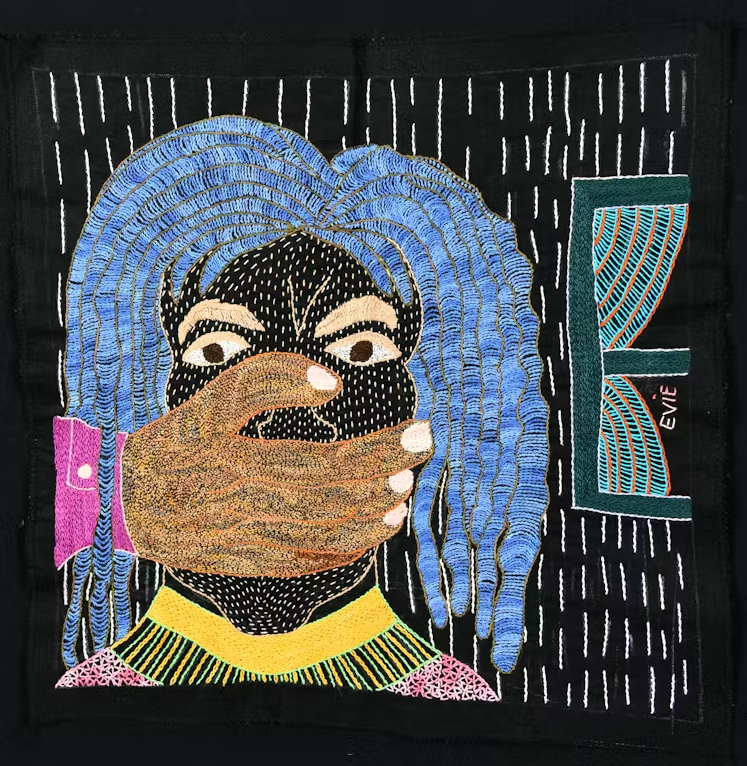
embroidery of women with her mouth covered with hand

Visually carving the everydayness of gendered violence: Using embroideries to call for action

By Professor Puleng Segalo and Dr Tinyiko Chauke

Many South African women live in fear due to the high levels of gender-based violence (GBV). Moreover, one in five (21%) women in South Africa who have intimate partners, have  experienced physical violence by their partners. More significantly, black women are identified in South Africa’s parliament report as the most vulnerable group to intimate partner violence due to their unemployment status, which is at an alarming rate of 30%. In 2021 and the first quarter of 2022 there were 902 cases of femicide, and 11,315 were sexual assault cases committed against women.However, People Opposing Women Abuse (POWA) is not convinced of the statistics as they believe that these do not provide a true reflection of women’s plight. They do acknowledge, however, that these statistics offer a glimpse of the seriousness of gendered violence in women’s everyday lives.

Therefore, it is critical to create spaces for dialogues to engage with the numerous ways in which gender-based violence affects women in the community. Visual methods and creative arts have been central to African social life and cultural construction even before colonialism took hold of African lives. We, therefore, draw from these methods to engage and reflect on the everydayness of GBV.

A work of art

Addressing social challenges through creative arts

Visual methods offer the vocabulary to often unspoken atrocities and traumas that people have experienced in their lives. Gender-based violence is a global challenge dubbed the parallel pandemic affecting communities alongside Covid-19. In a context such as South Africa where the unemployment rate is very high, many women stay in abusive relationships as alternatives do not appear to be in place. Therefore, it is critical to create dialogues, awareness, and empowerment opportunities where women can engage on alternatives and possibilities for better and safer lives. Visual participatory projects offer an opportunity for collective reflection, creating spaces for solidarity, and thinking differently about challenges confronting women. One such visual method is embroidery. Artworks such as embroideries force people to pause and reflect on the perpetual injustices and challenges confronting us daily. Furthermore, artistic visual images such as embroidery are useful tools that can be utilised to represent people’s reflections of their everyday experiences. Embroidery has the potential to contribute to how we make meaning of everyday realities, and how we can imagine the possible transformation of society. Gender-based violence has become an integral part of our lives — it has become part of ‘the everyday’, and it is therefore important to pay attention to this everydayness – the taken for granted; and how these have detrimental effects on the functioning of individuals, families, and ultimately, the whole society.

A call for action

Visual methodologies such as embroideries precipitate social change. They facilitate the co-production of knowledge in contexts where social injustice occurs. When shared publicly or disseminated on wider public platforms, such creative images have a wider reach, aiding critical awareness of the varied forms of oppression and sometimes raising awareness on the ways in which women internalise oppression knowingly and sometimes unknowingly. With embroidery, there is space to look beyond the perceived hopelessness where women are perceived as victims who do not have the power to change their circumstances. Instead, embroidery also highlights how women resist with the courage and determination to change their circumstances. Furthermore, embroidery offers the opportunity to highlight structural violence and inequalities (for example, patriarchy, unemployment, poverty, lack of access to proper education and health systems) that directly impact people’s everyday encounters. Women coming together to make embroideries that show how gender-based violence makes a home in all aspects of women’s lives, at the personal, the collective and the structural level, is a plea for action. The coming together further allows women to analyse policies and laws on GBV and how that affects their everyday lives.   

Women’s embroideries in communities may also serve as props for public community dialogues. With the various themes that the embroideries highlight (e.g. being hassled in the streets, domestic violence, being accused of witchery, human trafficking, substance abuse, to name a few) we come together as academics, school learners, and community women at various places and platforms within the community to engage on what these themes mean to all of us. We come together to share stories of survival — share networking and referral processes — to speak about possible steps that could be taken by the communities themselves and how the government can take women’s concerns and recommendations forward to effect relevant policies on GBV. 

Conclusion

It is clear that gender-based violence affects all of us either directly or indirectly. Therefore, the call for action is a challenge to all of us to play our role in the spaces we occupy. We should refuse to keep silent in the face of injustice and instead hold each other accountable and collectively work towards sustainable outcomes. From the micro to the macro level, attention has to be given to how gender-based violence affects us. After all, Women’s rights are human rights!

This blog post explores the Gender and Education Association 2021 funded research project titled Embroidery as a visual methodology that carves a bridge for dialogue, led by Professor Puleng Segalo.

The GEA Fund 2017/18: APPLICATIONS OPEN

We are excited to announce that the GEA Fund is entering its second year in 2017/18.  The Fund aims to support our membership to develop networks and undertake small research projects.

The focus of the 2017/18 Fund is to support pilot work (transcription, travel costs, workshops to bring potential collaborators together) that can feed into the development of a larger research bid.

To find out more and apply please visit our funding page


GEA needs you: Apply for the paid social media internship

GEA SOCIAL MEDIA Internship

You will be working in a fast-paced, intellectually demanding environment where the primary goal is to enhance visibility of GEA activities through the website, twitter, Facebook and any other relevant social media platforms.

The core duties for the post include:

  1. Creating content for the Gender and Education Website: http://www.genderandeducation.com
  2. Creating content and providing support for managing GEA Twitter @GenderAndEd
  3. Creating content and providing support for managing Facebook Gender and Education Association https://www.facebook.com/groups/164123763599032/
  4. Providing social media and web support for GEA events and conference


Click here for more details about the role

This internship will cover up to 10 hours per month at £15 per hour for 6 months. You will liaise with GEA Executive Member for Social Media Dr Jessica Gagnon Jessica.Gagnon@port.ac.uk content for the website. You will produce a brief report for the billable hours and send to GEA treasurer (covered presently by Claire Maxwell c.maxwell@ucl.ac.uk ) who will pay you monthly.

To Apply

Submit a CV and brief covering letter detailing your interest in the internship and the skills you have that make you suited to the responsibilities of the post to Dr Jessica Gagnon Jessica.Gagnon@port.ac.uk by 28th April 2017


Statement From GEA


We have learned with concern about proposed legislation that would make it impossible or impracticable for the Central European University to continue its operations in Budapest.

We would like to express our admiration for Central European University and its Department of Gender Studies that has pioneered in promoting studying gender and education in the region and beyond. 

Our support and solidarity with those academics whose work is under threat. We therefore ask, respectfully but in the strongest possible terms, that your government withdraw this legislation.

A conversation with Dr Joyce E. King

IOE UCL is delighted to announce that it will be hosting a conversation with  Dr Joyce E. King on the 8th November 2015.

Dr. Joyce King holds the Benjamin E. Mays Endowed Chair for Urban Teaching, Learning & Leadership in the Department of Educational Policy Studies at Georgia State University.

Entitled ‘African-centred Education: Healing the wounds of  Dysconcious Racism. Lessons for the UK from the Disapora,’ the event is sure to be inspiring and innovative for all.

For further details and to book a place contact: Dr Victoria Showunmi

v.showunmi@ioe.ac.uk

More info can also be found here;  JoyceKingFlyer final

Witch or Sexy Kitten; Girls, Double Standards and the Illusion of ‘Choice’ at Halloween

In the run up to Halloween, we are proud to publish this fantastic piece co-authored by Professor Jessica Ringrose, Emilie Lawrence, Hanna Retallack and Siri Lindholm which challenges the inherent sexism apparent in the costume choices open to young girls and women and the complex set of unwritten rules surrounding their behaviour during this holiday. 


“In the regular world, Halloween is when children dress up and beg for candy. In girl world, Halloween is the one night of the year when a girl can dress like a total slut and no other girls can say anything about it,” explains Lindsay Lohan in the 2004 cult teen movie, Mean Girls. This statement is testament to the existence of a set of complex unwritten rules that girls must navigate and negotiate with on a daily basis, to avoid being shamed by adults and peers.

Even small children aren’t immune from these pressures; the tweet quoted in the headline asks us ‘has Halloween become slutoween even for toddlers?’ Whilst the tweet poses ‘toddlers’ as the subject of debate it is immediately clear that it is girls we are dealing with here. There is no mention of young boys looking like sluts or skanks on Halloween; instead we are told to question why toddler girls are dressed up as cops and cats – opening up dialogue about their bodies and the ‘wrong’ choices being made – before they are even aware of the minefield ahead. We are subjecting these toddlers to scrutiny and failing them before they’ve even had a chance to understand the rules of the game.

The lead up to Halloween is a good time for parents, schools and young people to think more closely about debates over girls’ sexualised dress. Sexualisation is fast becoming a key aspect of protection and safe-guarding in social welfare and schooling. Some psychological research is claiming a direct causal link, with the implication that sexualised dress leads to psychological and social harm in girlhood (Zurbriggen and Roberts, 2012). In fact so powerful is the force of sexualisation said to be, that it is credited with causing anything from self-harm to human trafficking.

Critical sociological and feminist educational research suggests, however that it’s more complex. Positioning girls’ bodies as inherently suggestive or sexual can actually place them atmore risk and perpetuate a cycle of victim blaming that has long been common in public responses to rape and sexual assault. When schools participate in or fail to challenge what has been called ‘slut shaming’ they are perpetuating gender based inequality (Dobson and Ringrose, 2015). Education, starting at primary ages, needs to target the wider culture of sexism that promotes sexual objectification and violence against girls and women. Directing attention to the wider cultural values around (hetero)sexuality and sexual double standards, particularly masculinity and boys’ and men’s attitudes towards girls and women is also crucial.

Teenage girls face particular pressure and surveillance regarding their clothing ‘choices’. Halloween is a tense time. Girls are offered a dressed-up version of the same decisions they face every day: will they be a ‘sexy kitten’ ready to be objectified? Or the un-(hetero)sexy un-desirable witch? Girls often talk about extreme pressures, saying “you can’t win” when describing the minefield of both formal and informal rules that face them.

Issues of sexualised dress have had recent wide-spread media attention as young people have challenged school uniform dress codes as sexist, claiming they unfairly target girls’ clothes and bodies. The historical measurement and control over girls’ school uniform skirts have been joined by new debates over whether girls ought to wear trousers to avoid being a ‘distraction’ to male teachers and students

With occasions like Halloween, what constitutes ‘skanky’ fancy dress is vague and the social rules can be impossible to interpret correctly. Expressions such as ‘slutoween’ and ‘skankoween’ do not help on the path to a happier girlhood. There is a sexual double standard embedded in the term ‘slut’, with girls or women deemed bad and shameful through their dress, which is read as branding them sexually aware or active. Skank, slag, ho and slut are class-based labels also – they tell some girls that their tastes are poor, their behaviour wrong and that they are ultimately at fault for having made the wrong ‘choices’.

So this Halloween let’s look at the facts of sexism facing UK girls. The recently released 2015 Girls Attitudes Survey, a nation-wide survey that canvassed the views of 1,574 girls and young women from 7 to 21, found that three quarters of girls aged 11 to 21 (75%) report anxiety about experiencing sexual harassment that in turn affects what they choose to wear, where they go and how they feel about their bodies. Clear damage to girls’ wellbeing is evident. Almost half (46%) were found to have personally needed help with their mental health. A commodifying and sexualising consumer culture provides such conflicting messages around sexual appearance, which is seen as linked to sexual conduct. This causal link is the root of ‘rape culture’ myths of victim blaming that encourages girls to blame themselves when something goes wrong (Mendes, 2015).

One of the key issues here is the way in which adults engage with girls about their mental health and its link to ‘sexualisation’ and sexuality. According to the Girl Guiding Survey, girls feel adults are out of touch with the new threats to their wellbeing, ‘leaving them struggling to find the adequate support and information they need to remain resilient in the face of increasing pressures’ with 82 per cent of girls aged 11 to 21 saying adults don’t recognise the pressure they are under.

Projects such as Gender Equalities Leadership in Schools (GELS), led by researchers at the UCL IOE, connect up organisations like the Gender and Education Association and UK Feminista, who are working to tackle sexism in schools. GELS supports school-based activities such as feminist lunch and after-school clubs that provide young people with safe spaces in which to discuss conflicting messages and pressures around gender and sexuality. GELS is helping girls and boys with tools of critical thinking necessary to engage with dominant media texts on womanhood and ‘appropriate’ femininity and masculinity, as well as the chance to realise that the complexities they face are not only personal, but political. Watch this space for updates.


CFP to Host GEA 2016 Conference


CALL FOR PROPOSALS

The Gender and Education Association are pleased to announce that their next international interim conference will be held in June 2016. The GEA executive committee welcome proposals to host the interim conference from higher education institutions across national contexts and from conference teams spanning a variety of academic disciplines, theoretical backgrounds and fields.

Your conference proposal should include the following information:

  • Details of local organising committee
  • Conference theme and proposed dates
  • Conference venue, facilities, accommodation
  • Outline of the conference, including provisional programme
  • Potential keynote speakers
  • Details of funding required from GEA and how this would be used
  • Additional sources of funding

FOR DETAILS ON HOW TO APPLY, DEADLINES AND CONTACT INFORMATION, SEE THE ATTACHED FORM

Interim 2016 CfP genderandeducation.com semantic data

Healthy Sexual Development

SRE (Sex and Relationships Education) is VITAL in ensuring that we equip students with the confidence and knowledge needed to have healthy, positive and safe sexual relationships. Time and time again, research has shown that students are desperate for a curriculum that goes deeper than the biological mechanisms of sex; that goes beyond the scaremongering syllabus of STD’s and teen pregnancies and which delivers responsive and detailed information on a range of issues taking into account the emergence and influence of social media platforms, new media and pornography; pupils want to learn about pleasure, their bodies, relationships and the emotional responses to physical acts as well as being informed on consent and bodily autonomy.

With this in mind, and the understanding that great SRE can contribute to healthy sexual development, Naomi Rudoe and Alice Hoyle recently held a fantastic, and well attended event – Healthy Sexual Development Symposium: How relationships and sex education can contribute towards healthy sexual development. Here we provide GEA readers with a comprehensive report of their findings. This makes for fascinating reading and can go far in helping structure our practice when delivering effective SRE.


Report of HSD symposium