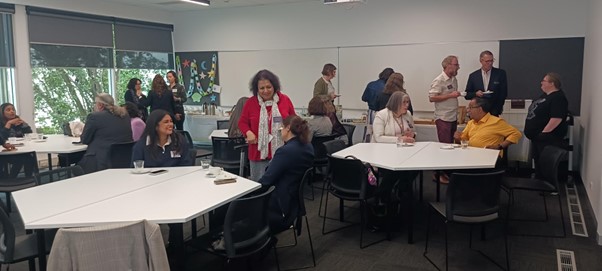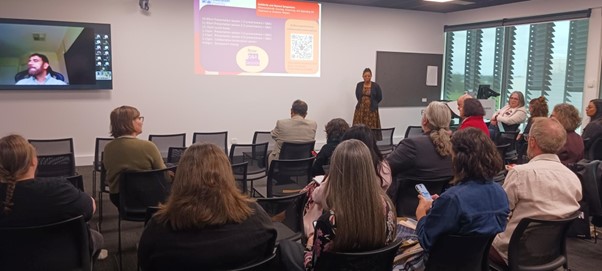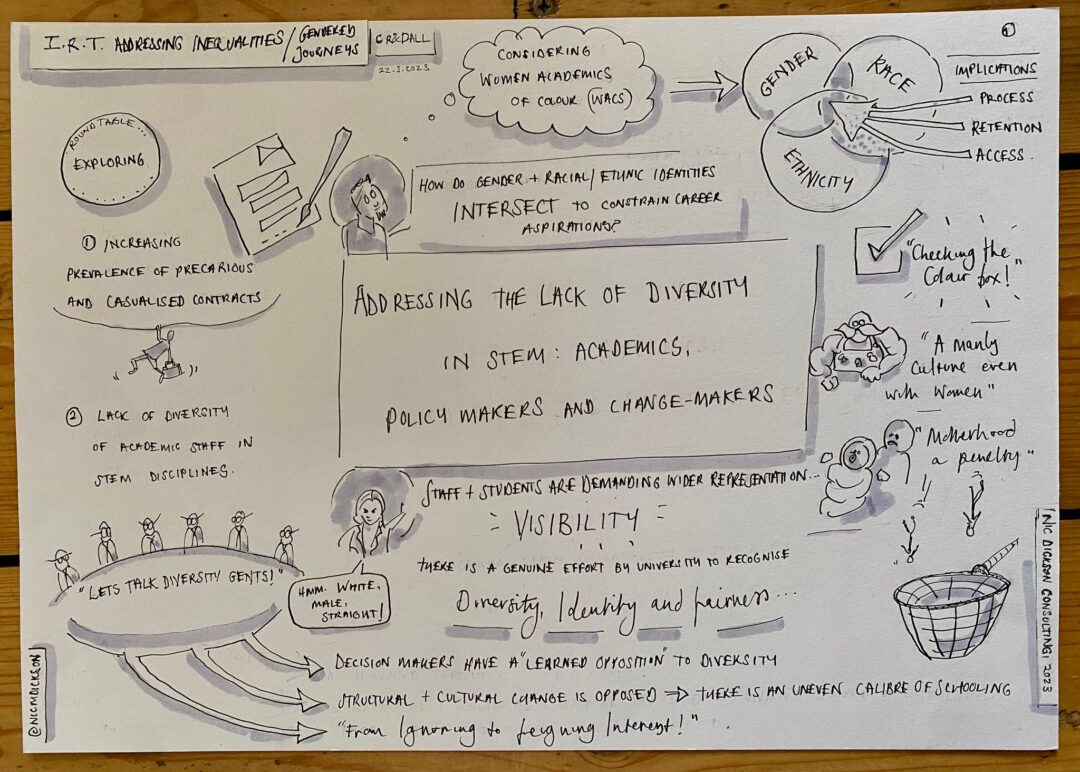
The image shows a sketch 'addressing the lack of diversity in STEM: Academics, policy makers and change makers' which was created by a colleague, Dr Nic Dickson, to visually capture discussions from a STEM roundtable

Are We Moving the Needle? Women Academics of Colour and the Politics of Representation in STEM 

Dr Abimbola Abodunrin, Post-doc Researcher in Education. University of Glasgow.

Walk into many STEM faculties across the UK, and you might notice something right away: the posters/decor speak of diversity, the strategies promise inclusion, and the websites proudly showcase progress or perhaps more accurately, incremental progress. Yet, look a little closer at who is leading labs, shaping research agendas, and influencing decision-making, and a different story often emerges. As a male academic of colour researching within STEM education spaces, I often find myself asking a simple but ‘uncomfortable’ question: Are we really moving the needle? And perhaps more importantly, who is still being left behind? The experiences of women academics of colour continue to reveal a persistent gap between representational gains and promising agendas to pursue equ(al)ity. Their stories speak not just about numbers, but about belonging, voice, and power. They also echo wider concerns raised in Danny Clegg’s WonkHE blog, where he suggests that universities are often better at documenting inequalities than preventing or addressing them. These reflections challenge all of us, including men and men of colour such as myself, to think more introspectively about what it means to actively contribute to decolonising STEM and academia more broadly. 

Vibrant test tubes filled with liquids in a modern lab setting, showcasing scientific exploration.

For many institutions, progress is measured through the politics of enumeration, even when agendas are well-intentioned: how many women are recruited, how many minoritised academics are appointed, how many diversity initiatives are launched. These numbers matter, of course. But numbers alone do not tell the whole story. Being the only one in the room or, worse still, being present to ‘authenticate’ spaces and projects without necessarily shaping them remains a familiar trope of experience for many women academics of colour. Alongside this is the invisible and often unremunerated labour of mentoring students seeking role models, sitting on diversity committees, and balancing expectations both at home and in the workplace that weighs on her body and career. Do I also speak of the tensions of performing particular forms of scientific legitimacy – marked by her ability to speak science, do science, and embody science in ways that mirror dominant cultural practices?  

A Black woman scientist in a lab coat using a microscope in a modern laboratory setting

I have witnessed, and through my research, had the privilege to listen to, brilliant women academics of colour whose ideas (re)shape conversations, yet whose contributions are sometimes framed as “niche” rather than central to STEM innovation. These experiences speak to representational politics, signalling symbolic inclusion and progress without disrupting the epistemic centre. As  Kalwant Bhopal’s article discusses, even equ(al)ity and diversity staff within universities often find themselves constrained; able to “talk the talk” but not always permitted to “walk the walk” when it comes to implementing equitable changes. Representation, in this sense, becomes visible but precarious; present, yet positioned at the margins of institutional power, even when occupying a leadership position. 

As a male academic of colour, I am also conscious of the spaces I occupy and the privileges I may hold, even within marginalised identities. Decolonising STEM is not simply about increasing diversity; it is more about questioning whose knowledge counts, whose voices are heard, and whose experiences shape institutional change. This means listening more carefully to women academics of colour, amplifying their contributions, and reflecting on how we, as colleagues, mentors, and collaborators, can challenge systems that continue to (re)produce inequ(al)ities. It also means recognising that decolonisation is neither a metaphor, as Tuck and Yang, put it, nor a destination but an ongoing practice. Sometimes this work involves small but subversive everyday actions: citing their work, recommending them for leadership roles, or challenging assumptions about their credibility and expertise in meetings. These may seem like small steps, but they contribute to shifting cultures and redistributing voice and influence. 

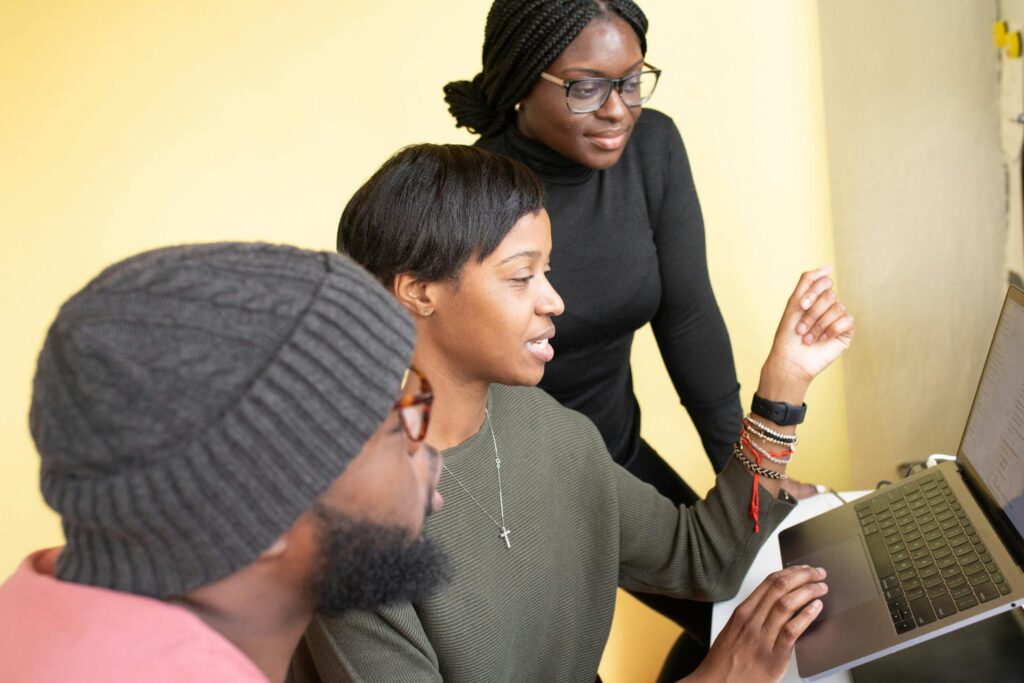
Three colleagues working together on a project, focusing on a laptop screen.

Encouragingly, there are growing conversations and initiatives seeking to address these issues. From mentorship networks and collaborative research communities to institutional commitments around equity and inclusion, there are signs of movement in the right direction. Yet, the question remains: are these efforts reshaping structures, or simply reshaping appearances? The stories of women academics of colour offer a powerful reminder that equitable and lasting changes require more than good intentions. It requires sustained commitment, uncomfortable conversations, and shared responsibility. As we continue to trouble the question of whether we are moving the needle, perhaps the most important step is to keep listening, keep reflecting, and keep working together toward a STEM academy where representation is not only visible but fundamentally equitable. 

Dr Abimbola Abodunrin 
Post-doc Researcher in Education 
University of Glasgow 
a.abodunrin.1@research.gla.ac.uk 

https://www.linkedin.com/in/abimbola-abodunrin

Images:
Featured image: Photo of a live sketch by Dr Nic Dickson, Visual  Inquiry (2023)
Photo by Artem Podrez: https://www.pexels.com/photo/vials-with-liquids-in-holder-8533087/
Photo by nappy: https://www.pexels.com/photo/people-looking-at-laptop-3514805/
Photo by Gustavo Fring: https://www.pexels.com/photo/woman-wearing-a-white-lab-coat-looking-through-a-microscope-8770727/

A white woman looks stressed with a cash note on the table in front of her

Working-class women’s transitions to doctoral education: The enduring role of economic capital  

By Dr Carli-Ria Rowell, University of Sussex and current GEA Co-Chair.

In this short blog post based upon my recently published article in British Journal Sociology of Education (Rowell 2026) I cast light on the enduring role of economic capital and access to knowledge in shaping educational pathways and decision making. I reflect on the economic insecurity that class inequality casts over educational opportunities, even in the lives of those considered to have succeed in education. In doing so I argue for greater systematic support pertaining to inclusion of working-class students at the doctoral level if we are to diversify higher education knowledge production and to take seriously historical epistemological injustices with regards to the classed politics of knowledge production and inequalities of representation. 

Reproduction in education thrives off of one’s (in)ability to access knowledge. Knowing what counts as valid and worthy, having a feel for the unwritten rules that open doors for some and lock out others. At the highest level of educational attainment then, one would be shocked and surprised perhaps then to learn that access to doctoral funding (and subsequent doctoral study per se, for working-class students) is seldom based on one’s academic accolades but rather who they happened to be taught by. Afterall, education is a meritocracy, right? It’s not who you know but what you know? Wrong, as my research illustrates.  In the case of being working-class and accessing doctoral funding then, having access to a ‘significant academic other’ (Rowell 2026) opens the possibility and probability of doctoral study as I discuss below.  

Within the UK, and elsewhere higher education has moved from an elite to mass system of enrolment, it nonetheless remains a deeply classed sphere. As Walkerdine reminds us, higher education continues to operate as a classed pathway and bastion of classed knowledge (Walkerdine 2021) especially so given academia’s classed ceiling (Friedman and Laurison 2019). Whilst there exists a plethora of research illuminating the experiences of working-class students at the undergraduate level and to a lesser extent the postgraduate researcher level, working-class access to, experiences of and outcomes pertaining to doctoral education remain largely absent. This was thus the imperative and motivating factor shaping my research exploring working-class women’s experience of navigating access to and through (and out of) doctoral study. Funded by the Society for Research in Higher Education (Rowell 2026) the research sought to explore the way(s) in which a working-class background shaped experiences of doctoral study, in doing so the research revealed the enduring nature of economic inequality upon access to higher education at the doctoral level.  

woman holding cash looking serious and writing

Whilst unpacking the experiences of thirteen working-class cis women’s journeys to doctoral education within the discipline of Sociology it became apparent that access (or not) to economic and social capital deeply structured their progression to and entry into doctoral study. All of the working-class women I interviewed had received funding – and – without exception would not have been able to afford to pursue doctoral study otherwise. The working-class women’s arrival at securing funding was by no means seamless nor linear, but often the outcomes of starts, stops and circling back round as they attempted to navigate the unfamiliar journey of navigating doctoral fundings.  

For many of the participants, the inability to pay straight up for doctoral study was exactly what precluded them from embarking on a seamless academic trajectory and not having access to economic capital resulted in fractured academic journeys. More profoundly however, access to economic capital through securing research funding (what I refer to as ‘accrued economic capital’) was foundational in equipping participants with the necessary economic capital allowing them to embark on doctoral study possible. 

people using digital device while meeting

A common theme and thread throughout participants narratives was the role that academics, who were also from working-class background played in supporting students accessing doctoral funding. Such academics, I refer to as ‘significant academic others’, a conceptual tool to theorise a specific form of academic social capital that, within the field of UKHE, provides access to hot knowledge (Ball and Vincent 1998), in this case: doctoral funding opportunities. ‘Significant academic others’ were drawn upon as a source of capital facilitating working-class students’ entry to doctoral study; it is through their ‘significant academic others’ that the working-class women were equipped with the right knowledge (cultural capital) of how to navigate the postgraduate doctoral fundings landscape. Most of the working-class women (all but one) were made aware of doctoral funding opportunities through their ‘significant academic other’ as opposed to more systematic practices, such as university or funder information dissemination outlets. It demonstrates how, for the working-class participants of this research acquiring the economic capital required for doctoral study was not a straightforward process or the results of structural widening participation initiatives but the result of lucky encounters with their ‘significant academic others’ (often too from working-class backgrounds).  

I call on universities and funders to deliver targeted and systematic support aimed at making known, to working-class student communities the opportunities for doctoral funding and to make clear the unwritten rules of game that enable some to secure such funding over others. If we are serious about the inclusion of working-class students at the doctoral level, then we must take seriously inequalities in access.  

References: 

Ball, S.J. and Vincent, C., 1998. ’I Heard It on the Grapevine’: ‘hot’ knowledge and school choice. British journal of Sociology of Education, 19(3), pp.377-400. 

Friedman, S. and Laurison, D., 2019. The class ceiling: Why it pays to be privileged. Policy Press.  

Rowell, C.R., 2025. Fighting for funding, working-class women’s transitions to sociology doctoral education: ‘Significant academic others’, economic and social capital. British Journal of Sociology of Education, pp.1-22. 

Walkerdine, V., 2021. What’s class got to do with it? Discourse: Studies in the cultural politics of education, 42(1), pp.60-74. 

Images:
Photo by www.kaboompics.com: https://www.pexels.com/photo/woman-in-blue-long-sleeve-blouse-near-the-money-on-table-7680366/
Photo by Tima Miroshnichenko: https://www.pexels.com/photo/a-woman-sitting-on-the-couch-while-counting-money-6694900/
Freepik: https://www.freepik.com/free-photo/people-using-digital-device-while-meeting_17873494.htm#fromView=search&page=1&position=4&uuid=f923630c-bc57-4c66-a5ee-b1585ddb5090&query=mentor

Want to write something for us? Find out more here!

two smiling young Black girls smiling at each other

Black Girlhood in Europe Symposium 2026 – Are you Down? 

By Dr Silhouette Bushay

A young Black girl in a red top

It is astonishing that a conference on Black British Girlhood Studies was convened for the first time in Britain in 2025, and we support and applaud this shift and look forward to many more – nonetheless, this truth is telling of the intellectual and political space that we are in. It also reflects a wider issue of epistemic whiteness and neocolonial violence which permeates and bolsters academic and wider institutional practices and agendas. For Black girls, their communities/families, and Black girlhood orientated scholars, researchers, practitioners, and professionals, the field is unsupported and requires research, funding, and more coordination and movement to build momentum, and consequently, drive progress. 

a young Black girl typing on a laptop

In recognition of the work that is required to contribute towards building the field of Black Girlhood Studies in Britain and other countries in Europe, Black Girl Streams C.I.C. is launching the Black European Girlhood Studies Association (BEGSA) which is also convening/co-hosting Black Girlhood in Europe Symposium 2026 – Black Girlhood at the Intersections: Health, Disability and Neurodivergence, and it’s first Special Interest Stream (SIS), the Black British Girlhood – Health, Disability and Neurodivergence SIS.   

Co-hosted by the Centre for Social Change and Justice (CSCJ), and funded by the School of Childhood and Social Care, CSCJ, and Student Life at the University of East London, the main objective of the symposium is to delve into some of the complexities involved in Black British Girlhood as a site for understanding a range of ideas around race, ethnicity, culture, gender, health, community, dis/ability and neurodivergence.  It will grapple with Black girl experiences with consideration community, embodiment, and institutions such as school, social care, and technology – to name a few. 

This is an interdisciplinary discussion where Black girls (18 and over) and women, academic, practitioner, students, policy and other professionals and stakeholders are welcome to contribute and collaborate in moving the agenda forward. 

The symposium takes place on the 11th March 2026 at the University of East London, UK. 

Come join us – see our online platform for more information and to reserve your free spothttps://blackgirlstreams.com/symposium  


Follow us on social media: 
LinkedIn: https://www.linkedin.com/company/black-girl-streams/  
Instagram: https://www.instagram.com/blackgirlstreams/  
YouTube: https://www.youtube.com/channel/UCY_e9pIyMXYC_EGNZziZ3QA (launches on the 2nd March 2026)


If you have any enquiries regarding Black Girl Streams or more specifically BEGSA including the Special Interest Stream, email: info@blackgirlstreams.com  

I am Dr Silhouette Bushay, Senior Lecturer and Course Leader at the University of East London, and Founder, Executive Director and Lead Scholar at Black Girl Streams C.I.C.  

https://uk.linkedin.com/in/dr-silhouette-bushay-81419838  

Image credits:
@eyeforebony https://src.nappy.co/photo/oWGwCNU7llU-MQ4x_SjG4 
Photographer: 5DMedia https://picnoi.com/people/6566/ 
Photographer: Monstera https://picnoi.com/people/6443/

Three hands hold the letters EDI

When Inclusion Excludes: The Paradox of EDI in UK Higher Education  

by Chong Liu and Qiaohui Xue  

Equity, diversity, and inclusion (EDI) have become central terms in UK higher education. Universities release strategies, policies, and glossy brochures that proudly proclaim their commitment to fairness and belonging. On the surface, it looks progressive. Yet research and lived experience suggest something more complex: EDI discourse itself can sometimes reinforce exclusion rather than dismantle it. This blog is co-authored by Chong and Qiaohui. Both of us engage with UK higher education as international researchers. Chong currently serves as the EDI Lead of the Gender and Education Association, while Qiaohui is a Student Representative. Although our roles and perspectives differ, our stories intersect in showing the paradox of EDI, especially as it is experienced from international positions.  

Chong’s Story:  

One issue lies in the dominance of white-centric perspectives. Curricula shaped by Eurocentric traditions often leave out diverse knowledge systems, marginalising Black, Asian, and Minority Ethnic (BAME) students and staff. The acronym “BAME” itself, once introduced to signal inclusivity, has been criticised for producing alienation rather than belonging. Many people describe feeling reduced to a label that institutions choose, rather than a language of identity they claim for themselves.  

For me, the tension runs even deeper. The term BAME does not exist in my mother tongue. I encountered it only after coming to the UK, learning it as part of the institutional language of equity and inclusion. In that sense, I was learning a foreign word that seemed to describe me, yet I was not fully entitled to use it. The distance was not only linguistic but also emotional – I was learning how to name myself in someone else’s language, within someone else’s framework.  

I remember this tension vividly from a personal experience. While preparing an application for the Higher Education Academy, I described myself as a “BAME student” – a “fancy” word for me at the time, learnt from a university’s Inclusive Teaching course and thought I was using the right language. When a white academic staff member read my draft, she looked at me in surprise and asked, “Are you BAME?” At that moment, I said yes, but later I realised why it felt unsettling. The term seemed available for her to apply to me, but not for me to claim for myself. What stayed with me was a strong sense of being othered. A word that was supposed to include me instead created distance.  

Representation often works in similarly ambivalent ways. At one disciplinary conference, my photo appeared in a publication page alongside a middle-aged Black woman and an older white woman. The arrangement looked perfectly composed to illustrate “diversity”. Yet I could not shake the feeling that I was being positioned less for my scholarship than for my identity. We were placed together to signify inclusion, but the effect was structural, almost performative. I was visible, yet not fully recognised.  

For women of colour in particular, such dynamics are deeply familiar. In white-dominated spaces, identities are often simplified or essentialised. Even in institutions with formal EDI policies, structural practices remain that separate “marked” from “unmarked” identities. Members of dominant groups may unconsciously reinforce their own belonging, keeping boundaries intact despite intentions to erode them.  

At the same time, I hope my current role will allow me to approach EDI from a more transformative angle. As the EDI Lead at the Gender and Education Association, I want to move beyond symbolic gestures and foster genuine participation. My aspiration is to create spaces where international students and scholars can define inclusion on their own terms — where they can exercise agency, build solidarity, and reimagine what belonging means. While I am still learning how to do this in practice, I see this as a process of collective exploration, one that challenges the limits of existing EDI discourse and opens up possibilities for change.  

Moving beyond critique means asking what genuine inclusion could look like. Real inclusion is not about filling quotas, showcasing diverse faces on a webpage, or categorising people into acronyms. It is about listening to lived experiences and recognising individuals in their full complexity. It is about rethinking curricula so that knowledge is not narrowly defined by Eurocentric traditions but enriched by multiple voices. It is about shifting power, ensuring that those who have historically been silenced are not only present but also shaping the agenda.  

Qiaohui’s Story:  

The other issue is that international students often seem absent from EDI discourse. At first, I was not even sure whether EDI was meant to include students like me. In my first year in the UK, I noticed posters about EDI in university buildings. Curious, I searched for definitions and began to read related academic work. One article, ‘Feeling excluded: International students’ experience of equity, diversity and inclusion’ (Tavares, 2021), resonated strongly with me, which highlights this paradox: although universities often emphasise their commitment to EDI, international students are rarely treated as an equity-seeking group. As a PhD researcher focusing on gender and international student mobility, I was particularly sensitive to such ideas, and I started to wonder whether they could inform my own research.  

But when I raised these questions in conversations with other staff members, the responses I received were often ambiguous. Some people told me directly that EDI was not designed with international students in mind. Yet at the same time, many international students come from minority ethnic backgrounds, making it impossible to separate their experiences from the very concerns that EDI claims to address. This ambiguity pushed me to think more critically about whether international students are actually included.  

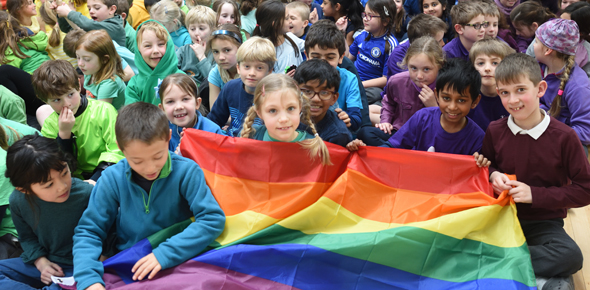
My interviews with other international students confirmed this uncertainty. Several had never heard of EDI. Others said they knew the term but felt it had little to do with them. The most visible sign of EDI, for many, was the rainbow flags displayed across campus. For some Chinese students, these flags felt novel, since in the Chinese cultural context, gender and sexuality are not always framed as diverse. The flags created a sense of curiosity, but also confusion. Students wondered what connection these symbols had with their own everyday lives.  

On the one hand, some international students see the posters of EDI in their University. On the other hand, many still encounter exclusion in daily practice, whether through racial microaggressions or moments when their voices are ignored. The gap between EDI discourse and lived experience can leave students feeling positioned outside the very spaces that claim to include them.  

These reflections also shape my current role as a Student Representative of the Gender and Education Association (GEA). For me, the goal is not simply to promote EDI as an abstract principle, but to make it real in practice. I want international students to feel not only that they are present in these conversations, but that they belong. This means creating space for their perspectives, supporting them to participate on their own terms, and ensuring they are recognised not just as symbols of diversity but as contributors to academic and social life. Only in this way can EDI move beyond words on posters and become something lived and transformative.  

Conclusion:  

Our different perspectives point to the same paradox: EDI can both include and exclude. Chong’s experiences show how label representation can create distance instead of belonging, while Qiaohui’s reflections reveal how international students often see EDI only as symbols, not as something that speaks to their daily struggles. Together, we argue that if EDI is to be transformative, it needs to move beyond posters and acronyms. Real inclusion means recognising international students as part of the conversation, shifting power, and creating spaces where people are valued for who they are and what they contribute. As universities renew their EDI strategies each year, perhaps the most radical act is not to add more words, but to listen more deeply.  

Reference:  

Tavares, V. (2021). Feeling excluded: international students experience equity, diversity and inclusion. International Journal of Inclusive Education, 28(8), 1551–1568. https://doi.org/10.1080/13603116.2021.2008536 

Image sourced from: https://phecanada.ca/professional-learning/equity-diversity-and-inclusion/understanding-edi-and-edi-intersectionality

a cluster of pegs and one peg alone

From Silence to Voice: Reclaiming the Curriculum for the Working-Class Feminist  

By Michaela Hall  

The intersectionality of class and gender is at the forefront of my experience and research as a PhD student exploring curriculum justice. In this blog post, I reflect on my higher education journey as a white, working-class, British woman and I touch upon how structural inequalities are embedded in curriculum design and delivery. I explore how neoliberal ideologies commodify education, marginalise working-class women, and erase diverse ways of knowing. My experience and reflections have shaped my commitment to advocating for curriculum reform that promotes epistemological justice, which has the potential to lead to broader social transformation.  

A Moment To Reflect  

Very recently, I attended a conference where one of the presenters mentioned that personal social injustices they face motivate them to change things for others. This resonated deeply with me and prompted me to reflect on my own intellectual journey through higher education, particularly my undergraduate studies. I reflected on how my experiences as a working-class white British woman not only shaped my path but also my research into gender and curriculum justice.  

I vividly remember the look in my dad’s eyes when I told him I was intending to go to university after completing my A Levels. I caught a glimpse of the heart-stopping, stomach-dropping panic.  

‘Are you sure?’ 

‘Have you thought about getting a job?’  

‘You don’t have to because your friends are, you know?’  

I knew I didn’t have to. I wanted to. Even in those self-absorbed teenage years, I did feel for my dad. I was asking for the equivalent of 2 years’ worth of food shopping for our working-class family of four, to be paid over the course of the next 3 years. Yet, with the most pained smile I will probably ever witness, he agreed.  

I studied Music, and it wasn’t until my third year that I came across my first female lecturer, a guest lecturer from the Music Therapy Master’s course. It was then that I realised there were no female lecturers in the department. We did not learn about any female composers and anything aside from Western music was crammed into a one-semester elective module in the first year – ethnomusicology – taught by a very charming, but very white, middle-class male. 

I didn’t think much of it at the time, but now I truly understand how teaching cannot be viewed as a matter outside of social class. Teaching is an overt genderised profession with evident historical roots within the capitalist system (Anyon, 1997; Arnot, 2002; hooks, 1994; Darder, 1991). I now question myself: Was it worth it? Is it worth it for working-class women now, after 20 years? What knowledge, or rather whose knowledge, are you paying for? These are just some of the questions I hope to answer through my research.  

Working-Class Realities and the Cost of Aspiration  

a white woman sits at a desk looking stressed

Class matters are deeply intertwined with gender and, needless to say, racial categories. (Davies, 2019; hooks, 1987; Darder, 1991) I have found that women are disproportionately affected by precarious work conditions, unpaid carer roles and responsibilities, as well as exclusion due to disability. Also, it is interesting to notice whose women one is referring to? In recent research, the UK Trades Union Congress (2025) revealed that women are 34% more likely to be on exploitative zero-hour contracts than men, BME women are 103% more likely than white men, and disabled women are 49% more likely.  

When I started my undergraduate studies in 2005, university tuition fees in England were set at £1,500 a year. At that time, the National Minimum Wage was £5.05 per hour for those aged 22 and over, and £4.25 per hour for those aged 18 to 21. Fees were the equivalent of 297 hours’ and 353 hours’ worth of work, respectively. Have things got better? Unfortunately, no. The National Living Wage, as it is now known, is set at £12.21, and a year’s fees can be charged at a maximum of £9,535 in England and Wales: an equivalent of 781 hours. So, what kind of curriculum are you paying all this money for? What will you learn? Who benefits from ‘such learning’?  Importantly, is it worth the mounting debt for the working class in particular? Alarmingly, if one pays attention to studies promoted by conservative psychologists, such as Jordan Peterson, equality policies, particularly in Scandinavian nations, have aggravated gender equality. 

It is essential to recognise that prevailing societal ideologies influence the dominant forms of curriculum theory, design, and development. At present, as research documents, neoliberalism has been capable of imposing itself as a public pedagogy aiming for educational outcomes that are directed by primary market drivers. Students are treated as a commodity, like any other commodity, a captive mass of customers, and knowledge is viewed as a commodity as well (Apple, 2000; Giroux, 2011). There is an emphasis on ‘marketable skills,’ which reinforces capitalist values, namely, individualism, competition, and instrumental views of reason and existence. Since the market dictates education, pedagogy is compartmentalized and individualized to be in tune with those markets. In the course of my research so far, I have observed that the majority of online prospectuses foreground workplace skills that can be acquired during the course, before describing the degree content.  For some, this isn’t very meaningful. The curriculum is designed to serve the labour market, not the students. It promotes skills for employability, assuming everyone is a potential worker, and adds little value for women who cannot work or are in insecure jobs, creating a sense of economic disempowerment. Notably, education is closely tied to a new emerging gendered class: the precariat. Distinct from the traditional working-class, the ‘precariat’ (a term originally coined in 2011 by British economist, Guy Standing (2014)) are characterised by their precarious employment, unstable living conditions and lack of rights both within and outside of the workplace.  

From a progressive feminist perspective, this assumption overlooks structural inequalities (such as access to employment, leadership roles, and equal pay, to name but a few) that disproportionately affect women—particularly those in caregiving roles, precarious employment, or excluded from formal work altogether. It adds little value for the women who cannot work or are in insecure jobs, creating a sense of economic disempowerment. By prioritising individualised success and employability, neoliberal curriculum design erases collective struggles and reinforces gendered marginalisation within education. 

Intersecting Inequalities: Who Is Left Behind?  

series of figures of similar colours grouped together while another of a different colour sits apart

Neoliberal framing also builds the curriculum as a site of power. Bernstein (1971) claims, “how a society selects, classifies, distributes, transmits and evaluates the educational knowledge it considers to be public reflects both the distribution of power and the principles of social control”.  The curriculum, therefore, is a selective tradition (Williams, 1983): when you select, you make choices of what is ‘in’ and ‘out.’…and in so doing, you murder countless knowledge platforms. ‘Educated knowledge’ is often defined by dominant Western, patriarchal, and capitalist ideologies, and higher education is no exception. The curriculum has an epistemicidal nerve (Paraskeva, 2011). The general curriculum engages in epistemological looting (Paraskeva, 2016), privileging Western Eurocentric narratives while silencing indigenous, feminist, and non-Western epistemologies. ‘Objective’ knowledge is masculinised, whilst socially constructed ways of knowing and emotional experiences are feminised and devalued. Actually, in many aspects, they have been produced as non-existent (Santos, 2014). Epistemological violence (Paraskeva 2016) against working-class women and other disenfranchised individuals and communities has historically been rampant -not just in the West – and this rode upon the wave of colonisation to the South. Hence, women from indigenous communities face double the marginalisation and oppression from both patriarchal and colonial powers 

How do the politics of the curriculum impact working-class women? They are systematically neglected: the curriculum rarely reflects the lived experiences of the working-class, as their knowledge is often rooted in survival, care, and community, and is not considered ‘academic’ or ‘valuable’. This invisibility also means that others, outside of their community, do not understand their realities. Women’s invisibility in the curriculum matters has been consolidated through men’s visibility. 

Additionally, the current curriculum perpetuates social hierarchies. As a result of the white, patriarchal Western Eurocentric norms embedded in the curriculum, working-class women are assumed to be uneducated and unskilled despite their different ways of knowing, reinforcing classism, ableism, racism, and sexism in both education and society. Constant exclusion from educational narratives and opportunities can lead to disempowerment and alienation, also limiting their ability to advocate for themselves or their communities. 

Towards Epistemological Justice  

I was fortunate enough to secure a full-time job, albeit at minimum wage, while attending school. Working full-time hours and studying on a full-time course was intense, and sure, I would have attained better marks if it had not been for cramming coursework in work breaks, but I managed to see myself through and come out with a piece of paper on the other side to show the world I had a degree. Looking back, however, it cost a lot more than money. My identity – my working-class ontology, my epistemology, and even my accent, which set me apart – all had to be shed for me to fit in with my peers and absorb white Western male knowledge. I am not ashamed to admit that, if it were not for employers covering the costs of my Master’s and PhD studies, nor for the fantastic support I receive from my supervisors, I would not be where I am today.  

someone holds a sign that says 'education for all'

I was, and still am, lucky — and it is not fair. As a society, we need to strive for something better, and I hope this is where my research will lead me. I cannot see how we can change society without changing education and teacher education. Although I am not naïve, as education alone cannot transform society, the truth is that the social transformation we so desperately need requires a radical shift in the way we think about and approach education. I am making it my mission to explore curriculum theories that promote epistemological justice, embrace diverse and plural ways of knowing, and break away from a territorialised curriculum that is fixed, canonised, and built on colonial and patriarchal frameworks.  

REFERENCES 

Anyon, J. (1997). Ghetto Schooling. New York: Teachers College Press. 

Apple, M. (2000). Official Knowledge. New York Routledge 

Arnot, M. (2002) Reproducing Gender. New York: Routledge 

Bernstein, B. (1971) ‘On the Classification and Framing of Educational Knowledge’. In M. F. D. Young (ed), Knowledge and Control. New Directions for the Sociology of Education (pp. 47- 69). London: Collier-Macmillan 

Darder, A. (1991). Culture and Power in the Classroom. New York: Routledge 

Davies, A. (2019) Woman, Race and Class. New York: Penguin. 

Giroux, H. (2011) Education and the Crisis of Public Values. New York: Peter Lang 

hooks, b. (1987) Ain’t I A Woman: Black Women and Feminism. London: Pluto Press. 

hooks, b. (1994) Teaching to Transgress. New York: Routledge 

Paraskeva, J. M. (2011) Conflicts in Curriculum Theory. New York: Palgrave 

Paraskeva, J. M. (2016) Curriculum Epistemicides. New York: Routledge 

Santos, B. (2014) Epistemologies from the South. Boulder: Paradigm 

Standing, G. (2014) The Precariat: The new dangerous class. London: Bloomsbury 

TUC (2025). Women are “bearing the brunt” of exploitative zero-hours contracts. 06 March 2025. Available at https://www.tuc.org.uk/news/women-are-bearing-brunt-exploitative-zero-hours-contracts (Accessed 2 June 2025) 

Williams, R. (1983) Culture and Society: 1780-1950. New York: Columbia University Press 

Free to use images sourced from Unsplash, and Pexels 

Chilean children in school

Citizen education and gender in Chile: An analysis from the perspective of school leadership

Camila Jara Ibarra

What is the objective of our research?

Understanding the process of socialization and the learning of politics and citizenship during the formative period of adolescence is crucial for comprehending the origin of the gender gap in political and civic participation later in adulthood, including experiences within the school environment. Schools, whether through explicit or implicit content, can contribute to the conceptualization of politics and citizenship as a male domain if their practices and interactions among students perpetuate gender biases and stereotypes (the tendency to attribute specific characteristics and traits to men and women (Jost & Kay, 2005)).

Schools possess formative potential that extends beyond the classroom, involving the institution as a whole. As Kerr (2015) emphasizes, citizenship education encompasses the classroom through the curriculum and teaching practices; the institution as a whole through spaces for deliberation and school participation; and the school’s relationship with the community through service activities and educational outings, among other aspects. While there is extensive literature and empirical evidence focused on the classroom and the influence of teachers on the development of students’ citizenship competences (Gainous & Martens, 2012; Schulz et al., 2018; Torney-Purta, 2002), less attention has been given to the role of school leaders in citizenship education, considering the formative potential of the entire school.

This project focus on school leadership (principals, management teams and teachers in leadership positions within the school) to observe their role in the process and experience of political socialization and citizenship education of Chilean students. In doing so, we aimed to identify their approach to gender issues and the existence of gender biases that could contribute to the construction and (re)production of a citizenship associated with the masculine or feminine roles in political life.

What have we done?

During the months of project execution, we gathered essential data to address the research objectives. Case studies were conducted to observe and analyse gender biases in learning and teaching processes within the school environment, with a specific focus on the role of educational leadership.

We collaborated with a sample of four secondary public schools in Santiago, Chile, including two exclusively female schools. To ensure gender balance in school leadership, we selected two schools led by female principals and two by male principals. In line with our initial proposal, we conducted in-depth interviews with educational leaders and citizenship education teachers. The objective was to gain insights into their perspectives on citizenship learning and teaching from a gender-oriented standpoint.

We interviewed a total of seven citizenship education teachers and six members of management teams. The analysis of these four school cases focused on the discourses and practices of leaders (political and citizenship beliefs and attitudes) and the opportunities for teaching and learning (spaces for deliberation and participation, as well as the school’s relationship with the community) offered by the school as a whole. The interviews, conducted between May and October 2023, lasted approximately one hour each.

What are our main findings so far?

The four schools analyzed exhibit differences in their school culture, yet they also share some characteristics in many of the examined issues.

From the cases examined, citizenship training plans have been developed, as mandated by the Ministry of Education (outlining citizenship education actions and learning opportunities for primary and secondary education students). In a couple of schools, units have been established to address gender issues. However, in the case of citizenship education plans, in general, these are not known by the school community and have a limited impact, as there has been no collective reflection on the type of citizenship the school community seeks to emphasize or the actions this will entail. It is suggested that the formulation of these plans has been primarily for regulatory compliance rather than constructing an educational plan for the community.

A noteworthy aspect in three of the schools is the recent establishment, within the last two years, of an internal department addressing gender issues. However, these departments or units are still in their early stages, and like the citizenship plans, their scope is not yet known or shared by the educational communities. While these units represent progress in addressing the visibility of gender issues, their focus has been oriented toward addressing gender diversity, coexistence problems, and non-discrimination rather than promoting formative or educational strategies from a non-sexist approach.

In all four cases, diverse citizenship conceptualizations are observed, which even differ within each school. Views range from critical positions regarding what has traditionally been understood as citizenship, related to civic duties and rights, to others where a broader and more active conception of citizenship linked to common good and democratic coexistence is observed. Regarding feminism, a common discourse is observed in all four schools around its relevance. While its importance is declared, the concept is not used institutionally, and instead, similar concepts such as gender equality or equity are mentioned.

Concerning forms of organisation and student participation, three parallel phenomena are observed in all cases: 

1. A growing weakening of traditional forms of student participation such as Student Unions, which generally have low attendance and often do not garner validation among students.

2. Minority groups of students with higher levels of politicisation, participation, and mobilisation capacity, who often drive actions such as school occupations.

3. School administrators and teachers report a growing lack of interest and disenchantment among students with topics related to traditional and electoral politics, even due to causes such as feminism during the post-pandemic period (2021-2023). However, there is a reported increase in interest in other types of issues such as animal rights.

These realities have a correlation in the discourses of school leadership, where there is a lack of problematization in relation to the type of citizenship that the school privileges, as well as to possible gender gaps or an education that produces or reproduces gender biases. These discourses, rather, focus on reducing gender issues only to the promotion of non-discrimination and the promotion of sexual diversity, from a focus on reparation rather than prevention, instead of thinking about the development of strategies in the formative or educational field for a non-sexist approach (from pedagogical practices, contents, work materials).

What can we conclude at this point?

All in all, it can be said that there is progress in schools in relation to citizenship education and gender issues, which contributes to the recognition and visibility of both topics. However, these advances are limited and the school leadership rather lacks of a critical or reflective vision on citizenship and the challenges, gaps and biases that citizenship education faces in terms of gender.

Finally, we did not encounter any ethical issues in the fieldwork. Before the fieldwork this study was revised and approved by Diego Portales University ethical committee. Participants were required to read and sign a written informed consent prior to their interview. We also tried to be mostly transparent with our research purposes and the future use that any information will have.

Catherine looks directly into the camera and smiles

Remembering Catherine Thomas

Tribute written by Tori Cann, with input from friends and family.

Catherine Wheel

You were fully committed to changing the world
This was your aim
That the barriers faced by young people today
Would no longer remain
You recognised the power of coercion and control
And the damage of self-blame
Your goal was to educate and validate and empower
So that lives were reclaimed

There was not enough time to complete the plan
As you were snatched away
Despite your energy and drive to make a difference
You were denied another day
Everyone you touched with your warmth and kindness
Misses your sunshine ray
Where Catherine was materially, is now an unoccupied space
But your legacy will stay

It was an absolute pleasure to work with you on your doctorate
Like a Catherine Wheel firework dancing
Always so passionate but pulled in different directions, all more important
Than grammar rules and referencing
You always had time to smile and laugh, despite the seriousness of your work
Taking pleasure in achieving
You will be much missed, but you leave behind an inspirational path
That others are now following.

Poem by Catherine’s PhD supervisor, Professor Dawn Mannay, School of Social Sciences, Cardiff University

In January 2023 the world of gender and education lost one of our newest and brightest shining lights, Dr Catherine Thomas (also known as Catherine Phillips). Catherine was midway through her (posthumously awarded) doctoral research into young people’s understanding of coercion and consent within and beyond education when her life was cruelly and unexpectedly cut short. For those that worked with Catherine, news of her passing was more than a shock, not least because Catherine was perhaps the most energetic and fearless of our friends. Sometimes the word ‘passionate’ is bandied around when describing our activist friends, but for us who knew and loved Catherine, passionate is likely the word that comes first and foremost to mind when we think of her. Fiercely passionate, protective, and tireless in her fight against injustice, Catherine wasn’t shy about letting you know what she cared about, and she wasn’t going to go easy on you if she thought you might be standing in the way of equality.

One of her friends recalled that he “had the opportunity to witness her profound care and concern for people, particularly those facing disadvantages in society. Catherine would often speak passionately about the children she met during her research interviews and her desire to change societal norms and systems that posed obstacles to their well-being. She would shed tears when discussing potential harm that children might have experienced. Her face would light up when she shared stories of positive changes resulting from her work and advocacy for the well-being of women and children. For Catherine, there was no dichotomy between work and personal life. Her dedication to gender equity and children’s well-being was her work, passion, and her life”

Such was her fire that it’s impossible to imagine a future without her, but it’s also impossible to imagine a future where her legacy doesn’t continue.

I first met Catherine when she was finishing up her MA in Human Rights at the University of West England where she received a Distinction, and she was introduced to me by EJ Renold who Catherine was a research assistant for at the time. We quickly became friends and subsequently worked together on three projects on girls’ rights for the charity Plan International UK, with Catherine taking on the focus on Welsh girls and young women. Anyone who worked with Catherine loved working with her, she approached any project with absolute enthusiasm, a commitment to justice and a fierce sense of humour. As part of her doctoral journey, working under the supervision of Professor Dawn Mannay and Dr Kevin Smith, Catherine continued in this vein. In 2022 Catherine was presented the Audrey Jones Awards for the work on her thesis to date, which further demonstrates the quality of her research and writing.

Friends and colleagues from her PhD community paint a picture of Catherine as just the best person to have around, funny, smart, generous in her spirit and unwavering in her support. Catherine was everyone’s hype-girl. While there were times when it was challenging for her, Catherine, like so many of us to be the first in our family to go to university, to be a mature student, to be at once both ‘Mum’ and ‘student’, delighted in connecting with other ‘misfit’ academics. She would always be the first to let you know that she was grateful for your presence, she was never shy to call out injustice and she absolutely delighted in lifting others. Her friend recalled “When I think of Catherine, I remember her as a source of empowerment and unwavering support for the well-being of people, especially women and children. She had an incredibly kind heart and would go above and beyond to assist others. She took the time to listen and always offered her helping hand to uplift those in need. Personally, she lifted me countless times, and her caring nature left a lasting impact on all who knew her. Many people who interacted with Catherine will fondly remember her asking, “hey, are you okay?”; and “how can I help, my love?”.”

In 2022 Catherine and I published a jointly written chapter on Girls and Mental Health and it was an experience I’ll always treasure. While I was off meeting the academic conventions Catherine would pull me back to make the writing more engaging for the intended audience. Whenever I reread this piece (which I have done a few times since Catherine’s passing) I can’t help but read this line in her voice: “Say it with us. Accountability is everything.” These seven words illustrate Catherine’s approach to writing, academia and activism perfectly. She didn’t just want you to understand the problem, she wanted to hear you say how you will be part of the solution.

Prior to her arrival in academia, Catherine’s career showed her deep commitment to gender equality for children and young people. In 2017 she joined Welsh Women’s Aid as a Children and Young People Public Affairs Officer and a Violence against Women, Domestic Abuse and Sexual Violence (VAWDASV) Trainer. As part of this role she worked with service providers, Welsh Government, schools and the police to advocate for young people’s rights and to train service providers in gender equality (you can read the Welsh Women’s Aid tribute to Catherine here). One of Catherine’s most valuable skills was her ability to speak across groups and to garner enthusiasm from others for gender equality work. Colleagues from Welsh Women’s Aid described Catherine as ‘unfaltering force for good’ an opinion that echoes across all of the tributes that have come from her friends and family. Her previous experience included copywriting, editing, and content management for not-for-profits and she also worked with CAFCASS Cymru on children and young people’s experiences. In 2014 she completed an internship with UN Women in New York which Catherine was immensely proud of (you can read her writing about this experience here). Catherine also took great enjoyment in writing poetry and fiction prose.

Words can’t do justice to the way Catherine made you feel; supported, loved, valued, and there remains a great sense of injustice to losing her so early. She was, and is, loved by so many and both professionally and personally, and her loss has been acutely felt, she still had so much to say and to do. So, in the spirit of Catherine, and her love for poetry I leave you with a poem of hope from Catherine herself:

Things don’t stay the same for long, so
wherever you are hang on. Even if your
fingernails splinter and all you feel is winter
deep in your bones

When there is no comfort at home, and no love
to call your own. When you feel like your soul is
broken and all the words spoken are of loss

You have the power to shower yourself with all
you need, you’re already complete.
You are not the actions or words of others, you
are not drowning in shame. You’re not to
blame.

So hang on, and soon you’ll plant your feet on
a different street. The season will change, cold
winds replaced by birds in trees and the low
hum of bees

You’ll have love at home, which will be your
own. Your heart will repair and you’ll feel safe,
in that place that reminds you you’re
strong and you’ve found where you belong.

So hang on.

Catherine Thomas, 1979 – 2023.

people around a globe

Collaboration, communication and connection: Reflections on the politics of carrying out international feminist research

By Tamsin Hinton-Smith, University of Sussex; Fawzia Mazanderani, University of Sussex; Nupur Samuel, O.P. Jindal Global University; Anna CohenMiller, Nazarbayev University; and Ruth Goodman, University of Sussex 

In January 2021 as an interdisciplinary team of feminist academics from participating universities in five countries, we embarked on a research project seeking to interrogate and increase gender inclusion and sensitivity in the focus and approach of higher education teaching in universities across five participating countries: India, Morocco, Kazakhstan, Nigeria, and UK. Set against the backdrop of the Covid-19 pandemic and with technology as the only bridge between us, our journey as a research team was not always smooth. In this blog we reflect on the challenges faced as a research team and our developing learning from being part of the research process. Gender on the Higher Education Learning Agenda Internationally is a 2-year British Academy funded research project funded as part of the Global Challenges Research Fund, with a central focus on equitable collaborative partnership between global north and global south countries to advance the Sustainable Development Goals.  

Reflections on the research journey 

The formal research design from the outset focused around online survey and interview data collection with university students and staff across partner institutions. However, as we undertook this research underpinned by principles of equitable collaboration, as feminist researchers we became increasingly aware of the need to focus more on reflecting on the research process and challenges within this, alongside the substantive focus.   

Through our mutual reflections on our research journey, four themes emerged: communication styles and expectations, our sense of connectedness, the embodied and emotional dimensions to carrying out the research, and ethical considerations in terms of where power sat across countries and individuals. 

We hope this blog provides interest to anyone concerned with the promotion of more equitable ways of researching collaboratively across intersections of gender, ethnicity, country context and academic seniority. 

Complex communication 

The research took place during the Covid-19 pandemic and so communication, and the majority of data collection, took place online. With all aspects of the research being conducted remotely, the ‘digital divide’ became apparent with inequalities arising both in access to internet but also confidence and experience using technical tools. Internet access and power outages compromised some colleagues in participating fully in all online meetings resulting in frustration and compromising opportunities for people to have their voices heard.  

 
Research outputs were translated into local languages to support equity of access of research insights. However, reflecting colonial legacies, English was the first language of two of the partner countries (UK and Nigeria), the language of academia in India, and third language after French in Morocco, and after Russian in Kazakhstan, and so was the common project language shared by all research team members.  The use of English as the project language represented uncomfortable communication inequalities, placing additional burdens on team members communicating verbally and in writing in a second or third language.  

Beyond the need to translate languages there is also the challenge of translating cultural understandings. As the Morocco based research assistant expressed, ‘we don’t usually have the same interpretation, and this causes sometimes problems of understanding and problems of progress.’ For example, assumptions about what is meant by gender in different international contexts, for instance, whether ‘non-binary’ was a relevant and appropriate gender option for our surveys, resulted in difference of opinion and reinforced the need for clear and explicit communication and to create a space where clarifying understandings and reflecting together were encouraged. Differences in assumptions and understanding existed for research practices more broadly including frequency and conventions for communication.  

Connectedness and humanisation of research process 

Conducting international research as feminist scholars, connectedness and humanisation of the research process, was of strong importance influencing the way sought to carry out the research. Not all of the co-investigators had met each other in-person, and the research assistants were appointed specifically for the project and had no prior connections with any other team members, so actively creating online spaces to get to know each other was central to the success of the project as a collaborative endeavour. We met regularly as a Team via zoom, including space for informal as well as project management discussion within this, and made sure that all stages of the research process were developed as a team in a consultative manner.  

Embodied experience and affect 

Online research design brings the potential to disrupt the privileging of embodied presence that favours able bodies, geographic proximity and monetary access to education. Yet, working in this way brought with it challenges to managing time zone conflicts and pressures encompassed in the collapsing of work and home, that virtual communication brings about.  

The pandemic required all team members to adopt new working patterns in terms of homeworking and researchers experienced intense experiences in the lifecycle of the project including childcare; illness of loved ones; and the emotional impact of fulfilling pastoral responsibilities for students in the context of the pandemic. The latter was particularly acute in India in Summer 2021 when pandemic conditions made continuing with the research in any meaningful way temporarily impossible. A humanising approach was vital to making sure that our continuation of the research through these challenging times took place in a way that recognised and supported what the research team and participants were negotiating in their wider lives.  

Ethical concerns and considerations 

Finally, we faced ethical challenges in moving beyond hierarchical approaches to knowledge production where research on the Global South is conducted by researchers from the Global North, to achieving equitable partnership in practice.  

However diligently we sought to attend to feminist ethics around voice, power and collaboration; practicalities including technological inequalities around access, reliability and confidence continued to challenge the potential to meet the goals of equitable participation. Requirements to lead ethical approval, data storage, video conferencing hosting, and paying of budgets, all through UK lead organisations, provides a constant reminder of hierarchies of participation. One researcher expressed how:  

Research, which is being done in the countries of Global South, it can be funded by international organizations or it can be funded locally, but what we have at the end of the day, the research outcomes, they are not widely circulated in the local communities.  They go to the Global North…’ (Kazakhstan Research Assistant). 

It is with this in mind that it has been particularly important in this project to ensure translation of key outputs and for the research team to support development of outputs identified by international team members as important to local agendas and audiences. 

Conclusion 

In this blog we have reflected on the process and experience of undertaking collaborative feminist research into gender equality in higher education, as an interdisciplinary, international research team. Through our reflective practice we hope to generate a wider understanding around the challenges of carrying out research equitably in practice, alongside our substantive focus on understanding gender (in)equality in higher education.  

An in-depth reflexive exploration of the process and experience of undertaking collaborative feminist research into gender equality in higher education, as an interdisciplinary, international research team can be found in the forthcoming publication:  

Hinton-Smith, T., Mazanderani, F.,  Samuel, N., and CohenMiller, A. (2022) ‘Co-creating cross-cultural approaches to gender mainstreaming in higher education: experiences and challenges in developing an interdisciplinary, international feminist knowledge-exchange research approach’, in CohenMiller, A., Hinton-Smith, T., Mazanderani, F., and Samuel, N. (Eds.) Leading Change in Gender and Diversity in Higher Education from Margins to Mainstream. Routledge: https://doi.org/10.4324/9781003286943 

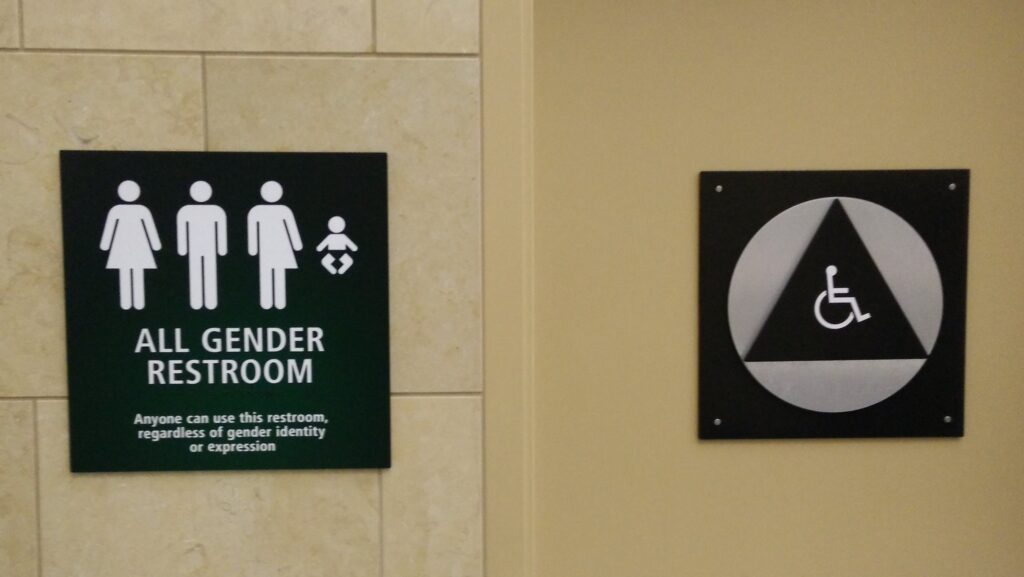
school toilets

Toilet Talk: Empowering young people in schools to research and talk about toilet issues

A GEA Funded project

By Alice Little, Josh, Oscar, Elliot, Charlotte Haines-Lyon, & Nathalie Noret

Pupil toilets are a problematic space in school. Pupils often report feeling unsafe and being concerned about the cleanliness and hygiene of school toilets. As such are often reluctant to use the toilets in school time. We aimed to work with young people to explore and challenge common toilet narratives to develop healthier, more equitable toilet practice.  

Working with young people, we developed a participatory research project to examine: how can young people work with schools to develop toilet policy and practice that is safe, healthy, and socially just? We successfully recruited a secondary school in South Yorkshire to participate in the project. The school had recently conducted a student voice survey and identified a problem with the school toilets. Our student as researchers group decided to investigate this further.

Consistent with our participatory approach to the project, our blog post is co-authored with members of our young people research team, Josh, Oscar, and Elliot. This approach was approved by our institutional ethics board. We highlight why the young people decided to get in the project, what they have done so far in the project, and why they feel Toilet Talk is important.

Why get involved?

JoshMy motivations for joining Toilet Talk was to gain an insight into the processes and factors considered during a research project at University standard. I joined Toilet Talk with these intentions in mind and soon became invested into the opinions and attitudes towards toilets and their usage from the answers given by students at my school and sixth form.

OscarI joined Toilet Talk because I have always felt that the quality of school toilets is below adequacy – I believed that through Toilet Talk, we would be able to make meaningful change to our Sixth Form, lower school, and schools across the country. I also felt that the research aspect would be quite interesting, i.e., looking at statistics from peers etc. I was interested in seeing if my opinions on the toilets in and around Sixth Form were shared among peers.

What we have done so far

Alice, Josh & OscarInitially we set out to work in a participatory way where the young people could lead the direction of the project. The young researchers chose a method for collecting data about school toilets. We began collaborating on choosing questions that could be asked to other pupils within the sixth form. We discussed ethical considerations such as confidentiality and safeguarding. An aim was to provide reassurance to pupils that we would respect their anonymity when answering the questionnaire. The team of pupil researchers wanted to make sure that respondents felt comfortable and could answer truthfully without any worry of any repercussions. The sessions were held in 25-minute form time slots, which fitted into the school day and were flexible to accommodate those who wanted to take part.  

Some of our findings so far

Josh & Oscar – Initially we believed that social space and toilets were connected; our finding concurred that our predictions and estimations were closely matching to the outcome of the Student Voice Survey. 62% of respondents stating that the toilets in Sixth Form were being used as a social space, with 23% specifying that the toilets do not address all needs of pupils. It would be interesting to see if these findings and statistics are generally found across the country in all genders and age brackets – it would be helpful to research further into school toilets to confirm this belief. It was insightful to discover that many of our views on the toilets were shared with our peers as well.

Why these findings are important and our next steps

Josh & Oscar – Collectively, we agreed that sharing our findings with the head of our Sixth Form would be helpful in working towards a solution with the Student Voice Surveys in mind. An intention was to specifically address the findings on social space and accessibility, as we believe these are the key elements that are contributary towards achieving a more comfortable environment for students using the toilets. We believed that through our research being conducted alongside York St John University researchers, our student voice was elevated, and responses would be better received by our Sixth Form and its management. Therefore, hopefully the findings will result in a higher chance of action being taken towards the facilities, better improving the overall conditions for ourselves and our peers. We believe a higher quality environment is deserved for pupils within our sixth form, especially with equitable toilets being a basic human right.

The young researchers facilitated a meeting with senior leadership, and it became clear that no toilet policy existed within the sixth form. An action plan was created that included the co-creation of a toilet policy, and clear expectations to be set out in whole year group assemblies. The young researchers have opened dialogue with the leadership team about expectations and conditions of the sixth form toilets and they wanted to continue this discussion moving forward.

The Toilet Talk project has highlighted the benefits of employing a participatory approach when undertaking research in schools on sensitive and challenging topics. The young researchers in this project have highlighted how important it was to feel listened to and contribute to a meaningful discussion with their school leadership on their research findings. This has led to a change in school policy and practice related to school toilets.

This research secured ethical approval from the York St John University, School of Education, Language and Linguistics, Ethics Committee in January 2022. Written consent was received from the young people to take part in the Toilet Talk project and those involved in writing the blog attended a workshop session on authorship and anonymity within academia, and verbally consented to being named co-authors.

This blog post explores the Gender and Education Association 2021 funded research project titled Toilet Talk: Empowering young people in schools to research and talk about toilet issues, led by Dr Charlotte Haines Lyon.