by Dr Tof Eklund (Senior Lecturer – School of Social Sciences) and Dr Eunice Gaerlan (Senior Lecturer – School of Education), Auckland University of Technology.
Part of the run up to GEA Conference 2026 blog series.
Across a growing number of countries, governments, courts and political movements are asking a deceptively simple question: what is a woman?
In the United Kingdom, a 2025 Supreme Court judgment held that the terms “woman” and “sex” in the Equality Act 2010 refer to biological sex, and declared that “biological sex” meant that trans women are really “biological men” and trans men are really “biological women.” In the United States, the Trump administration has directed federal agencies to recognise only two sexes, male and female, defined by the gender marked on one’s birth certificate and immutable thereafter.
While intended to exclude trans people, this policy has already led to problems for cisgender Americans whose birth certificates are simply incorrect. This idea that biological sex is binary and “real,” and that gender is false or made-up are increasingly finding their way into debates about schools, sport, bathrooms, healthcare, identification documents and the language governments use to describe their citizens.
Now, the Parliament of Aotearoa New Zealand, is considering the Legislation (Definitions of Woman and Man) Amendment Bill. The Bill proposes defining a woman as an “adult human biological female” and a man as an “adult human biological male”, and these definitions are to be applied to all existing and new law, precluding any consideration of gender identity.
Developments in the US, UK, Aotearoa and elsewhere each have their own legal, political and cultural contexts and can’t be collapsed into a single story. Simultaneously, they are connected and interdependent, not merely inspired by one another, but following from chains of political power, social influence, and money, in both gross and subtle ways. Without dismissing the outsized impact of a handful of key players, there is also a certain zeitgeist at work, a a renewed political investment in defining and enforcing gender identities and norms by calling them biological realities based on binary sex.
The question is not whether governments can produce legally workable definitions of “woman” and “man.” The real question is what happens when a government decides to enforce a rigid classification that denies the complexity of bodies, identities, cultures and lives, and why a government would reject both self-identification and modern medicine in order to do so. It’s hard to believe that this is actually about a tiny number of trans athletes or how people pee. We have to ask why government control of gender has become so politically desirable right now.
The problem with “biological reality”

Arguments for legally defining women and men often appeal to “biological reality,” a phrase that suggests an underlying indisputable truth, something objective, observable, a trump card that renders all claims about gender moot. “Let them identify their genders,” it says “we will make law based on the binary of biological sex.”
Biology, however, would beg to differ.
Chromosomes, hormones, reproductive anatomy, secondary sex characteristics and other features associated with sex do not always align neatly. Intersex variations alone make it difficult to sustain the idea that all human bodies can straightforwardly be divided into two internally consistent biological categories, whether one counts wombs or testicles, testosterone or oestrogen, facial hair or cup size. The assumption of an obvious, objective binary necessitates that all these things align into two mutually-exclusive categories with no overlap in a way that not many people could identify with.
Terms such as “biological woman” create the appearance of scientific precision where it does not exist. Even “biological female” fails to resolve the question of which biological characteristics determine membership of what category.
Bodies, and biology, are real. They are also individual and mutable. Menopause is an obvious example, but as someone on feminising HRT, my risk of breast cancer is lower than that of an average cisgender woman, but 46 times that of a cis man. Even genitals are more varied and more affected by hormone levels than we’ve been led to believe. The problem is not biology, the problem is the assumption that biology produces two simple, universal and uncontested social categories called women and men.
The “natural order” of things
The response to evidence that human biology is complex is often an appeal to “all of nature.” The idea of a binary “natural order” has been used to police women and persecute queer and gender-nonconforming people for centuries. Once again, biology is not compliant: the natural world is fascinating and strange, often divisible into male and female, but profoundly not limited to two absolute categories. Variation in sex characteristics, reproductive strategies, sexual behaviour and social organisation exists throughout nature, both between and within species.
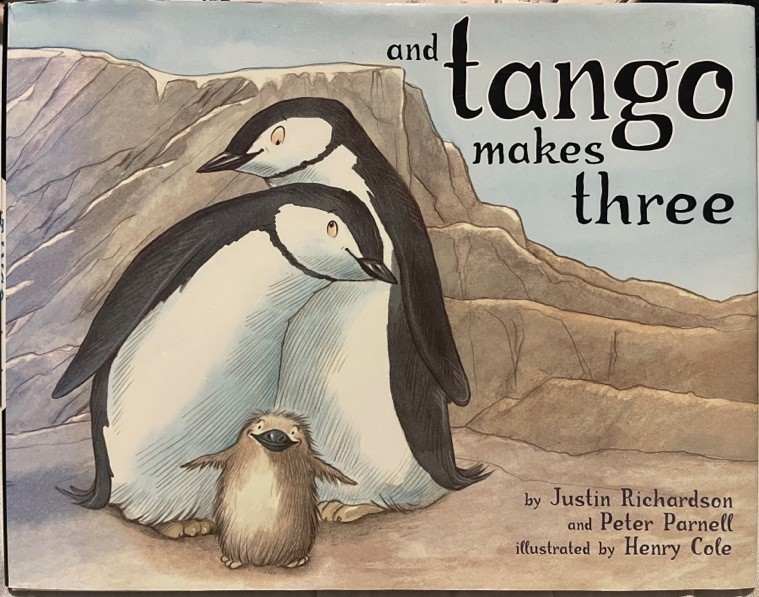
Even if we exclude the hermaphroditic snails, sex-changing clownfish, and self-fertilising lizards, there’s same-sex mating pairs in many avians, including waterfowl such as penguins, swans, ducks, and geese, peahens changing their plumage to look like peacocks, habitual homosexual behaviour in mammals from dolphins and sheep to primates, and female spotted hyenas, who are larger, stronger, and dominant relative to males, have an erectile “pseudophallus,” and engage in a lot of what we might call “straight and gay oral sex.”
Our closest primate relatives, chimpanzees, engage in a lot of the kind of behaviour the “manosphere” describes as “natural,” including polygyny (“harems”), violence, and rape, but our next-closest relatives, bonobos, are matriarchal, peaceful, pansexual, and exhibit cooperative behaviour more similar to humans than chimps. Deep anthropological study shows few signs of harem/polygynous behaviour and relatively little human-on-human violence among hunter-gatherer groups, but with considerable contextual variation.
In short, any political use of “nature” and the “natural” to support male dominance, heterosexuality, or normative gender roles and identities is rhetoric. The “natural man” is by no means straight, dominant, or any of the traits we presently associate with masculinity: likewise for the “natural woman” with femininity and the “natural none-of-the-above” with it all.
So, if neither human biology nor nature provide an inherent basis for a binary division into two exclusive sexes, what do “adult human biological man” and “adult human biological woman” refer to? They refer to gender norms. All this talk about “biological sex” is actually a pseudo-scientific rationalisation of the patriarchal politics of cisgender heterosexuality. It’s extremely dangerous as the lie it tells about trans people can easily be turned against other queer people and used to undermine women’s rights. The Bill before the NZ Parliament smuggles restrictive gender roles into the law in the guise of “obvious, natural” distinctions between two biological sexes. There’s a bitter irony inherent in the passing of a law that could used to reinstate discrimination on the basis of sexual orientation (as “unnatural,” an old slur) on the 40th anniversary of homosexual law reform in Aotearoa.
A politics travelling across borders
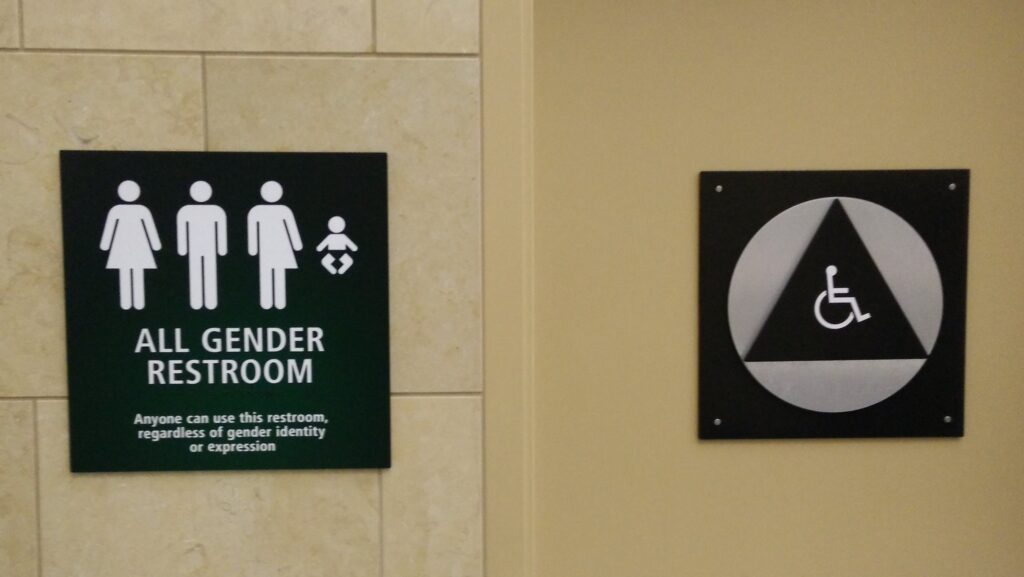
We see the patriarchal order of things in what “bathroom bills” say about cisgender women: the claim is that women are vulnerable, weak, and subject to predation any time they are less than fully dressed around “men,” even in spaces full of other women. Why isn’t there a panic about what trans men will do in men’s toilets? It’s because these bills don’t just define trans women as “really men,” they define men as powerful and dangerous, and women as weak and vulnerable in a way that suffragists, let alone feminists since, would have found offensive.
The only way to ignore the statistically nominal incidence of allegations and complete absence of convictions (documented in much of the US) of trans women for offending in bathrooms or changing rooms is to start with the assumption that trans women as “really men” and that men are dangerous. This is what I mean when I say that the Bill seeks to smuggle gender roles into the law.
We know this because Aotearoa is not encountering these arguments in isolation.
Across different national contexts, we are seeing attempts to re-assert gender norms by defining sex as a fixed binary category, and setting it in law as the category that matters, dismissing gender identity as irrelevant. The legal mechanisms differ. In the United Kingdom, this has occurred through judicial interpretation of equality legislation. In the United States, it has been pursued through executive action and federal policy. In Aotearoa, the Definitions of Woman and Man Bill would revise all existing law to accomplish its ends.
These events are not identical. Their histories and consequences are shaped by different political, legal and cultural contexts in different nations and regions, even as the tactics, motives, and key personalities overlap to variable degrees. Nowhere is the overlap stronger than in the language used.
“Biological reality.” “Natural order.” “Common sense.” “Protecting women.” “Protecting children.” “Sex is binary.”
Such phrases present themselves as neutral descriptions of a world that already exists, when they are political claims about how the world should be organised, which forms of knowledge should be authoritative and whose lives should be recognised within it. They serve to foreclose discussion and exclude evidence through a deluded or hypocritical gesture toward the “obvious.”
This has significant impact on society. Once the state establishes a correct relationship between body, sex and gender, it must also determine who fits within those categories, who does not, and how the boundaries between them will be maintained. Compare that with the simplicity of self-identification and making law and policy based on behaviour, not a gender (“sex”) marker.
Gender categories have histories
There is a particular irony when colonial states present binary gender as timeless and universal.
Colonialism did not simply seize land and resources. Everywhere European colonial powers went they brought their social hierarchies and systems of knowing with them. Indigenous cultures were a blight to be eradicated, whether that was through the conversion or extinction of indigenous peoples. “Progressive” colonial politics propagated variations on the slogan “kill the savage to save the man.” That salvation was explicitly Christian, and came with a strictly defined set of definitions: of gender, sexuality, marriage, family and social organisation.
Indigenous cultures were and are diverse: some had more than two genders, some did not. Some accepted homosexuality to a greater or lesser degree, and some had egalitarian gender roles while other did not. What they all faced was immense pressure to adopt the coloniser’s definitions and to live by his rules, with violence or the threat of violence never far away.
Here in Aotearoa, attempts to legislate supposedly universal definitions of womanhood and manhood take place on whenua (land) where Māori understandings of gender and sexuality, including takatāpui identities and histories, will never fully align with the English words “woman” and “man” and cannot be contained within European colonial binaries. Understanding of gender in different iwi (tribes) and hapu (family groups) varies, but Parliament imposing a definition of gender on tangata whenua (Māori) is unambiguously a violation of Te Tiriti o Waitangi (Aotearoa NZ’s founding document).
Internationally, gender systems across Indigenous cultures remind us that contemporary Western understandings of sex and gender are anything but universal human truths. Instead, they are ways of organising bodies and social relationships that have acquired enormous institutional power. I’ve make the case that defining legal gender as biological sex is incoherent without a definition of biological sex, and that it is pseudoscience to claim that “biological sex” is binary. So when a government attempts to set the meaning of woman and man through law, we have to look beyond claims to the natural and biological.
We must ask whose definition is being universalised.
Trans people are not the endpoint of gender essentialism
Transgender, non-binary, intersex and gender-diverse people face the starkest and most immediate consequences when governments insist that gender must follow a state-defined “biological” binary. Gender non-conforming people, here defined as everyone impacted by such a law, do not have to justify their existence by demonstrating that restrictions placed upon them will eventually harm somebody else.
At the same time, it is naïve at best to assume that the politics of gender essentialism end with the exclusion of trans people. Far from it, there is every reason to see these laws as the tip of the spear in an assault on women’s rights and an attempt to re-inscribe the authority of a crumbling patriarchy.
It’s not merely possible that these laws will create social expectations for men and women, it’s inevitable. We’ve already seen cases of cisgender women being harassed for being in the “right” restroom, the police being called on trans men when they comply with the new law, and one notable instance where a trans woman and a nonbinary person were assaulted by a mob and then arrested by police in Bossier Parish, Louisiana.
It all makes sense for the “natural” and “obvious” definition of “biological sex” replacing gender in these laws. It seems to me that the definition is “women are weak and vulnerable by nature, so dangerous men must protect women from other dangerous men; biological sex is obvious, so we know who’s who, and if we’re wrong, it’s because someone is attempting to trick us. There’s no need to or even possibility of questioning this, it’s just nature.”
In the end, who suffers if we accept this definition? Women who appear too masculine. Men who appear too feminine. Intersex people (the moment they fail to meet binary expectations). People whose appearance, mannerisms, relationships, interests and/or ideas disrupt heterosexual norms (whether they’re “queer” or not). Children who in any way colour outside the lines of “obvious, natural” gender performance for girls and boys. Ultimately, everyone, but not at all equally.
We can already see this logic operating in debates about bathrooms, sport, healthcare and schools. When access to spaces, opportunities or rights depends upon establishing who is a “real” woman or man, what counts as proof of identity? Who establishes the functional criteria, who performs the tests, who decided which people pass and who fails? And what happens to people who “fail” to perform their gender (“biological sex”) correctly?
Trans, intersex, indigenous gender, and other gender-nonconforming people need and deserve all our support right now. The fight for trans lives, rights, and inclusion cannot be separated from wider feminist struggles for equality and freedom. We are the canaries in the coal mine, the easy targets, the “communists” the brownshirts came for first. If we fall, someone else will be next. If we continue down this path, at some point we’ll see “household voting” (repeal of women’s suffrage) mainstreamed in the same way “protect girls’ sports” and “no men in women’s toilets” has been.
This is is an education issue
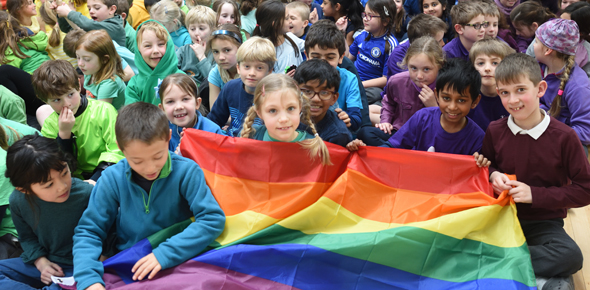
I’ve seen some trans people conclude that feminism has been successfully claimed by transphobes and that there’s no point in trying to convince cisgender people of our worth, or that our destruction would endanger them. I believe they’re wrong, but I also know their despair is the product of experience. The problem is political, systemic, and socioeconomic, but the solution is education.
Schools and universities are, after the home, some of the most important places where gender is taught, and often the only place where it is discussed. Gender is communicated through curricula, uniforms, toilets, sports teams, literature, classroom interactions, administrative systems, school balls, relationships education, policies and countless mundane moments through which young people learn who they are permitted to become.
Education can reproduce narrow gender norms or it can interrupt and question them. It can demand conformity or demonstrate acceptance. Schools set the boundaries on acceptable speech and behaviour in their halls in ways that reverberate throughout society.
The international resurgence of gender essentialism presents particular challenges for educators and researchers. Political arguments about sex and gender do not remain inside parliaments and courts. They enter classrooms, staffrooms, teacher education programmes and educational policy.
They influence whether a child can safely explore who they are. They affect what teachers believe they are permitted to say and teach. They shape institutional decisions about names, pronouns, uniforms, toilets, sport and relationships education. And they influence whether trans and gender-nonconforming students and educators experience educational spaces as places in which their lives are recognised as possible.
But something greater is also at stake.
Education should be about expanding the possibilities through which young people can understand themselves and the worlds they inhabit. Gender essentialism narrows those possibilities by and prescribes how bodies should be understood. It depends on a notion that free thought is contagious, that accepting trans people undermines everyone who isn’t trans, and the twisted logic that teaching about gender diversity is “teaching kids to be trans.”
Defending gender diversity is consequently not a specialist concern belonging only to trans communities. It is about educational and personal freedom of thought and choice, allowing for diversity of experience, understanding, and values. Accepting the sleight of hand that mandates gender essentialism by calling it “biological sex” forces everyone through a cookie-cutter into a shape that inevitably won’t fit. It undermines the trust required for education, opens the door to other politically-mandated “truths” and requires that every teacher become a propagandist. If that sounds like what demagogues have claimed inclusive education does, you just have to look at what they were arguing for instead.
Gathering in Aotearoa

When the Gender and Education Association gathers in Aotearoa New Zealand for its 2026 conference, we will do so at a moment when the meanings of sex and gender are being fiercely contested across borders.
Having these conversations in Aotearoa invites us to consider global movements towards gender essentialism from a place shaped by Te Tiriti o Waitangi, mātauranga Māori (Māori knowledge) and takatāpui histories, presents and futures, rather than simply importing political debates produced elsewhere.
It also invites dialogue across borders. What can we learn from what is happening globally? How are anti-trans and gender-essentialist politics moving between national contexts? How are they being translated into education policy and practice? What forms of resistance, solidarity and possibility are emerging alongside them?
The freedom of trans, non-binary, intersex, takatāpui, and all other gender-nonconforming people is bound up with a larger feminist project: the freedom of everyone to live beyond prescribed gender norms.
Denying others that freedom is ultimately denying everyone that freedom.
Images:
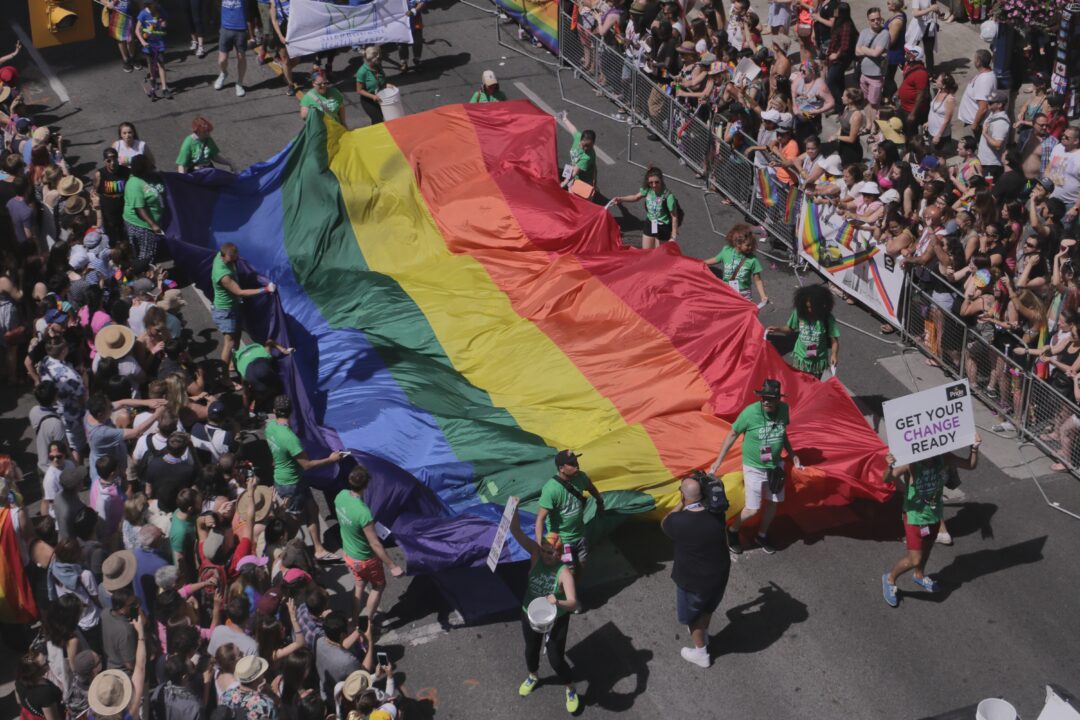
Pride gathering flag photo from Pxhere
X chromosome Photo by Unknown Author is licensed under CC BY-NC-ND
Photo of And Tango Makes Three is author’s own
All gender restroom photo
School children with flag by Copyright ©University of Cambridge
This Photo by Unknown Author is licensed under CC BY-SA-NC