C2C: Keynote Speaker Professor Raewyn Connell

This post is part of the Countdown to Conference (C2C) series. We would love to feature a brief blog post from you too! Visit our main Countdown to Conference page for details!


C2C: Keynote Speaker Professor Raewyn Connell


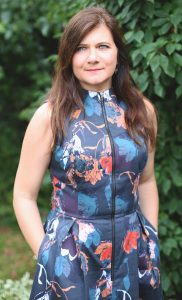
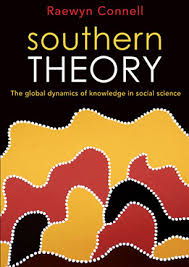
Raewyn Connell is Professor Emerita at the University of Sydney and a Life Member of the National Tertiary Education Union. She has taught at Macquarie University, Flinders University, and several universities in other countries. Recent books are Southern Theory (2007), about social thought in the postcolonial world; Confronting Equality (2011), about social science and politics; Gender: In World Perspective (3rd edn, with Rebecca Pearse, 2015) and El género en serio [Gender for Real] (2015). Raewyn’s other books include Schools & Social Justice, Ruling Class Ruling Culture, Gender & Power, Masculinities, and Making the Difference. Her work has been translated into nineteen languages. She is the 2017 recipient of the American Sociological Association’s Jessie Bernard Award. Details can be found at her website www.raewynconnell.net and on Twitter @raewynconnell


As a keynote speaker for #GEAConf2018, Professor Raewyn Connell will be discussing the conference theme by highlighting the global dimension in gender relations, and current debates about knowledge.  ‘Post-truth politics’ is not peculiar to the global North, and is not separate from contemporary imperialism. Power on a world scale is still concentrated among groups of privileged men, including corporate managers, the super-wealthy, and military power-holders.  But their legitimacy is fragile, which is a reason for the revived appeal to violence in global politics and the turn, in media and domestic politics, to hostile fantasies of threat and protection.

Global feminism has disrupted patriarchal authority very widely, and mass education is one of the most important sites where this has happened. Feminist critique of the mainstream curriculum remains essential.  Yet we need to look critically at the global politics of our knowledge about gender, which itself has an imperial history and is challenged by decolonization campaigns

Global feminism has disrupted patriarchal authority very widely, and mass education is one of the most important sites where this has happened. Feminist critique of the mainstream curriculum remains essential.  Yet we need to look critically at the global politics of our knowledge about gender, which itself has an imperial history and is challenged by decolonization campaigns. Claims for the universality of knowledge, which provide some resistance to post-truth politics, are subject to familiar feminist critiques, yet cannot be replaced by claims of epistemic privilege.  We need, in current conditions, a feminist model of truthful practice as a basis for knowledge and curriculum. Professor Connell hopes to illustrate what this means for teachers’ working lives as well as in theory.


If you are attending conference, let us know on Twitter using the hashtag: #GEAconf2018

C2C: Women’s stories in mathematics

This post is part of our new Countdown to Conference (C2C) series. We would love to feature a brief blog post from you too! Visit our main Countdown to Conference page for details!


C2C: Women’s stories in mathematics
by  Sam Prough, University of Wisconsin-Madison


I am thrilled to become part of GEA as well as have the opportunity to attend the GEA 2018 conference! I’m excited to share my research that unpacks the math stories of individuals who identify as women in an effort to understand how they can be supported in learning by looking at their collective experiences as a new and meaningful form of truth.

As the world spirals into a realm of post-truth, people seem to be scrambling to find facts and prove objectivity in order to counteract statements and opinions lacking evidence and substance. When this tightening of accepted truths and truthful stories occurs across the news and even research, what or whose truth is valued? What or whose stories are heard?

What or whose truth is valued? What or whose stories are heard?

There’s a profound irony in how I have placed myself within the hierarchy of stories and truth telling in research. I was more than surprised to have my work accepted for the GEA 2018 conference. In fact, as an early graduate student, I had chalked up the application merely as an opportunity to practice my skills of promoting and concisely writing about my work. This entrenched lack of confidence that such work would be considered meaningful by others was really an internalized thought about what stories or truths would be considered meaningful within academia as a whole.

Within mathematics education the accepted truth of what counts as math learning is narrow and additionally emphasizes the perspective of men. Math is frequently framed as highly masculine and often accessible only to a select few. The ideas and learning of underrepresented individuals, such as women in mathematics, are frequently made invisible.

Research is at a crucial crossroads. I would argue that research can recognize a more meaningful array of truths by listening and embracing the stories of these often made invisible individuals. I’m interested in what new things this can show us about women’s experience in math education. By exploring multiple women’s stories in math, it is possible to recognize a range of experiences that create an environment of what counts as math learning for women.

What are other ways that gender education research can function in a post-truth society without erasing the voices of the very individuals that they study? I look forward to attending #GEACONF2018 to find out!


If you are attending conference, let us know on Twitter using the hashtag: #GEAconf2018

Activating Intersectional Feminist Change in Schools: #PressforProgress for #IWD2018

Following on from our recent blog “Sexual harassment at school: What can young people’s gender-based activism tell us?” In this discussion Hanna Retallack, Jessica Ringrose and Tabitha Millett outline IOE UCL led activities designed to support gender and sexual diversity and equity in UK secondary schools.

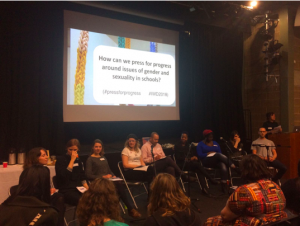
On Saturday March 10, to celebrate International Women’s Day 2018, UCL IOE doctoral student and feminist teacher Hanna Retallack hosted a Feminism in Schools: #pressforprogress conference at Blackheath High School.  Over 100 young people from schools across London and beyond (including independent, comprehensive and academy schools) joined together with scholars, teachers, activists and NGO groups to discuss how we press for progress around issues of gender and sexuality in our secondary schools.

This event brought together a range of UCL IOE staff and students including Jessica Ringrose (Professor of Sociology of Gender and Education) and Paul Dunkley (doctoral student researching Black LGB young people) who discussed the need to tackle gender and sexuality together as well as the possibilities of digital feminist activism; Linett Kamala (IOE / UCL Coordinator for National Professional Qualification for Headship (NPQH) who talked about her art work and the need to diversify the art curriculum. We also heard from representatives of organisations dealing with gender and sexuality in schools including David Brockway of Great Men Project who spoke about teaching positive masculinities with boys and young men, Natalie Bennett of Teaching Individuals Gender Equality and Respect who discussed gender diversity in schools and Amelia Jenkinson from Sexplain who described the work of her inclusive and sex positive sexuality education programme. We also heard from university activist  Sainabou Hydara of University of Kent who talked about the importance of intersectional feminism and secondary school teachers including Charlotte Carson of Feminism in Schools Network who explained how be a feminist activist in school; for schools and Holly McGuire of Teaching Feminists who facilitated the afternoon discussion.
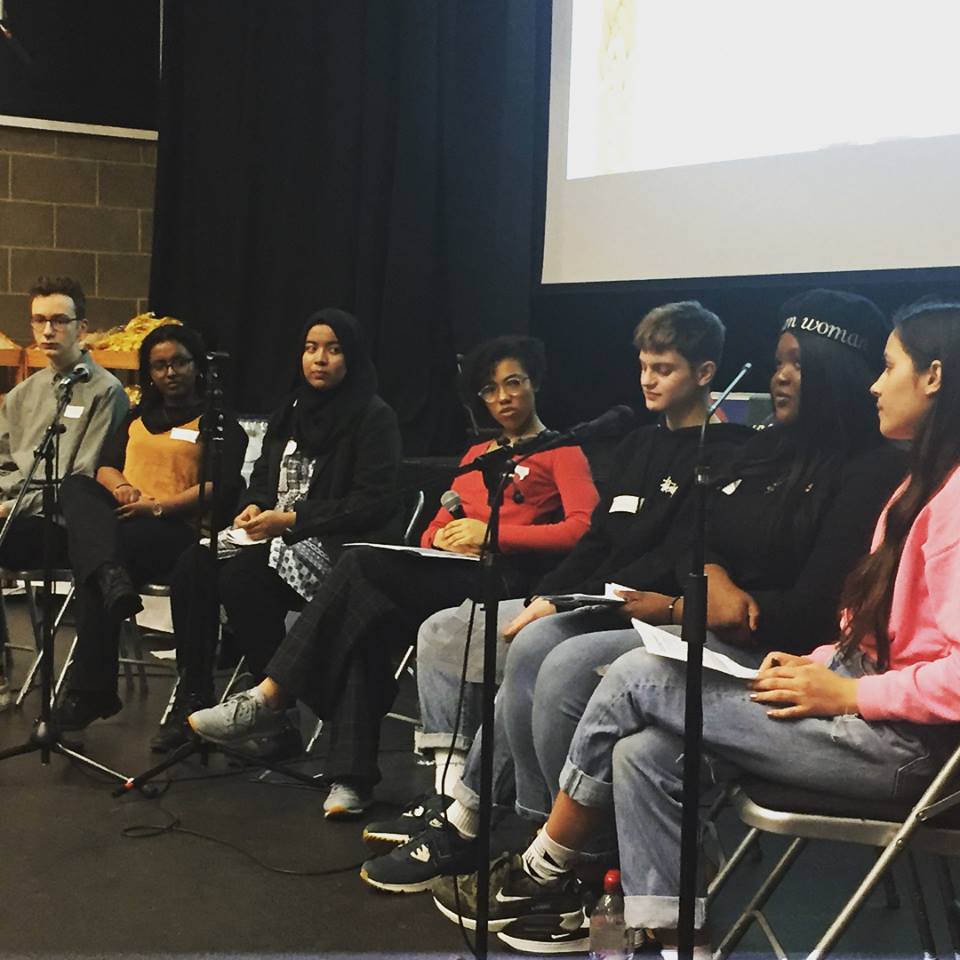
 

The adult speakers contributed alongside a group of feminist school students from a range of schools around London including Deptford Green, City of London, Oaklands School and Haberdasher Askes. This group of enterprising young activists, all between the ages of 15 and 18, talked about their own feminist activism in schools; an idea for a brand new compulsory subject for 11-15 year olds that teaches them about social justice issues; the need for their curriculums to be diversified across all subjects; the importance of connecting up LGBTQ and Feminist societies in schools;  creating inclusive and safe environments for marginalized students in schools; over-hauling sex education to include all forms of sexuality (and with much more focus on agency and pleasure); their hope that teachers encourage and support their activism and for feminist school students and schools across the UK to join together and lobby for government action.


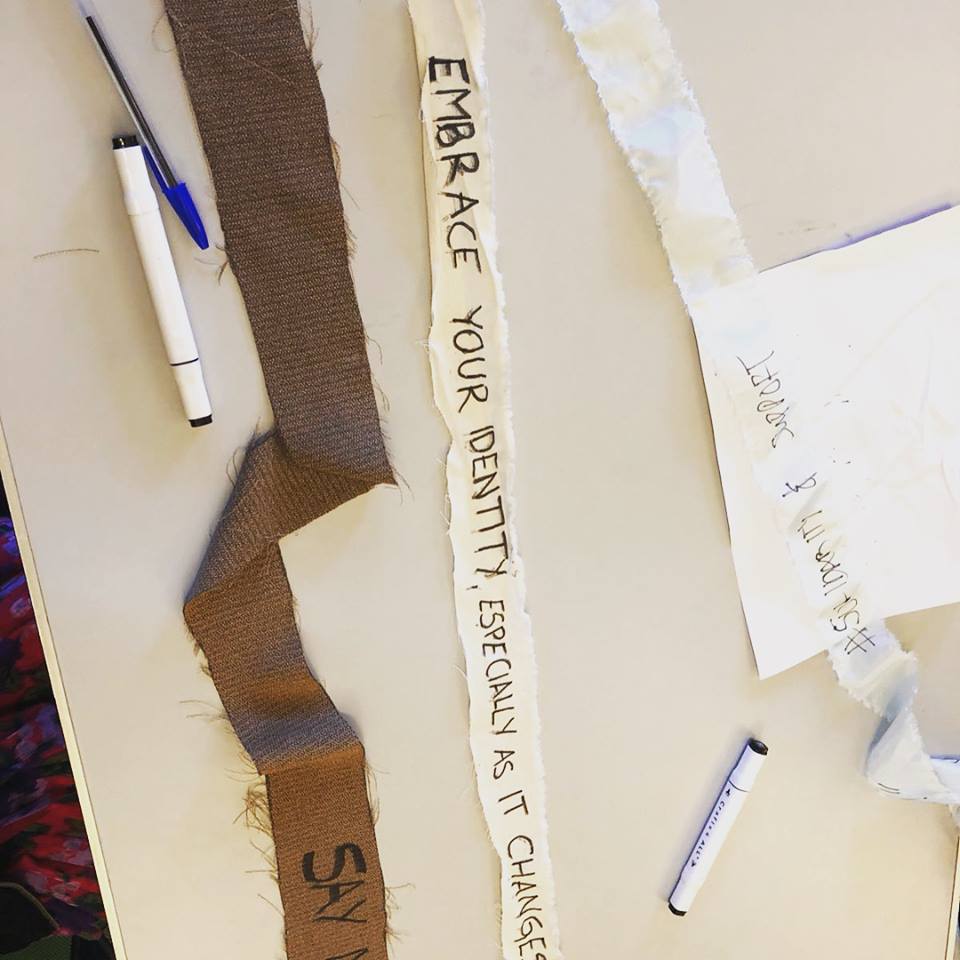
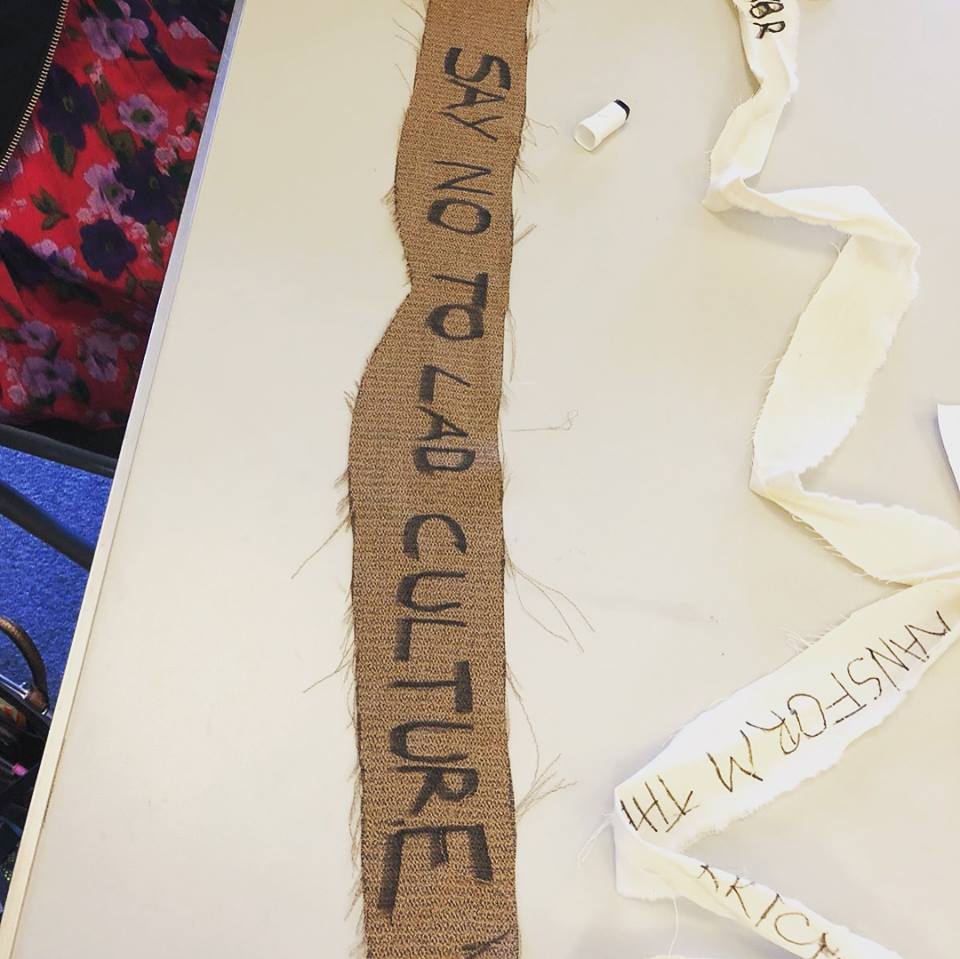
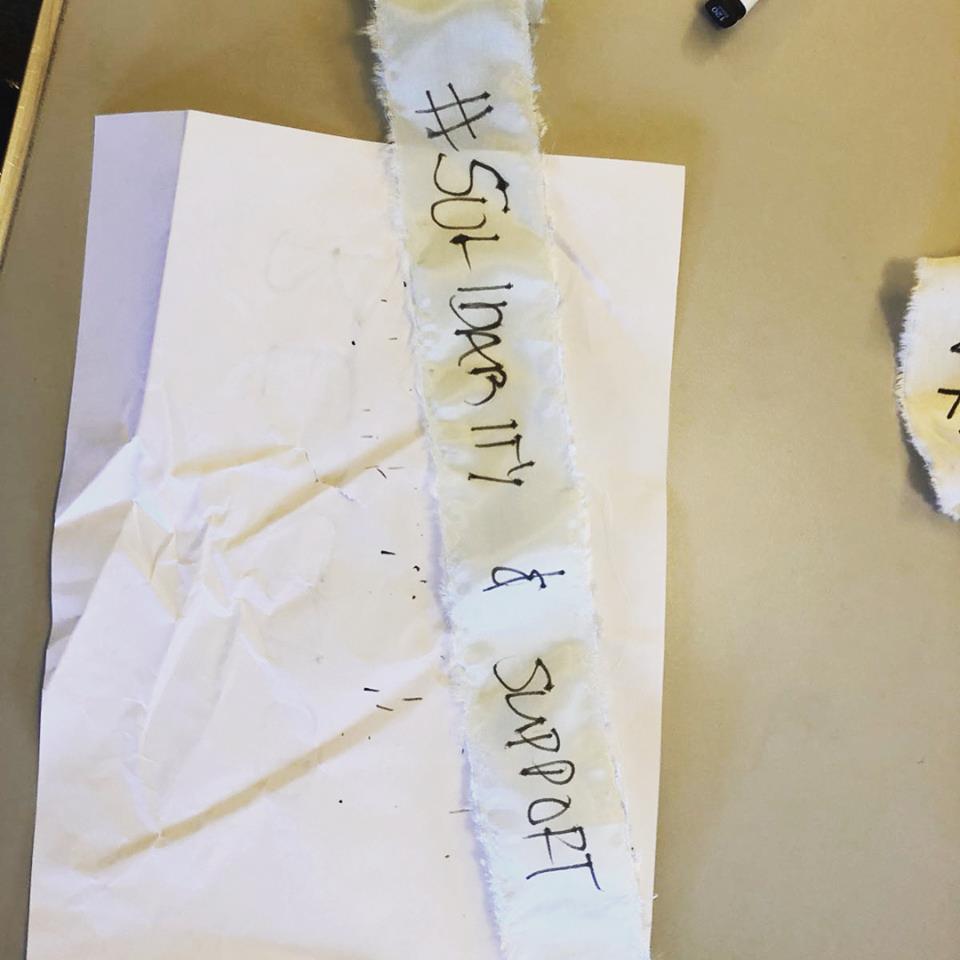
The afternoon session was devoted to creating feminist art practices for social change. Tabitha Millett delivered the ‘Plait for Progress’ session which wove together feminist concepts, materiality and craft into one participatory artwork. As she explained to the students, throughout the course of art history, domestic handicrafts such as weaving, embroidery and quilt making have all been considered women’s work, due to their associations with and location within the domestic sphere, a stereotypical feminine space. Consequently, these artistic mediums were deemed as inferior to other art works such as painting or sculpture, typically associated with men, as historically women’s work is devalued based on gendered connotations. In the 1970’s, during the Women’s Liberation Movement, feminist artists such as Miriam Schapiro, Sandra Ogel and Judy Chicago challenged this aesthetic hierarchy and pushed to reclaim women’s work and craft as worthy art forms that embodied the female experience and thus seeing it’s transgressive and political potential. Plait for Progress’ methodology is inspired by this reclamation of weaving.

During the art workshop, the participants discussed and shared their ideas from the morning about how they would like to see feminist progress in their schools and wrote down their ideas on strips of material. Each individual group of several students created one plait; then all plaits in each break-out room were plaited together to create five 50 feet feet plaits. These were then brought together in the auditorium to create a five stranded plait that stretched up through the audience, weaving amongst us as we discussed our ideas for change (pictured above).  The collaboratively woven plait then filled the space, weaving in and around the participants. How the plait occupied the space is significant. Plait for Progress takes craft associated with the private and domestic space and makes it public. The deconstruction of the public/private binary isessential for women’s liberation therefore Plait for Progress aimed to reclaim public space through its material agency. Moreover, the plait is comprised of materials carefully selected based on texture and colour.  Here we aim to read masculine, feminine and fluid identities into the materials as a way of escaping the body and representing who is present. Ultimately, Plait for Progress aims to weave ideas together to create something new.

It was a powerful day described by attendees as ‘truly intersectional’, honest’, ‘inspirational’ and as a call to ‘fight for more inclusive schools’. The event is part of the impact agenda for universities, partnering with schools and young people to work together for more fair and just educational environments. This ongoing work is transforming school cultures from the bottom up through grassroots movement. Watch this space for further student and teacher blogging about this event with ideas for how to press for change in your own schools and for an accessible toolkit coming soon with key principles for supporting gender and sexual equity and diversity in schools everywhere.


Meme Defectors? Girls’ encounters with leadership role models

Written by Michele Paule, Oxford Brookes University

Back in the 90s when I was working in a secondary school, a creative young RE teacher painted a mural of heroes onto the wall of a corridor. The only two women on it were a suffragette and Marilyn Monroe. I suggested to him that there should be more women, and that there should be more areas of influence represented than those suggested by suffragettes and sex symbols. “I see your point” he said, ‘’but what’s the use if the girls don’t recognise them?”

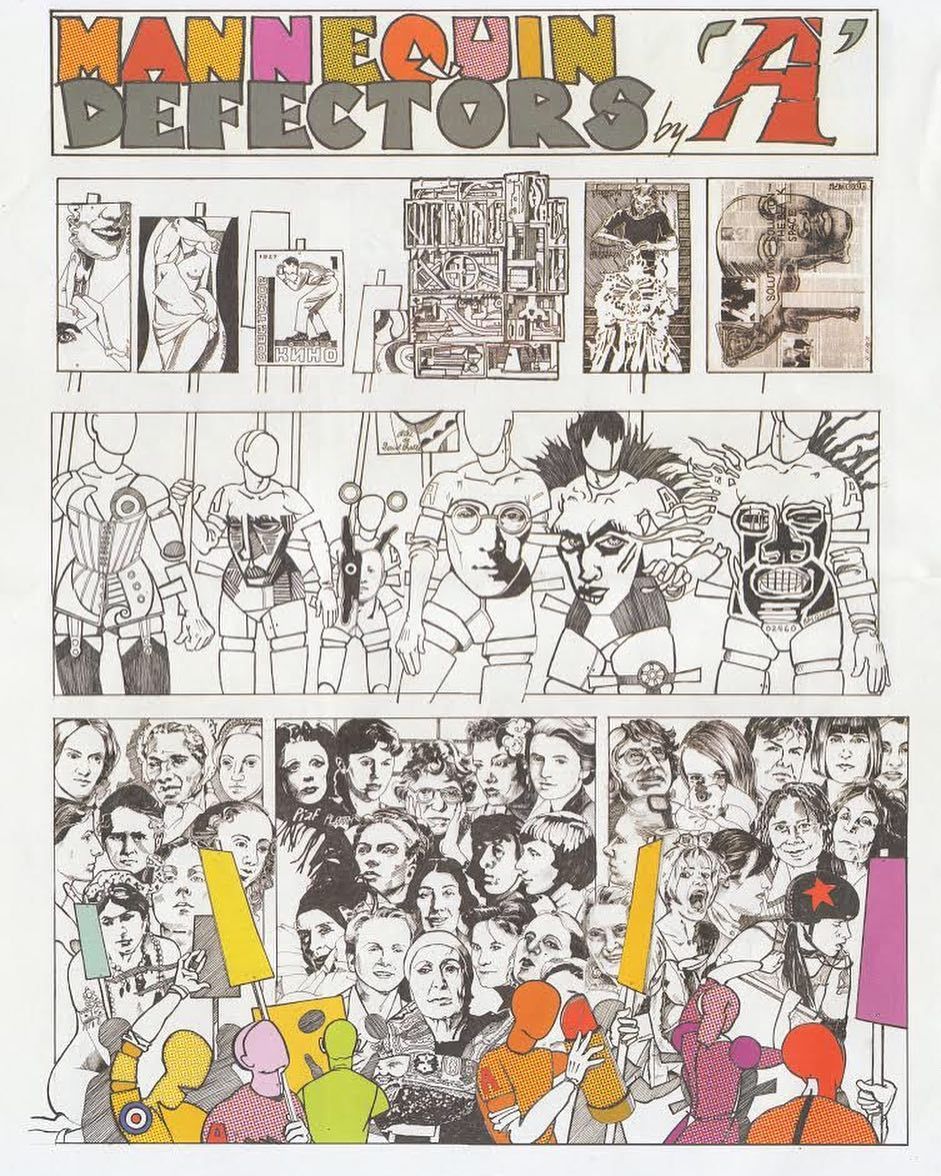
In 2008 the artist Jann Haworth created the comic strip, ‘Mannequin Defectors’ in which mannequins march past a street mural depicting prominent women in the arts and sciences. It was prompted by Haworth’s realisation that she could ‘barely cite thirty’ such women herself.

I remembered both of these as I began to look at the data for my pilot study that looks into girls’ ideas about leadership and women leaders. ‘Mannequin Defectors’ remains a favourite work, and I hope the RE teacher grew up to create more representative school art, but as a feminist media educator I know that the relationship between representation and audiences is a complex one that goes beyond offering media ‘mirrors’ and assuming effects.  The study explores the kinds of ideas about leadership made possible and/or meaningful to girls. It seeks to understand how girls engage with these ideas via figures chosen by themselves, the discourses that surround these figures, and the media and everyday contexts and practices in which such engagements take place.

An absence of visible role models in girlhood is a popularly-cited as a root cause for the  shortage of women in decision-making positions in adulthood; initiatives such as Edwina Dunn’s The Female Lead, or the Biographical Dictionary of Swedish Women  seek to address this shortage.  However valid in themselves though, concerns about the proportion and visibility of women leaders too often translate into ‘role model’ solutions for girls that are based on simplistic ideas of gender-matching. In such solutions the complexities of relationships that young people may have with media figures, and with more locally available role-models, are reduced to a matter of inspiration = imitation; few consider the cultural contexts in which girls encounter these figures, the meanings girls attach to them,  and how encounters and meanings are embedded in girls’ everyday lives and media practices.

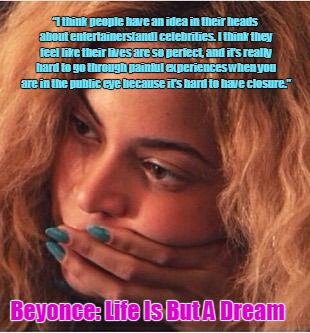
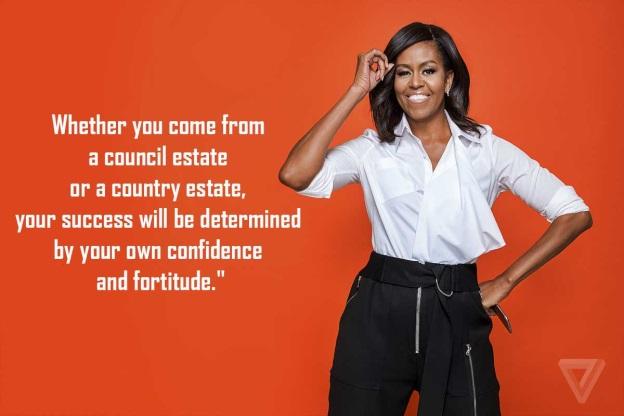
In this post I focus on two leadership figures cited by participants in school interviews and whose images feature frequently as memes in the Facebook group collages created for the project: these are Michelle Obama and Beyoncé.

Global and hyper-local role models

Beyoncé’s had so many like different situations in her life. So from when she was younger she had a lot of horrible experiences. She’s such a public figure that everything that happens in her life, people know about.  Participant

….

I’d have like my Aunty because like she’s like been through a lot…I look up to her Participant

One of the first things I ask participants to do is to describe a woman leader they admire. Michelle Obama and Beyoncé are the most popular in each group. After these two there is no clear winner, and no British women leaders/politicians are named at this stage. After global figures, girls are as likely to cite women they know, especially their mothers and their teachers, as they are women in the public domain. As they discuss their nominations themes emerge of hardships overcome and personal qualities admired. Participants seem as familiar with the obstacles that Beyoncé has faced as they are with the life stories of their own adult women relations; they quote the aspirational aphorisms of Michelle Obama as they do those of their teachers. This merging of the global celebrity and the hyper-local figure can be understood when one considers ways in which global celebrities have become enmeshed with everyday life, especially through social media. This study will, I hope, contribute to understanding of the role celebrities occupy in the lives of everyday youth, and of what ‘role models’ mean to girls who are neither members of celebrity fandoms nor the subjects of targeted leadership programmes

Merit and influence: leaders and celebrities

Most leaders have like worked hard to become what they are now and a lot of celebrities, a lot of them have also worked hard, but also a lot of them have been born into celebrity. Participant

….

A celebrity they like have more influence on younger people like our age group whereas a leader, like you think politics it would be for like older people and for that generation, not ours. Participant

The girls’ nomination of Michelle Obama and Beyoncé as their favourite leadership figures illustrates the blurring of boundaries between celebrity and politics. This blurring is seen not only in the increasing involvement of celebrities in political movements and processes, but in the ways in which politicians construct celebrity identities with what Marshall  describes as  an ‘affective function’, attracting support around personality and interests rather than policy.  This ‘celebritisation’ of politics, with its associations with the ephemeral and the low-brow, was a matter of concern well before the election of Trump, with commentators fearing that

If we don’t take back the celebrity politician system, citizens might well face a political contest between a basket-ball player versus a football player, or a comedian versus rock star, or a movie star versus a television situation comedy star (West and Orman 2002, p.119).

At first glance, the girls’ selections may seem to play into these anxieties. However, to read them in this way is to indulge in simplistic cultural hierarchisation, in which celebrity, and especially the tastes and opinions of the teenaged girl, will always occupy the lowest positions. And while Michelle Obama and Beyoncé could be seen to represent Street’s (2004) distinction between the celebrity politician and the activist celebrity, this divide is not meaningful for the girls. Their discussion focuses instead on the idea of influence – who has it, how they got it, and whether they deserve it.  Their distinction between the celebrity and the leader is framed in terms of merit, with the hard-working celebrity earning the status of leader.

The other distinction between the celebrity and the leader is made in terms of generational appeal.  Michelle Obama and Beyoncé, the girls feel, do more than ‘sit in a room with a giant bunch of people and argue about taxes and stuff’ and instead are constructed as highly accessible figures who model hard work and the material successes it can bring. InMichelle Obama, participants see qualities of accessibility and everydayness that both sit alongside and are the source of her influence. Her accessibility is partly framed through her status as a Black woman – this is central to their perception of her as a good leader; one participant describes her as ‘someone who came from a background or was born as a minority, can have that opportunity…I think that makes her be a leader’.
Michelle Obama and Beyoncé can also be seen as occupying the same taxonomic category of ‘leader’ for girls when considered within contexts of digital consumption and reproduction.  With the shift away from more traditional forms of news consumption and civic engagement to new forms of online participation, both are figures that girls encounter and share in their social media activities, especially via memes. Rather than providing evidence either that popular culture has the potential to energize the public sphere, or the contrary that those who engage with celebrity cultures are unlikely to engage with politics, the ways in which girls talk about their favourite leaders suggests that they offer a nexus around which ideas about power, influence and gender coalesce and are made accessible for interrogation  as well as reproduction.  Like Haworth’s ‘Mannequin Defectors’, encounters with the role-model images provoke a consideration of what they stand for.

This project is supported by funding from the Gender and Education Association


#PressforProgress this March

With recent global activism for gender equality fuelled by #MeToo, #TimesUp and more – there is growing momentum behind campaigns for gender parity. Mass public engagement with these hashtags has fuelled unprecedented media attention to sexual harassment and assault. However, for many of those working in the field of gender and education these stories of pervasive rape culture are unsurprising. The question remains: How can we challenge these issues in and through education? And what can we learn from what educators and students are already doing?

From Women’s History Month to International Women’s Day (IWD) on March 8th and International Transgender Day of Visibility on March 31st, this month presents a number of unique opportunities to address sexual and gender equality in schools, colleges, universities and beyond. In the spirit of this year’s IWD campaign theme #PressforProgress, GEA will be spotlighting the work of our members in challenging gender and sexual inequities. First up is a guide to utilising AGENDA as a teaching and learning resource for schools.

Utilising AGENDA as a teaching and learning resource

AGENDA: A young people’s guide to making positive relationships matter is a free online guide developed with young people, for young people. It has been designed so that 11-18 year olds can explore the issues they are interested in at their own pace.

Produced collaboratively between Professor Emma Renold from Cardiff University, the Children’s Commissioner of Wales, NSPCC Cymru and Welsh Women’s Aid, AGENDA has played a significant role in informing the Welsh Government’s report on the Future of the Sex and Relationships Education in Wales. Additionally, Professor Emma Renold recently joined First Minister Carwyn Jones at the United Nations in New York to discuss how Wales is advancing gender equality through resources such as AGENDA, the SRE report and Welsh government legislation on violence against women.

AGENDA showcases the different ways in which young people in Wales and across the world have raised awareness of a wide range of issues, including: gender equalities and discrimination, consent, LGBQ & T+ rights, bullying and sexual harassment, street harassment, female genital mutilation, sexual exploitation and relationship abuse.

The AGENDA working group have developed a variety of lesson starters and activities that draw on the AGENDA resource. Originally devised for the Welsh Baccalaureate Qualification, but adaptable to any classroom, these lesson activities create a range of student-led learning opportunities around healthy relationships.

Community Challenge

This lesson activity invites students to:

• Explore international awareness raising days on a wide range of issues (e.g International Women’s Day), and the non-governmental organisations (NGO) that support them
• Consider the issues that these awareness-raising days and NGO’s address and why
• Assess different modes of change (e.g online petition, school assembly) and their strengths or weaknesses
• Develop their own ideas for campaigns addressing their chosen issue

Accompanying this lesson activity are a series of community challenges for student-led projects. These challenges come with a brief and key resources that help develop learners’ skills, whilst encouraging them to identify, develop and participate in opportunities that will benefit the community. Community challenges include:
Championing Gender Diversity
Supporting LGBTQ+ Rights
Campaigning for Healthy Relationships

Case Study One: Relationship Matters

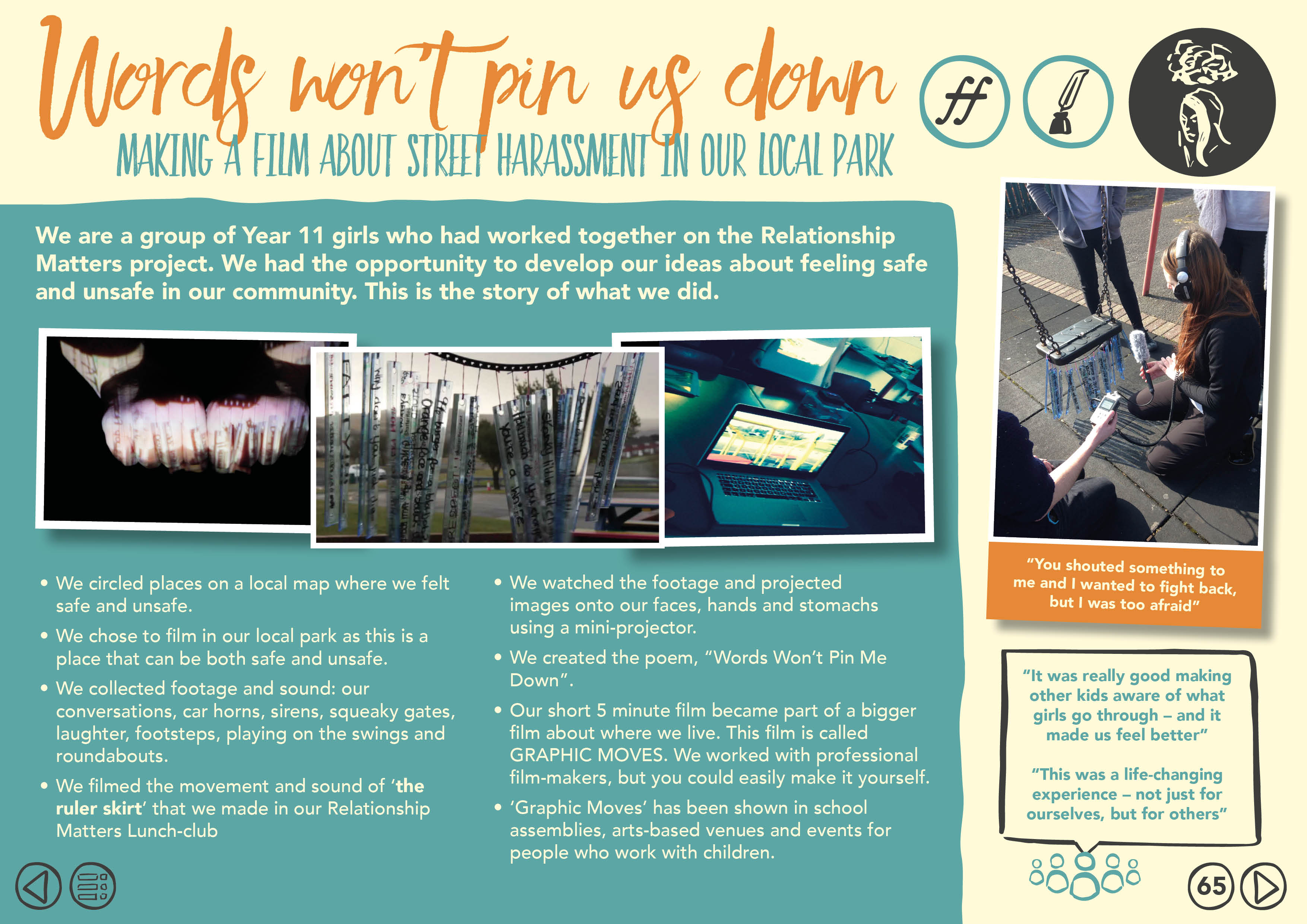
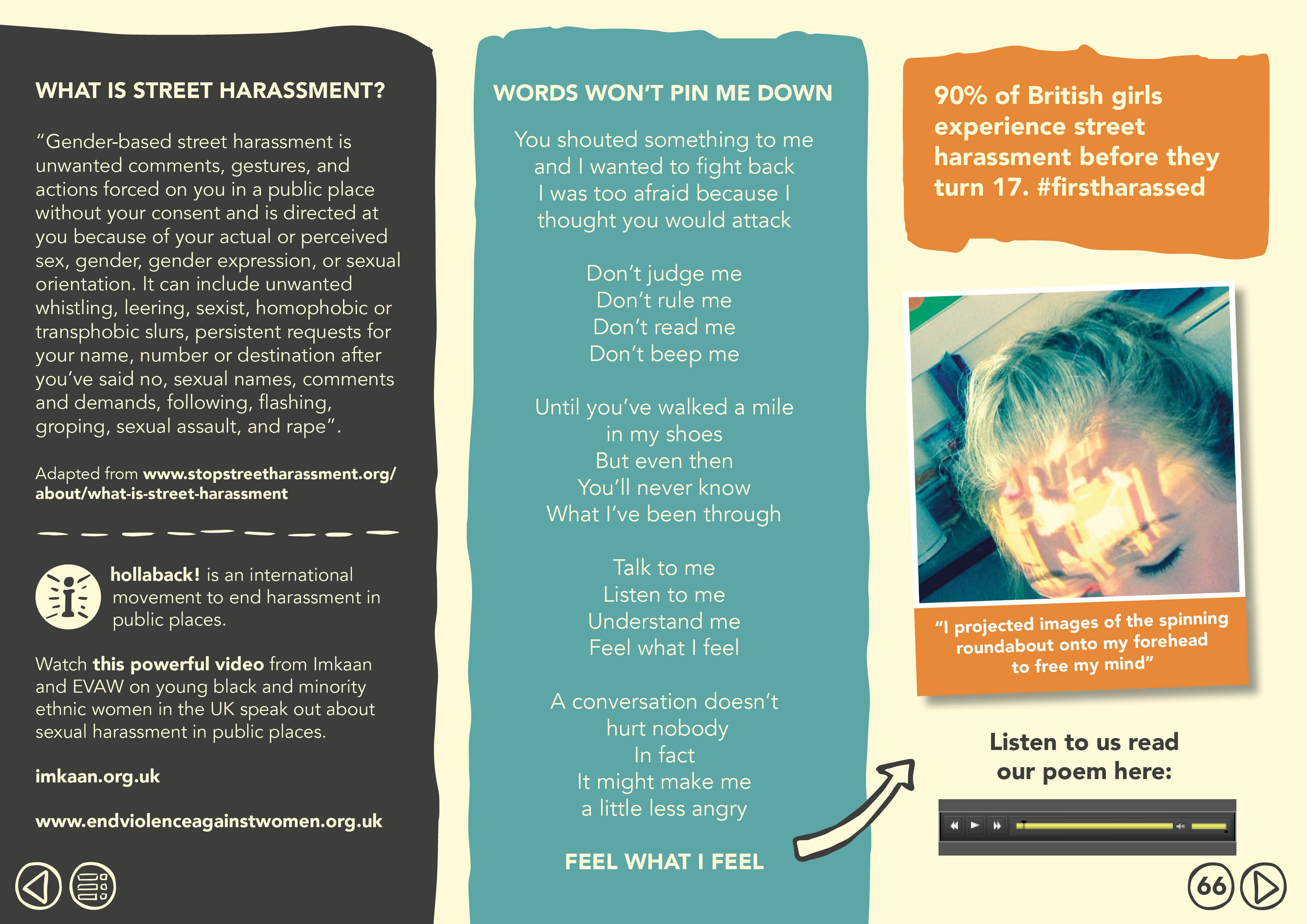
The Relationship Matters project tells the story of one youth-led school-based group who used a range of creative media, from poems and films to wearable visual art, to raise awareness of girls’ experiences of sexual harassment online, at school and in their community. In a series of listening assemblies they collected comments from over 300 students to influence and shape their own school’s whole-school SRE provision and future SRE policy and practice across Wales. Watch their film here: “Words Won’t Pin Me Down”.

This case study was recently submitted to the Women and Equalities Committee’s public inquiry into the sexual harassment of women and girls in public places.

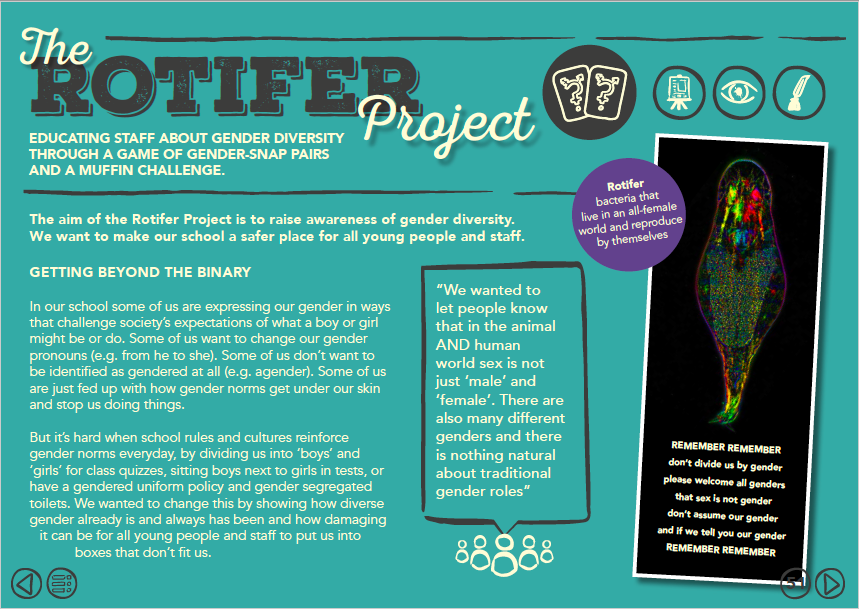
Case Study Two: The Rotifer Project – Educating staff about gender diversity

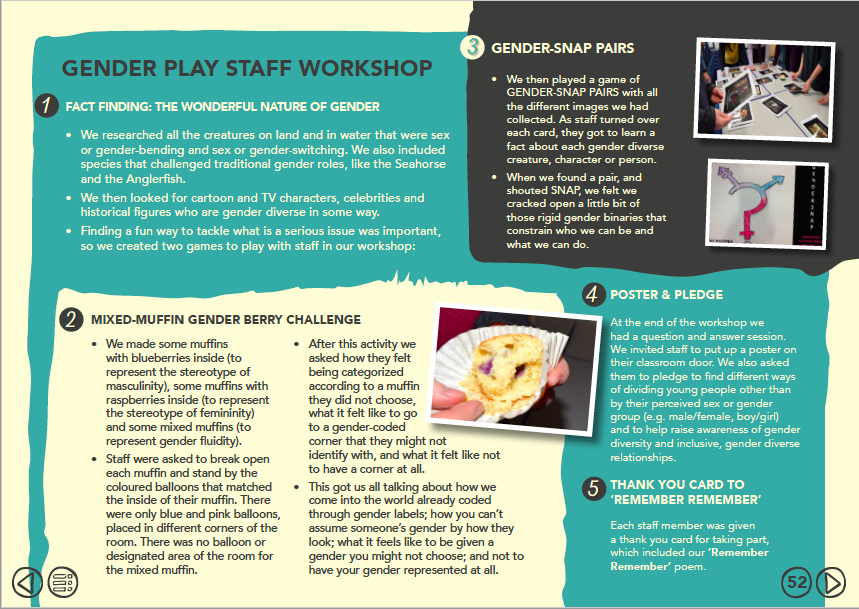
The Rotifer Project was initiated from a staff and student concern that the school needed to do more to raise awareness of gender diversity in the context of gender equity to better support the increasing number of transgender identifying students, and sexism, homophobia and transphobia. From a clear aim to make the school a safer and more inclusive space, a small group of students from the LGBT and feminist school-based youth groups set about creating a resource, sparked from their own experiences, and their own research into the issues. The groups were fully supported by the PSE and safe-guarding lead, inclusion officer and gender and sexuality academic experts.


Global Challenge

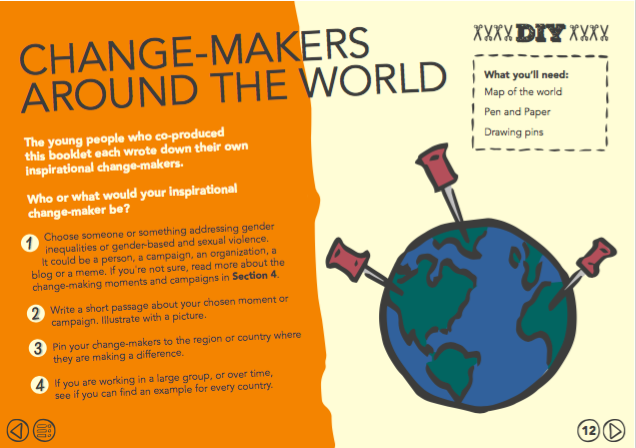
This lesson activity follows the same pattern as the above, but focuses on change-makers around the world. It also features a global activist crossword puzzle and answer sheet.

Accompanying this lesson activity is a Global Challenge supporting students to acquire knowledge and understanding of how creative activisms on social justice issues are using art to support projects across the world.

Individual Research

This lesson activity invites students to:
• Explore case studies from young people making a difference around gender inequalities
• Develop their own ideas for a research project exploring their chosen issue

Accompanying this lesson activity are a series of Individual Proposals for student-led projects. Each proposal includes links to a wide range of resources to support students in developing their research ideas including: useful websites; primary data sources; blogs and vlogs; key researchers in the field with links to their research papers. Individual Proposal topics include:
Selfie Culture
• Youth Feminist Activism
• Intimacy and Friendships
• Digital Gaming

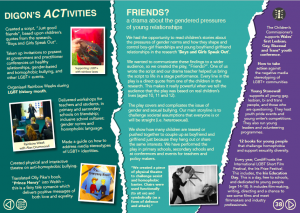
Case Study Three – Friends? A drama and resource on the gendered pressures of young relationships

The following case study provides an example of children and young people from the youth group DIGON actively and creatively engaging with research findings on issues that are often normalised and consequently remain invisible in many SRE programmes.


CfP – GEA Conference 2019

With preparations well underway for the 2018 GEA conference at the University of Newcastle, Australia (for details, please see here), we now turn our attention to gearing up for GEA Conference 2019.

The Gender and Education Association are pleased to announce that their next international conference will be held in June 2019. The GEA executive committee welcome proposals to host their long-standing conference from higher education institutions across international contexts and from conference teams spanning a variety of academic disciplines, theoretical backgrounds and fields.

The deadline for submission will be 30th June 2018. We welcome proposals from across international contexts.

For guidance on how to apply to be a host for our 2019 conference, please see here: GEA Conference CfP 2019

For proposal guidance please see here: GEA Conference Proposal Guidance 2019

Call for Papers #GEAconf2018

Gender, Post-truth Populism and Pedagogies: Challenges and Strategies in a Shifting Political Landscape

#GEAconf2018 Organising Committee: Professor Penny Jane Burke; Professor Lisa Adkins; Professor Rosalind Gill; and Associate Professor Ros Smith; Dr Julia Coffey and Dr Akane Kanai, along with the broader CEEHE administrative team.

We are delighted to announce that the Call for Papers for #GEAconf2018 is now live.

The conference theme is intended to provide a platform to critically engage with and interrogate the current political landscape in which debates about knowledge, authority, truth, power and harm are resurfacing and require feminist intervention. A central question underpinning this conference theme is: what does it mean to be pedagogical in a post-truth landscape? And how might feminist scholars work to intervene in this environment? The GEA 2018 conference will provide a forum to critically engage with and interrogate the current political landscape in which debates about knowledge, authority, truth, power and harm are resurfacing and require feminist intervention.

The conference features a stellar line-up of keynote speakers, including: Professor Raewyn Connell; Professor Sondra Hales; Professor Susan Page; and Professor Jane Kenway.

#GEAConf2018 welcomes 400-word abstracts for individual papers, roundtable discussions and symposia, along with other formats that share ideas and generate discussions in innovative ways.

The deadline for abstracts has been extended to Friday 23rd February 2018. Further information about the CfP and how to submit can be found via the conference website.

Wondering what to expect at GEA Conference? Check out the tweets from 2017 in this #GEAConf2017 tweet story and watch highlights from the 2017 conference.

#FEAS Cite Club: Educational epistemologies and methods in a more-than-human world

Feminist Educators Against Sexism (#FEAS) are an Australian-based, international feminist collective committed to developing interventions into sexism in the academy and other educational spaces. One of their interventions is Cite Club, an e-mail group where #FEAS send their works to one another and cite one another where possible. As part of our ongoing collaboration with #FEAS, each month GEA profiles a Cite Club publication on this blog. September’s Cite Club featured a Special Issues of the journal Educational Philosophy and Theory edited by Helena Pedersen and Barbara Pini.

Educational epistemologies and methods in a more-than-human world

Pedersen, H. and Pini, B. (Eds). (2017) Educational epistemologies and methods in a more-than-human world [Special Issue]. Educational Philosophy and Theory, 49:11, pp. 1051 – 1124.

Despite increasing calls amongst educational researchers to disrupt the privileging of the human in knowledge-making, many of us feel a strong sense of ‘cognitive dispossession’ (Braidotti 2017) when trying to let go of familiar ‘humanist’ concepts, thoughts and ontologies. Pederson and Pini (2017, p. 1051) note that these humanist approaches often ‘carry the epistemological promise that the world is accessible for us as researchers and possible to understand and conceptualize as a source of endless scientific knowledge production and accumulation’. When seeking to rid ourselves of humanisms epistemic orthodoxies, searching instead for ‘new’ post-humanist and post-anthropocentric paradigms, we can reproduce the same ‘illusions of control over our research process’ and reinforce the ‘machinery of thought-production’ (Pederson and Pini, 2017, p. 1051).

Collectively this Special Issue urges us to ‘push against “the given” in educational research in diverse and unsettling ways’ (Pederson and Pini 2017, p. 1053). The place of method and methodology is questioned. We are invited to revolt against the ‘belief that the method one chooses to guide research determines its truth, its legitimacy, its validity, and its trustworthiness’ and encouraged instead to play with methods that are ‘emergent with the research’ (Snaza and Weaver 2017, pp. 1056 – 63) or begin with ‘concept as method’ (St. Pierre 2017, p. p. 1087).

Analysis is also unsettled. Gough and Gough draw on their collaborative biographical writing to explore ‘what it means to perform diffractive interpretations and analyses in posthumanist educational inquiry’ (2017, p. 1112). Mazzei and Youngblood-Jackson offer a different consideration of voice in their qualitative interview data: attributing it to a complex assemblage of human and nonhuman agents and challenging normalizing assumptions about ‘voice as simply spoken words emanating from a conscious subject’ (2017, p. 1090).

Cracking and rupturing conventional analyses of the over-coded world of young sexualities, Renold and Ringrose (2017) illuminate the complex ambiguities of phallocentric power relations operating in teen girls and boys digitally-mediated peer cultures. Their dynamic accounting draws on posthuman feminist theory to acknowledge yet deterritorialize the binary machines that hold in place ‘dichotomous offline-online social worlds, risky “victims” and abusive “perpetrators”, and heteronormative gender bifurcations which tether masculinity to boy bodies and femininity to girl bodies’ (Renold and Ringrose 2017, pp. 1075 – 76).

Whilst Renold and Ringrose emphasize radical uncertainty and the power of the not-yet as a means of rupturing dominant codes, Wallin’s paper views the uncertainty of planetary futures as a ‘painful reminder of the limits, contingency, and impermanence of our human existence’ (Pederson and Pini 2017, p. 1053). He argues that educational pessimism, resonating with the current climatological crises, may offer a new disposition from which to ‘reassess the ideals of progress and optimism that continue to regulate pedagogical expression’ within the ‘ambit of affective capitalism’ (Wallis 2017, p. 1108). By pushing questions of educational research into such ‘insecure territories’ this Special Issue addresses a range of complex issues and spotlights some of the shifts catalyzed by thinking ‘beyond the fantasy of human control’ (Pederson and Pini 2017, p. 1051).

Inclusive practices: supporting teachers, supporting students

Written by Kim Beasy and Loren Dyer

In Australia, Lesbian, Gay, Bisexual, Transgender and Intersex (LGBTI) young people report high levels of bullying, harassment, and discrimination at school, resulting in negative educational and health outcomes. Previous Australian research has identified significant need for LGBTI-inclusive schooling environments. Our project will investigate these environments by drawing on the voices of school staff to construct an interactive web-based resource which will further support school staff in creating inclusive environments.

The website will be based on data collected as a part of a partner project conducted in Tasmania, Australia. This project currently underway is being conducted by the University of Tasmania in partnership with the state’s gender, sexuality and intersex support and education service ‘Working It Out’ . A number of school staff from around the state are being interviewed about supporting LGBTI students in Tasmanian schools. Researchers are seeking to explore the needs of school staff in creating and sustaining inclusive school environments and how school staff already support LGBTI students.

We will use the data generated from these interviews to create a web-based resource about the knowledge, attitudes and approaches of school staff to LGBTI-inclusive teaching practice and school cultures. We hope through this project to explore alternative ways of communicating practice and engage teachers in culturally responsive pedagogies.

We will be focusing on the way that language and bodies are used in creating safe and inclusive spaces in schools. While information about gender and sexuality is important, teaching practices in culturally responsive pedagogies extend beyond the need to transmit information. Teaching in ways that are inclusive of diverse sexualities and genders involves a vast range of strategies for creating language-based spaces. In this project, we are interested in these strategies and how they can be communicated to others. We are also interested in what these language spaces might look like, and how they might be considered ‘safe’ and ‘inclusive’. We would particularly like to explore a way of communicating that shows how language-based safe spaces might work.

When looking at the public resources available to teachers and students through government and non-government organisations in Australia, we found that they are mostly print-based. Brochures, posters and websites use exemplars and suggest practices in ways that are designed to inform people about gender and sexuality diversity rather than communicating the indirect techniques for creating safe spaces. The resource we will develop will be interactive – it will allow visitors to navigate multiple narratives about teaching practices in a way that allows them to create their own space, going beyond ideas of safety. We plan to develop the website with gaming and multimodal design techniques; using words, images and abstract spatial representations to reflect the power of language and the spaces created by language.

The website will be a prototype – we hope to expand it in the future to include student voices and experiences as well. We hope that our website will actively engage its users in a critical interpretation of other people’s experience of practices of inclusion, and act as an access point for a collation of current understandings and techniques in regards to inclusive pedagogies.

GEA Fund project: institutional visit #1 – Small Slow Steps

This post has been a while in the making, there have been other drafts, many engaging and reflective email exchanges about form and content, and many personal and professional life events both uplifting and challenging since we met in June. But the luxury of time to reflect on our first institutional visit and what has come out of it has been important. The visit itself – to host and be hosted in the home institution of a colleague with whom we are building new partnerships, both professionally and personally, with few strings attached – is a rare and significant intervention in a ‘rankings’ and ‘output’ world. Metrics, workloads, and casualization make different forms of academic identity and ways of knowing more or less possible. Here we are challenged to imagine, and work towards ‘alternative’ educational futures and to re-think concepts of futurity that themselves turn (back) on neo-liberal, reproductive, and (hetero)normative temporal logics.

When reporting back on what was done, what was found out and what was achieved, as is now so often required, we, as academic sometimes lapse into grand statements of world-changing impact and findings ‘found’. Often, questions of transformation around sexual politics and identities form a narrative of progressive change, but what is also found woven through the same works is an accompanying narrative of partial ‘stasis’, or ‘lack of change’ (Ekins and King, 2006: 222). Sex education in particular is messy field, where sex and relationship education is neither consistent nor systematic. There are still many inconsistencies surrounding the provision of sex education in schools, even tough it is globally accepted that young people have a right to school-based sexuality education (WHO, 2010). And there are huge gaps between official sexuality education and diverse young people’s lived experiences (Sundaram and Sauntson, 2016).

We want to be modest, and mindful, of the work underway, aware too that there is much more to come and be shared in conversations between institutions, across borders, lost in policies, and found in quieter sustained conversations. There is much we have been ‘translating’ in our conversations across our Chinese-Scottish locations. Here is a brief version of where-we-are-now, in moving near and far:

Prof. Yvette Taylor hosted Dr. Lauren Misiaszek at the University of Strathclyde from 12-16 June, 2017. To continue to develop this project and explore future funding opportunities to advance its agenda, the visit included various meetings together and with colleagues in education, sociology, and the humanities, as well as a meeting with faculty-level leadership to discuss the Gender and Education Association (GEA) Fund and these future possibilities. We discussed grant proposals drawing on many of the themes of our Fund project, and continued some of these discussions in the Strathclyde Feminist Research Network, and the Feminist and Women’s Studies Association (FWSA) conference held at Strathclyde. Lauren also participated in two invited Strathclyde lectures, further connecting to the larger GEA and/or Strathclyde community of faculty and students, and submitting her chapter ‘China with “foreign talent” characteristics: a “guerrilla” autoethnography of performing “foreign talentness” in a Chinese university’ to the edited collection Feeling Academic in the Neoliberal University: Feminist Flights, Fights and Failures (Taylor and Lahad, eds, 2018).

This chapter resonates with Pereira’s (2017) analysis of the importance of ‘being modern and foreign’ in relation to credible and authoritative epistemic status.

Aware of our implicatedness in being ‘modern and foreign’, we then traveled to participate together and individually in GEA 2017 at Middlesex University in London, which allowed us our first experience of presenting this project publically together (purposefully, simply titled ‘Developing critical feminist sex education in teacher training institutions (Scotland and China): a discussion on our 2016/2017 GEA Fund project’), and of receiving feedback on our initial work. We also continued to meet about our next steps. Since the visit, we have learned we received one of the grants – pilot funding around the pedagogical practice of council circles from the University of Newcastle (Australia), called Gender-Health-Education Council (GHEC): Global Pedagogies for Practitioners. We are considering how this project may provide focus for the participants (including community partners, students, and colleagues) in our Fund project this coming fall semester. Simultaneously, we have begun to plan Yvette’s visit to Beijing Normal during Spring 2018.

But, what does all of this mean for us?

We have had freedom to think about our own process and tough questions at the core of our work, including how do we…:

  • continue to evolve our project, both theoretically and methodologically, in response to current events and/or (inter)national agendas around sex education? What about writing about them in a blog like this when our work is in progress and the topics are considered ‘sensitive’, a term we are exploring?
  • respond to the pressures to embody ‘global capital’? To promote our project as “global”?
  • find meaning early-mid/mid-trajectory in professional settings? For us, this was about the reflective experience of getting to reflect together after Strathclyde seminars and meetings, preparing and presenting together for the first time, for those unexpected moments of rethinking the ‘taken for granted’ of the conference space, and for long, uninterrupted conversations outside the formal setting
  • build slow, simmering partnerships that can outlast grant cycles?

Universities ‘internationalise’ in marketing themselves as global institutions, competing to attract elite international students and hyper-mobile staff, establishing transnational partnerships and ‘satellite’ campuses. Concurrently HEIs are implicated in the maintenance of racialized borders whether in the monitoring of the immigration status of (some) staff and students, in the statutory duty to engage with ‘counter terrorism’ agendas such as ‘Prevent’ in the UK, and in the enduring and often unmarked whiteness and coloniality of curricula and disciplinary cannons. Likewise, ‘equality and diversity’ are increasingly institutionalized, in initiatives such as Athena Swan, yet it is clear that while HEIs measure and market their ‘happy diversity’ (Ahmed 2009) and institutional commitments to ‘diversity’ can be non-performative in practice (Ahmed 2012). Not unrelated, to return to our first question above, the drive to include diversity on school curriculum can be a specific neoliberal drive to get this ‘right’ as a matter of measurement (e.g. fewer teenage pregnancies as a measure of success) and technocratic efficiency. Again, we see the problematic return to, and perhaps inevitable use of, liberal notions of progressiveness and recognition (Binnie, 2011).

We pause on what the next steps of the project will look like: Will there be a shift in the sense of what sexuality studies is doing, beyond proliferating more case study examples? Will there be generational and geographical tensions or resolve in having ‘been there and done that’ (Arondekar and Patel, 2016) or in being ‘new for some but very old for others’ (de Sousa Santos, 2012?) Recognizing the work that is being done to challenge and orient away from historically dominant research landscapes, we will continue to ask, in the context of this sexual health education project, what kinds of pedagogies and methodologies are needed to resist and rework educational borders and barriers? How does the project balance material, concrete interventions from the local to the international while simultaneously considering how to shift?

Investigators:  


Dr. Lauren Ila Misiaszek

Institute of International and Comparative Education

Faculty of Education

Beijing Normal University

http://fe.english.bnu.edu.cn/t003-ti-1-34-64.htm

Email: limisiaszek@gmail.com


Prof. Yvette Taylor

School of Education

University of Strathclyde

http://strathclyde.academia.edu/YvetteTaylor

Email: yvette.taylor@strath.ac.uk