This post is part of the Countdown to Conference (C2C) series. We would love to feature a brief blog post from you too! Visit our main Countdown to Conference page for details! For more information about #GEAConf2019 visit the conference website
C2C: Free Student and Early Career Researcher Symposium
Free pre-conference events on 24th June, part of the Gender and Education Association international conference #GEAconf2019
The event is especially organised for current university students and ECRs/ECAs (early career researchers/academics), but mid and senior career academics are welcome. Download and share the event flyer.
Topics & Speakers:
Keynote and Workshop: Becoming resource-ful: the making and mattering of creative activisms to address gender and sexual violence Professor Emma Renold, Cardiff University
Workshop: Beyond Awareness: Breaking Implicit Bias Habits Dr Jessica Gagnon, University of Portsmouth and Dr Arif Mahmud, University of Roehampton
Workshop: On Writing, Reviewing And Publishing In Peer Reviewed Journals The Gender and Education journal editors: Professor Carol Taylor, Associate Professor Susanne Gannon, Professor Jayne Osgood, and Professor Kathryn Scantlebury
Panel Discussion: Navigating Academia: From PhD to Professor Professor Jessica Ringrose, University College London; Dr Victoria Showunmi, University College London; Dr Tori Cann, University of East Anglia; Dr Arif Mahmud, University of Roehampton; Dr Jessica Gagnon, University of Portsmouth; Dr Carli Rowell, University of Glasgow
If you are attending conference, let us know on Twitter using the hashtag: #GEAconf2019
This post is part of the Countdown to Conference (C2C) series. We would love to feature a brief blog post from you too! Visit our main Countdown to Conference page for details! For more information about #GEAConf2019 visit the conference website
C2C: New initiative in Israel: The Institute for Gender Equality in Education Yael Boim Fein, Mandel School for Educational Leadership
My name is Yael Boim Fein, and I was born a raised in Israel. I am a feminist activist, a feminist researcher, and an educator. I am a fellow at the Mandel School for Educational Leadership in Israel, focused on gender and education, and a member of a feminist theory research group in the van leer institute in Jerusalem. I am the founding director of the new Israeli Center for Gender Equality in education in the Society for the Advancement of Education.
Last year I participated for the first time in the GEA conference, and it was a life changing experience. Four days of constant discussion about the most burning issues in the field of gender and education, amongst an amazing group of researchers and practitioners, all with the desire to share knowledge in order to make the world a better place – so exciting! There was no doubt in my mind that I want to come again, this time to share my own vision, and to think together of the ways we can form a better interplay between research and practice, and share knowledge on an international scale.
As a fellow at the Mandel School for Educational Leadership, my focus was exploring why, despite the extensive research done in the field of gender and education, pointing out the various ways in which the education system preserve gender inequality, and the way gender roles limits girls and boys ability to develop more fully, the education system is not changing. That question might sound naïve, but my intention was to identify the key factors for the lack of systematic change, in order to find the way to promote one, using public policy analytical framework. Meaning that my goal was to identify factors that can be opportunities for change.
In
the coming GEA conference session I will describe some of the current Gender
Equality issues in Israel, point out the key factors that can be opportunity
for change in the education systems, focusing on the interplay between research
and practice.
I invite you to a discussion focused at generating new ways to make research a better tool in the service of education, asking what theoretical questions and methodologies would be most fruitful for promoting change on one hand, and on the other hand, seeking for ways to use practical knowledge emerging from existing research.
If you are attending conference, let us know on Twitter using the hashtag: #GEAconf2019
This post is part of the Countdown to Conference (C2C) series. We would love to feature a brief blog post from you too! Visit our main Countdown to Conference page for details! For more information about #GEAConf2019 visit the conference website
In addition to the launch of the series Feminist
Thought in Childhood Research at this year’s Gender and Education
Association conference (details of which can be found in this
blog post), Bloomsbury Academic is delighted to announce a further related
new research series that is also open to proposals for new books.
The Bloomsbury Gender
and Education series is co-edited by Marie-Pierre Moreau (Anglia Ruskin
University, UK), Penny Jane Burke (The University of Newcastle, Australia) and
Nancy S. Niemi (Yale University, USA).
This series publishes rigorous, critical and original
research exploring the relationship between gender and education in a range of
institutional, local, national and transnational contexts. Books in the series
will cover a range of issues, themes and debates of key interest in
contemporary societies and will be relevant to an international and diverse
readership. The series will contribute work that speaks to key contemporary
themes, debates and issues and to theoretical, methodological and empirical
concerns in the field.
Themes explored across the series will include:
attention to gender in relation to schooling,
tertiary education and lifelong learning
digital and social media
educational policies and practice
gendered and sexual violence
gender identities and sexual orientation.
As such it is an essential resource for academics and
researchers working in fields including gender and education, sociology and
gender studies, as well as all those interested in gender issues and social
justice more broadly.
If you have any questions or comments about the series or
would like to discuss contributing, you can contact either the series editors
or publisher:
If you’d like to be kept updated on this series as it develops, as well as to receive news and special offers on other books and publishing opportunities from Bloomsbury, why not sign up to their Academic Education e-newsletter? It’s quick and easy and you can unsubscribe at any time using the link in the footer of any email.
If you are attending conference, let us know on Twitter using the hashtag: #GEAconf2019
This post is part of the Countdown to Conference (C2C) series. We would love to feature a brief blog post from you too! Visit our main Countdown to Conference page for details! For more information about #GEAConf2019 visit the conference website
C2C: Non-Binary at Conferences Dr Francis Ray White, University of Westminster Twitter: @nbinhe
I’m looking forward to what will be both my first GEA conference, and the first time presenting a paper on the Non-Binary in Higher Education research project. My co-researchers Jennifer Fraser (University of Westminster), Raf Benato (City University), and I are conducting this project with the aim of better understanding how non-binary people, that is folk with gender identities that fall outside the male/female binary, move through higher education as both staff and students. More than that, we want to imagine what higher education, its institutions, its curricula, its teaching practices, might look like beyond the gender binary. Our project is ongoing and will include public events, skills sharing, interviews with staff and ‘future dreaming’ sessions with students.
Our GEA paper will start to discuss the findings from our recent online survey which was completed by over 350 non-binary higher education staff, students and alumni in the UK. An initial overview of the survey findings has started to reveal some of key struggles for non-binary people navigating higher education. Most of these reflect experience on the margins of cultural intelligibility – the lack of language, the lack of understanding, the lack of space (literal and metaphorical) in which to exist, the constant post-binary gender chore of explaining oneself to administrators, students, colleagues or tutors. Experiences often reflect the wide variation in the steps institutions have taken towards recognising and making space for people to be something other than male or female as they work or study. But, while there are the horror stories, there are also glimpses of what it is possible to carve out, both in the classroom and beyond, to make being non-binary possible in higher education today.
Our desire to do this research has undoubtedly come in part from our own experiences as non-binary and genderqueer academics who know only too well the ins and outs of university administrative systems and the day to day expectations, misreadings, misgenderings and the subtle and not so subtle erasures that shape non-binary life. Despite nearly eight years as an out non-binary academic this is still a daily reality for me, and one which I am still working out how to intervene in effectively. The irony of being the non-binary person who stands up in front of a conference to talk about being a non-binary person in higher education is that I don’t have the answers and can’t tell you how to avoid the pitfalls because I’m usually in one at the time!
Added to that, negotiating the academic conference itself offers up a whole other range of potential challenges. Although we haven’t specifically focused on conferences as an aspect of non-binary academic life in our research, I have always encountered them as curiously fraught spaces. It was actually attending a queer conference in Berlin back in 2010 that not only introduced me to someone using gender-neutral pronouns in real life for the first time, but helped bring in to focus my own need to re-name both myself and my gender. The thing about conferences is they often literally involve labels in the form of the ubiquitous conference name badge. Appearing under my unambiguously gendered former name at this conference felt particularly suffocating, the name tag failing to adequately capture either the kind of queer I felt I was, or the deep ambivalence I felt about the gender it signified. I’m not saying I only subsequently changed my name so I could have it on name badges at academic conferences…but I’d be lying if that wasn’t part of it!
Even with my more ambiguous name proudly printed on my name badge, conferences are still an unknown quantity for the non-binary attendee; will there be pronoun stickers? Will there be a gender-neutral toilet? Is it going to be the kind of gender conference where gender means women and everyone assumes you are one (even if you’ve shown up to give the talk on non-binary)? I’ve been both delighted and disappointed over the years and suspect that will be the case for many years to come.
For more information on the Non-Binary in Higher Education Research Project please see our website: https://nbinhe.com or follow us on Twitter: @nbinhe You can also email us at: NonBinaryinHE @ westminster.ac.uk
If you are attending conference, let us know on Twitter using the hashtag: #GEAconf2019
This post is part of the Countdown to Conference (C2C) series. We would love to feature a brief blog post from you too! Visit our main Countdown to Conference page for details! For more information about #GEAConf2019 visit the conference website
C2C: ‘I don’t think my sexuality would come into it at all’: Understanding Australian LGBT trainee teachers’ expectations Dr Kate Russell, University of East Anglia Twitter: @DrKRussell
I find it hard to identify myself as a researcher at times; I have a Psychology degree, a PhD in Sport Psychology and publications in body image research, child protection, teacher training, and the sociology of gender and sexuality in sport and education contexts. I have taught in Psychology, Sports Science, teacher training, and Education departments and shared my love and interest for all of these things wherever I have been.
My PhD in Sport Psychology looked at the participation motivation of female rugby players, netballers and cricketers. I focused on how body satisfaction influenced their identity within the sport and how the functionality of their bodies (as related to the ability to complete the requirements of their sport) factored heavily in this. I also found that body satisfaction was transient; many of the women who were initially positive about their body shape and size on their field of play, were often very negative about their bodies once they were in a social context. The frame of their judgements shifting from a performance oriented to a presentation mode that created a tension for them. Identity and gender have always been central tenets for me in my work.
In 2007, I emigrated to Australia to start a new life and to begin work as a teacher educator on a Health and Physical Education undergraduate training course. While I continued to research gender representations in elite sport there, I also began a new research focus on trainee teachers. I have been influenced heavily by the work of Tanja Ferfolja and Kerry Robinson in relation to the role of gender and sexual diversity training for trainee teachers in helping support their work with future pupils. Along with researchers like Harris and Gray, they have also focused on LGBTQ+ qualified teachers experiences in schools and the difficulties that many have faced but I was keen to focus more on the trainee experience. I was intrigued about the development of teacher identity and how/if sexual and gender diversity might influence ongoing thoughts about how to be a teacher.
My project (that I am presenting on at the conference), examined the experiences of 12 LGBT identified trainee teachers through their courses but also about what their hopes were for a teaching future. I was keen to explore if they felt that their gender and/or sexual diversity would/could/should influence the type of teacher they saw themselves becoming and how they would negotiate this in the heteronormative school climate. In New South Wales, where I was located, there is an exemption to anti-discrimination laws that means that religious schools can claim the right to refuse to hire, or to fire, an employee on the basis of their sexuality or gender identity and I wanted to know how LGBTQ+ trainees saw that. Faith based schools proliferate the Australian school system and was a destination of choice for many trainees – including those who identified as LGBTQ+. I have employed Janet Alsup’s Borderland discourse, as well as post-structural readings of the trainees stories to help frame the tensions identified; how they sought to negotiate the professional with the personal in a space where heteronormative dynamics take prominence and how difficult decisions needed to be made about where to teach in the future, what to hide, and how to live an open life. I argue that teacher training institutions need to do more to bring sexual and gender diversity into their classrooms to encourage (difficult) conversations about gender and sexual diversity, trainee teacher identity development and future aspirations. When some teacher educators espouse the mantra that teachers should keep the ‘professional and personal separate’, this feels very problematic or naïve at best. LGBTQ+ trainee teachers do not and will not live or work in a vacuum and these trainee stories show that there needs to be an open discussion about this as we train the next generation of teachers.
If you are attending conference, let us know on Twitter using the hashtag: #GEAconf2019
This post is part of the Countdown to Conference (C2C) series. We would love to feature a brief blog post from you too! Visit our main Countdown to Conference page for details! For more information about #GEAConf2019 visit the conference website
C2C: Exploring the participatory experiences of transgender and non-binary people in sport Abby Barras, Ph.D. Student, University of Brighton Twitter: @AbbyBarras Blog: www.abbybarras.com
I’m going to start this introduction off
with a confession. This is going to be only the second conference I have ever
presented at, ever. If you had told me two years ago that I would be standing
in front of academics and talking about my PhD research, the chances of me
believing you would be rock bottom. This is not because I have had a meteoric
rise into academia, far from it. Rather I am here by a lucky fluke, a bit of
hard work, and the good grace to know that it’s not an opportunity to be
squandered. This post is as much an explanation as to how I got here as a thank
you to those who helped and inspired me and continue to do so.
At the time of writing I am just
finishing my second year as a full-time PhD student at the University of
Brighton, based in the School of Applied Social Science. My research focuses on
the participatory experiences of transgender and non-binary people in everyday
sport and physical exercise in the UK. It’s a scholarly extension of my
master’s dissertation (Gender Studies, University of Sussex) which looked at
participation for elite level transgender athletes and why posters on the
website Mumsnet had (and continue to have), such an issue with transgender
people taking part in sport. My research is a bit of a balancing act, drawing
on feminist standpoint and queer theory, hegemonic masculinity, sports
sociology, gender studies and the significance of transgender people and
bodies.
I came late, then, to postgrad education,
doing my MA part time in 2014 when my son started school and I was working at
the University of Brighton as an administrator. It was hard at times to juggle
it all, but I found a home on that course, one which offered me non-judgemental explanations
as to why I had been feeling so overwhelmed by motherhood. It gave me a renewed
belief system, it re-politicised me and reconnected me to feminism. I found the
topics which I could most relate to were those around bodies: pregnant bodies,
bodies that move, health, fitness and sport. I was fascinated by the opposing
arguments in academia and the media and wanted to explore these debates more
fully. In October 2016 I applied to do a PhD and was
accepted to the University of Brighton to start the following year. Without the
support of my tutor Prof Alison Phipps and former supervisor Prof Katherine
Johnson I would not be here, now writing about this PhD, and I will be forever
grateful to them both for believing in me.
Don’t worry, I’m done with trying to
understand what’s going on in Mumsnet-Land, but I did come to realise that there is
a lack of in-depth qualitative research which directly asks transgender people
about their participatory experiences in everyday sport and physical exercise. Transgender people still face greater barriers to
participation than cis-gender people, so I wanted to find out exactly why and
hopefully, work with people to reduce these health inequalities.
Lastly, my research would not exist were it not for the generosity of the people in the transgender community who spoke to me about their experiences. The biggest thanks will always be to them.
If you are attending conference, let us know on Twitter using the hashtag: #GEAconf2019
This post is part of the Countdown to Conference (C2C) series. We would love to feature a brief blog post from you too! Visit our main Countdown to Conference page for details! For more information about #GEAConf2019 visit the conference website
C2C: Navigating Sexual Violence Cases in US and English Universities Erin Shannon, Ph.D. Student, University of York Twitter: @Erin_R_Shannon
I never thought I would land in a Department of Education
for my Ph.D. studies. Thanks to the nature of my research—sexual violence in
universities—I have been in a different department for each of my degrees: I
double majored in English Literature and Women’s and Gender Studies at The
College of New Jersey, moved to an International Development department (and
Brighton) in 2016 for my MA in Gender, Violence and Conflict at the University
of Sussex, and am now in the second year of my doctorate in University of
York’s Department of Education. Since I am relatively new to the field of
educational studies, this will be my first time at a Gender and Education
Association conference and I am very much looking forward to sharing some
preliminary findings from my thesis.
My thesis is a comparative project examining how
universities in the United States and in England respond to student disclosures
of sexual harassment and sexual violence. In order to understand how
universities handle these cases, I am examining three levels of response: written
policy, how university staff members implement that written policy, and how
student victims/survivors experience staff implementation of policy. I am
beginning to conduct a policy discourse analysis to address the first of these
response levels and am nearly finished with my fieldwork, which addresses the
latter two. I conducted 44 interviews with university staff members (e.g.
Wellbeing Advisors, Title IX Coordinators) at five diverse universities in each
country as well as with self-selected student victims/survivors who had
reported to their universities.
While student demographics and sexual violence victimisation
rates (around 25% of students) are similar in England and the United States,
responses differ significantly as the United States has a standardised federal
response framework while England currently does not. In the 2016 Changing the Culture report, however,
Universities UK noted that it was looking at established response frameworks,
such as Australia’s and the United States’, for guidance in possibly creating a
national model. Beyond national structure, university responses to sexual
violence also look different in practice in each country: Title IX in the
United States is a legalistic and punitive model while English universities often
pursue a culture change model.
My findings suggest that despite these differences in
response structure, universities in England and the United States have a shared
investment in protecting their institutional reputation over the wellbeing of
their students, especially student victims/survivors. My participants shared
with me that this need to preserve reputation comes in many forms, including
protecting academic staff who perpetrate violence because they are seen as
‘valuable’ (e.g. they win large grants or provide important REF contributions),
urging students not to go to the press about their cases, and even forcing a
student to report so the university could fire a tenured professor to eliminate
bad press. This prioritisation of institutional reputation over student
wellbeing occurred in my sample despite the genuinely good intentions of
individual staff members responsible for policy creation and implementation.
I will be discussing this dynamic and more initial findings during my presentation, and am looking forward to connecting with other feminist education scholars. If you would like to know more about my research in the meantime, you can visit projectcursv.com
If you are attending conference, let us know on Twitter using the hashtag: #GEAconf2019
This post is part of the Countdown to Conference (C2C) series. We would love to feature a brief blog post from you too! Visit our main Countdown to Conference page for details! For more information about #GEAConf2019 visit the conference website
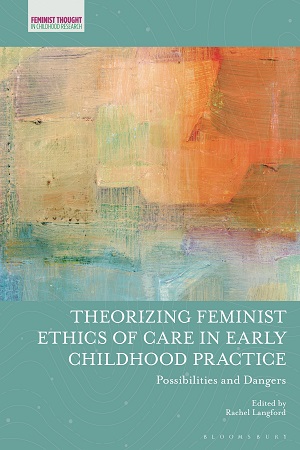
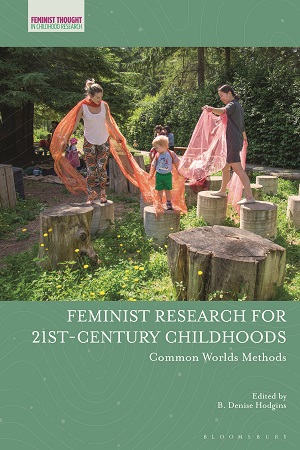
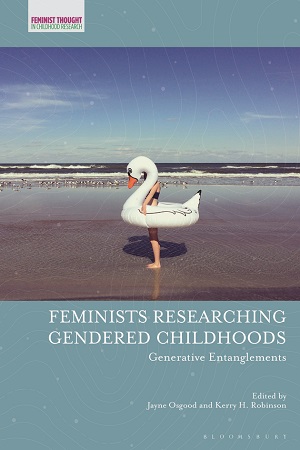
Edited by Professors Jayne Osgood (Middlesex University, UK) and Veronica Pacini-Ketchabaw (University of Western Ontario, Canada) and published by Bloomsbury Academic, the series will be launched at the Gender and Education Association conference on Thursday 27th June at 12pm in Portland Building, Room 2.33abc. All conference attendees are very welcome to bring their lunch and come along to the launch for the chance to find out more about the series as well as opportunities to contribute to it.
Drawing on feminist scholarship, this series explores the
use of creative and experimental modes of researching and practising in
childhood studies. Recognising the complex neo-liberal landscape and worrisome
spaces of coloniality in the 21st century, books in the series provide
a forum for cross-disciplinary, interdisciplinary and transdisciplinary
conversations in childhood studies that engage feminist decolonial,
anticolonial, more-than-human, new materialisms, post-humanist and other
post-foundational perspectives that seek to reconfigure human experience. The
series offers lively examples of feminist research praxis and politics that
invite childhood studies scholars, students and educators to engage in
collectively to imagine childhood otherwise.
The series editors welcome proposals for new books – both authored
and edited collections, from early career and established scholars – addressing
past, present and future childhood research issues from a global context.
Delegates of the GEA Conference 2019 will also have the opportunity
to receive 35% off the first three books
in the series – so look out for a discount flyer in your delegate pack!
If you have any questions or comments about the series, you can
contact the series editors or publisher:
Jayne Osgood, j.osgood @ mdx.ac.uk
Veronica Pacini-Ketchabaw, vpacinik @ uwo.ca
Publisher: Mark Richardson, mark.richardson @ bloomsbury.com
If you are attending conference, let us know on Twitter using the hashtag: #GEAconf2019
This post is part of the Countdown to Conference (C2C) series. We would love to feature a brief blog post from you too! Visit our main Countdown to Conference page for details! For more information about #GEAConf2019 visit the conference website
Join us for the free pre-conference day for the Gender and Education Association international conference. Anyone can join, whether or not you are joining us for the rest of conference.
International Teacher Symposium, University of Portsmouth, Monday 24th June 2019
All are welcome. The event is especially organised for teachers, education leaders, and education researchers. The full day event is scheduled for 9:30am-6pm. For event details, including session times, please visit the conference website
Keynote and Workshop: Becoming resource-ful: the making and mattering of creative activisms to address gender and sexual violence, Professor Emma Renold, Cardiff University
Workshop: Beyond Awareness: Breaking Implicit Bias Habits, Dr Jessica Gagnon, University of Portsmouth & Dr Arif Mahmud, University of Roehampton
Celebrating Differences: Whole School and Community Approaches to Supporting LGBTQ+ Students, Aaren-James Martin & Sarah Jolliffe (Portsmouth Pride), Josh Breach (Portsmouth City Council), & Jo Morgan (Portsmouth Grammar School)
Engaging Boys and Men as Agents of Change in #MeToo: Powerful Pitfalls and Possibilities, Professor Michael Kehler, University of Calgary, Alberta, Canada
Teaching Feminist Digital Writing and Activism on #MeToo, Sexism, and Racism, Ileana Jiménez, Teachers College, Columbia University, New York USA
If you are attending, let us know on Twitter using the hashtag: #GEAconf2019
This post is part of the Countdown to Conference (C2C) series. We would love to feature a brief blog post from you too! Visit our main Countdown to Conference page for details! For more information about #GEAConf2019 visit the conference website
C2C: Keynote Speaker Professor Emma Renold Twitter:@EmmaRenoldand@agenda_matters Keynote Date: Monday 24th June (FREE Pre-Conference Day)
Keynote and Workshop Title: Becoming resource-ful: the making and mattering of creative activisms to address gender and sexual violence
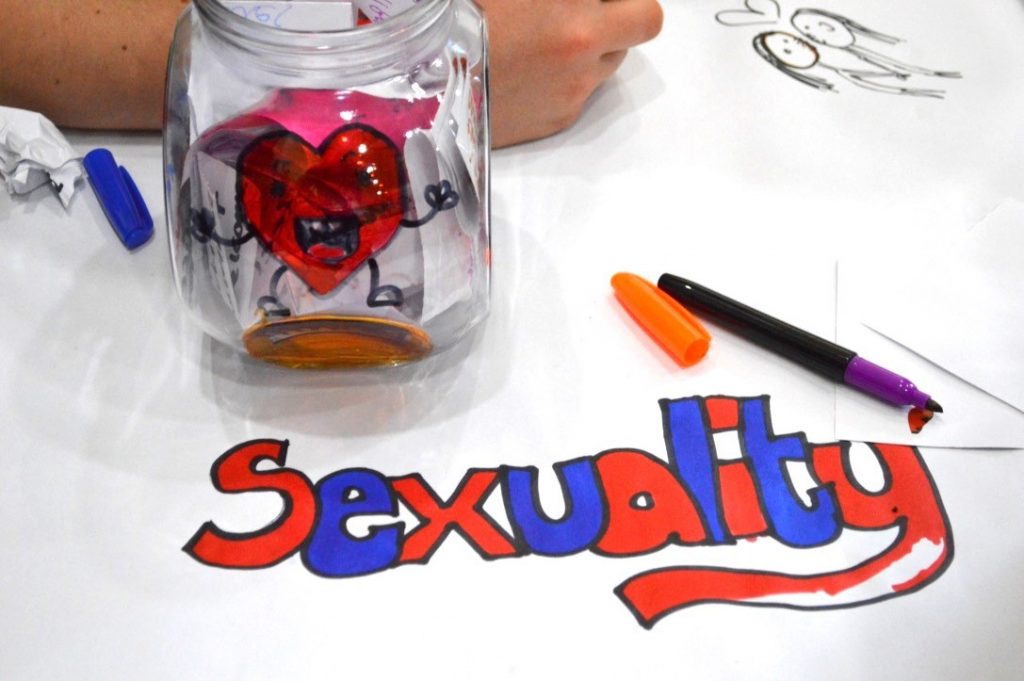
Abstract: This session shares the making and mattering of AGENDA: A Young people’s guide to making positive relationships matter (www.agenda.wales, Renold 2016). AGENDA was co-created with young people for young people, and started out as a bi-lingual, 75 page activist resource to address gender-based and sexual violence. Since 2016 AGENDA has expanded into an online resource for practitioners and young people with additional new case studies and activities from England and Wales across both primary and secondary sectors (see www.agendaonline.co.uk).
AGENDA is all about creating art-ful
encounters that make space for young people to learn about gender-based and
sexual violence in relations/hips through the rule-bending and rule-breaking
practices of others. Carefully designed, it connects fields of practice
together that are often estranged through divisive curricula (e.g. arts,
science, humanities) or policy terrains (e.g. anti-bullying, children’s rights,
violence against girls and women, safeguarding). Inspired by the Latin origins
of activism (actus: “a doing, driving force, or an impulse”) AGENDA invites
young people and their practitioner allies to learn and do something about what
matters to them in the context of social justice, rights, equalities and
diversity. From equal pay and poverty to misogynoir, street harassment and
LGBTQI rights this resource lifts the silence on issues so often skirted over
in schools with over 30 examples of creative change-making practices sourced
from local and global youth activist stories and local case studies.
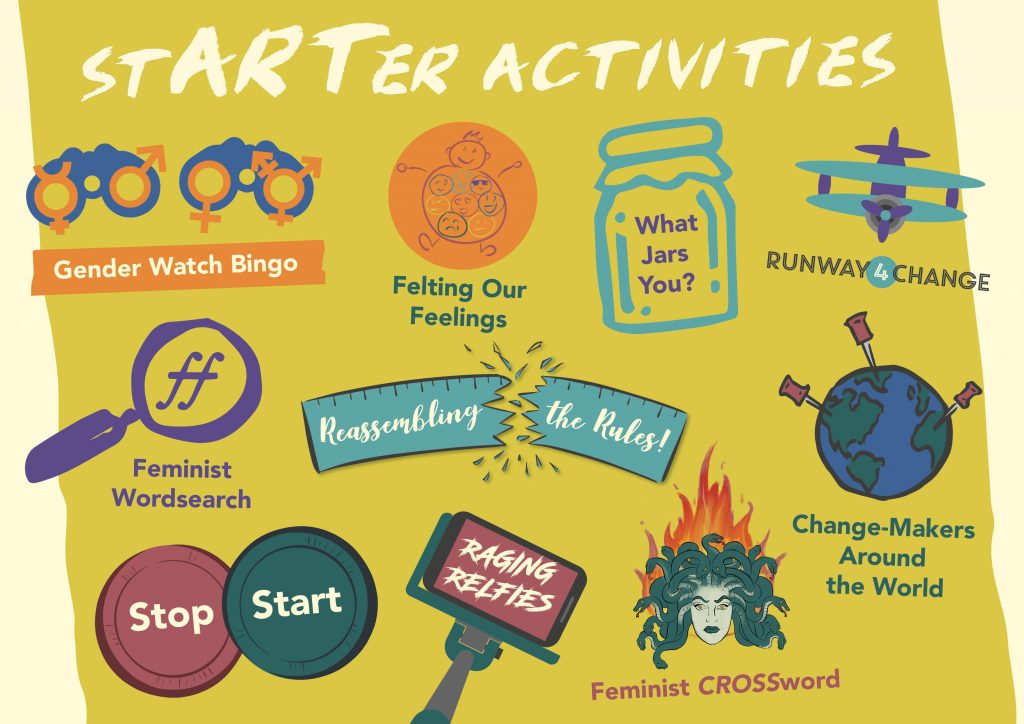
Creativity, transformation and affirmation are the heart-beat of the resource – processes that have been developed over years of experimenting with participatory research-engagement-activisms, inspired by queer/feminist materialist and posthuman scholar-activism, particularly within the field of gender and sexuality education (e.g. Taylor & Ivinson, 2013, Coleman & Ringrose, 2013; Taylor & Hughes, 2016; Allen & Rasmussen, 2017). Ringrose, Warfield and Baradisi, 2019, Osgood and Robinson 2019, Taylor, Jones and Coll 2019). The aim of this session is to share some of this process through film, images and artefacts and invite participants to try out some of the AGENDA stARTer activities. Throughout, there will be plenty of opportunity to explore the challenges and affordances of how to become more crafty and resource-ful in mobilising creative activisms and pedagogy for addressing gender and sexual violence, and making Relationships and Sexuality Education matter in new ways more widely.
Bio: Emma Renold is Professor of Childhood Studies at the School of Social Sciences, Cardiff University, Wales. She is the author of ‘Girls, Boys and Junior Sexualities’ (2005), Children, Sexuality and Sexualisation’ (with Ringrose and Egan, 2015) and co-editor of the book series “Routledge Critical Studies in Gender and Sexuality in Education”. Inspired by feminist, queer and new materialist posthumanist theory, her research investigates how gender and sexuality come to matter in children and young people’s everyday lives across diverse sites, spaces and locales. Here, (see www.productivemargins.ac.uk) she has explored the affordances of co-productive, creative and affective methodologies to engage social and political change with young people on gendered and sexual violence, including the co-production of the creative-activist resource for young people and practitioners, ‘AGENDA’ (see www.agendaonline.co.uk). In 2018 Emma was winner of the ESRC Impact in Society Prize – a landmark achievement for how feminist-queer qualitative research-activisms can inform policy and practice.
Watch the ESRC video of Professor Renold’s research, ‘Transforming Relationships and Sexuality Education in Wales’:
If you are attending conference, let us know on Twitter using the hashtag: #GEAconf2019