This post is part of the Countdown to Conference (C2C) series. We would love to feature a brief blog post from you too! Visit our main Countdown to Conference page for details! For more information about #GEAconf202 visit the conference website.
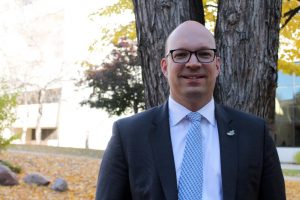
C2C: GEACONF2020 Keynote Speaker Kristopher Wells
Dr. Kristopher Wells is a Canadian Research Chair and Associate Professor in the Department of Child and Youth Care, Faculty of Health and Community Studies at MacEwan University in Edmonton, Alberta. Dr. Well’s research specializes in sexual and gender minority youth, education, health, sport and culture. He serves as the co-editor of the International Journal of LGBT Youth, which is the world’s leading research publication on LGBT youth. He is also the co-author of Growing into resilience: Sexual and gender minority youth in Canada (University of Toronto Press).
Dr. Wells is one of the driving forces behind the creation of many ground-breaking initiatives including Pride Tape and NoHomophobes.com. These initiatives have been featured in more than 50 published articles and have gained national and international attention. Additionally, Dr Wells has served as an expert scientific consultant to the Federal Government of Canada, Canadian Senate, Canadian Teachers’ Federation, RCMP, Public Health Agency of Canada, UNESCO, World Health Organization, and many other provincial and municipal governments across Canada.Dr. Kris Wells’ commitment as an educator, researcher, and advocate for gender equity and equality will certainly provide a highlight spotlight session you will not want to miss. Dr Wells’ work within LGTB communities exemplifies the GC3 theme for this conference. Dr. Wells’ ability in connecting theory to practice in the community through his Pride Tape and No Homophobes initiatives shows how thecomplexities of gender research can be done collaboratively with public and government officials.
This post is part of the Countdown to Conference (C2C) series. We would love to feature a brief blog post from you too! Visit our main Countdown to Conference page for details! For more information about #GEAconf202visit the conference website.
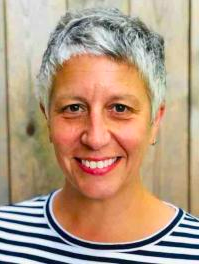
C2C: GEACONF2020 Keynote Speaker Jessica Fields
Dr. Jessica Fields is Director of the Interdisciplinary Centre for Health & Society and Professor of Health Studies and Sociology at the University of Toronto Scarborough. Fields’ research focuses on racialized and gendered discourses of vulnerability and risk. Fields is the author of Risky Lessons: Sex Education and Social Inequality (Rutgers), which received the 2009 Distinguished Contribution to Scholarship Book Award from the American Sociological Association’s Race, Class, and Gender Section and is currently completing another book, Problems We Pose: Feeling Differently about Qualitative Research (University of Minnesota Press), in which she welcomes emotion and feeling as a source of insight—not an obstacle to understanding—into the racialized, gendered, and sexual inequities that compromise health and well-being.
Fields leads The Beyond Bullying Project (with Drs.Laura Mamo, Nancy Lesko and Jen Gilbert and funded by the Ford Foundation), a community-based storytelling project that interrogates policymaking that challenge perceptions of LGBTQ sexualities and youth as problems and consider what is required for sexual health education to open up to the uncertainty, discomfort, and pleasure of learning from and about LGBTQ sexuality and lives.
Fields commitment and scholarship which interrogates educational conditions for learning as well as focusing on barriers experienced by marginalized communities will provide for a provoking spotlight session. Engaging in a dialogue on the complexity of gender through a collaborative approach to dismantling the barriers through her work by connecting theory to practice, will provide attendees with informative and practical ways to be more genderly inclusive within education.
Are you a teacher, youth worker or academic who has been inspired by the story of AGENDA: A young people’s guide to making positive relationships matter and put it to work in your setting? If so, we would love to hear from you. Professor Emma Renold and colleagues behind the AGENDA resource are currently seeking participants for a research project assessing its reach and impact.
Co-created with
young people for young people, AGENDA started out as a bi-lingual, 75-page
activist resource to address gender-based and sexual violence. Since 2016
AGENDA has expanded into an interactive online resource for practitioners and
young people with additional new case studies and activities from England and
Wales across both primary and secondary sectors (see www.agendaonline.co.uk).
It is a timely
resource as relationships and sex education is poised to become
compulsory in England and Wales. The AGENDA resource provides practitioners with a range of
interactive and accessible activities to support children and young people to
safely and creatively speak out on issues that matter to them. It is a resource
that is designed to be adapted, therefore we are keen to understand how the
resource is being used to develop whole school approaches to positive
relationships and RSE provision, as well as the challenges and barriers that
practitioners face when putting the resource to work in their settings.
We are inviting practitioners to complete this short survey about their experience with AGENDA. In addition, we are looking for practitioners who might be willing to participate in a follow-up interview to enable us learn more about different experiences of using and adapting the resource, as well as the challenges faced.
We hope that this study will help identify areas where
additional support is needed and inform the future development of the AGENDA
resource. If you are interested in participating in the Educating AGENDA
research project, or would like to find out more about the study please e-mail marstonke@cardiff.ac.uk.
Gender and Education Association International conference,
Hosted by the University of Calgary, Werklund School of Education
June 15th-18th, 2020
Call for Papers
CfP deadline: 30th November 2019
The Gender and Education Association is seeking contributions to our 2020 International Conference, hosted by the Werklund School of Education at the University of Calgary.
The 2020 GEA conference theme, Gender Complexity, Collaboration, Connectedness (GC3), reflects on the pillar of gender as a central identifier in education. The primary goal this year is to provoke conversations attentive to the complexity of gender particularly as it relates to the current social, political context. The (dis)locating identities from a gendered lens speaks to the diverse and complex ways people are positioned, counted and made to matter through empowering and dis-empowering practices and knowledges. Nationally, internationally and locally we are witness to Calls to Action and the need for respectful dialogue across communities for greater intercultural understandings. We are in the midst of a troubling and troubled landscape wherein identity politics are used and misused.
The conference will be responsive to and reflective of the ways in which gender is complexly located within education. The complexity of gender points to the intersectionality and the matrices of power associated with gender in education. This conference will variously address the messiness of gender in the practical and theoretical realm with consideration of the implications this has for those in education as well as those outside of education.
It is also a conference that will address collaboration both in the purest sense in which gender is a collaborative process through which we are authored and co-authored as well as in the broader sense that feminists engage in collaborative research and activism to disrupt normative ideologies. Collaboration is highly valued and promoted and in fact, during this conference our team will endeavor to promote opportunities for collaboration and community, spaces and places throughout the conference that prompt dialogue and nurture national and international collaboration.
Finally, this conference is intended to speak to the connectedness possible when theory meets practice. A significant component of this year’s conference is the ways that theory informs and provides for practical implications particularly in education.This conference will showcase the complexity of gender in education at a time when mainstream rhetoric and the politicization of identities may in fact need it the most. This conference will dislodge deeply held views and understandings from the us/them, win/lose, he/she renderings of education realities and instead invite, nurture and encourage collaborative non-exclusionary understandings for a more fluid frame of reference with/in education. Navigating the theoretical and pedagogical, this conference is designed to open dialogues to collaboration.
A number of conference speakers have been confirmed:
I am Natasha Richards, a doctoral student at the University of Essex. The 2019 conference was my first experience with GEA – and it was incredible. The atmosphere was extremely welcoming, every single talk/workshop I attended was intriguing and informative, and the mix of academic and social activities provided excellent opportunities for networking. I made some useful contacts and (more importantly) some wonderful friends.
One of the standout sessions for me was on the first day with keynote speaker Professor EJ Renold. Their depictions of new research methodologies encouraged me to see and think differently within my own research. They highlighted the struggles with forming research methodologies, which I have found as a Practice as Research doctoral student, and emphasised that research practice operates at the threshold of academia and activism. They suggested that using art in research methodologies reconnects us to the history of subversive activism. There is currently powerful youth activism emerging around the world, so linking research, education, and activism when working with young people is pertinent and matters. Professor Renold stated that there are currently few dedicated resources to empowering young people. They showed a video of their work with AGENDA, which utilises creative approaches to educating young people. The session linked perfectly to my own research on creative approaches to relationship and sex education. At the end of the session I felt energised and inspired.
One of the elements of the conference that I loved was the raw honesty and vulnerability displayed by many of the speakers. In the panel discussion Navigating academia: From PhD to Professor, each speaker depicted different elements of their experiences, exposing the difficulties as well as the triumphs of their career journey. I appreciated the insistence that working class academics need to learn to stop being grateful in a system that is, actually, quite exploitative. Two of the panel members, Dr Jessica Gagnon (University of Portsmouth) and Dr Carli Rowell (University of Glasgow), conducted another session on being unapologetically working class. Their words were my words. They made me feel like I did belong in an environment that was not built for people like me. They expanded on the notions of gratitude as being linked with feeling like you shouldn’t be there. I left their session feeling validated. I left feeling inspired to believe in my own voice and to value my own journey into academia.
Feeling like you do not belong in academia is not solely an experience of working-class academics though. It was encouraging to hear a diverse range of academics discussing their feelings of “imposter syndrome” throughout the conference. In the talk Uplifting gender and sexualities education research: memoirs and manifestos for early career academics, Dr Leanne Coll (Deakin University) recited stories from people working in sexuality studies. She depicted feelings of having arrived too soon or being out of time. She encouraged academics to rethink the negative. The session encouraged me to consider two important points: “The story of becoming an academic is never a singular journey” and “you must make an informed choice of what kind of scholar you want to be”.
Many speakers in the conference addressed the inequalities experience by BAME students and academics. The conference made me consider unconscious bias, the notion of white fragility, and the impact that money can have on institutions’ inclination to act on intersecting inequalities. In her powerful keynote speech Competing Inequalities: Gender, Race and White Privilege in Higher Education Institutions in the UK, Professor Kalwant Bhopal (University of Birmingham) emphasises that “money doesn’t talk, money screams”. Investment into fighting inequalities, particularly with regards to race, needs to be financially backed, and it is likely this will only happen in institutions if it directly benefits the institutions themselves.
Going
forward, I think it would be great to have a PhD student on the Executive
Members Committee, or a separate advisory group of doctoral candidates, to
bring a student voice to GEA planning and discussion and to help develop
networks which encourage and generate the exchange of information and ideas
between doctoral students and researchers at all career levels.
These are
some of the key points from the conference that I am still contemplating:
To believe in myself more
To collaborate with a diverse range of people
To feel confident to share initial research findings and gain feedback
To understand and address unconscious bias
To interrogate the extent to which my research is intersectional
To appreciate that there is no right way to do academia
To close,
I would like to encourage my readers to consider their own role in fighting
intersecting inequalities, both within academic institutions but also wider
society. In the words of keynote speaker Professor Emerita Heidi Safia Mirza (UCL
Institute of Education): “Let’s be mischief makers”.
This post is part of the Countdown to Conference (C2C) series. We would love to feature a brief blog post from you too! Visit our main Countdown to Conference page for details! For more information about #GEAConf2019 visit the conference website
C2C: Free Student and Early Career Researcher Symposium
Free pre-conference events on 24th June, part of the Gender and Education Association international conference #GEAconf2019
The event is especially organised for current university students and ECRs/ECAs (early career researchers/academics), but mid and senior career academics are welcome. Download and share the event flyer.
Topics & Speakers:
Keynote and Workshop: Becoming resource-ful: the making and mattering of creative activisms to address gender and sexual violence Professor Emma Renold, Cardiff University
Workshop: Beyond Awareness: Breaking Implicit Bias Habits Dr Jessica Gagnon, University of Portsmouth and Dr Arif Mahmud, University of Roehampton
Workshop: On Writing, Reviewing And Publishing In Peer Reviewed Journals The Gender and Education journal editors: Professor Carol Taylor, Associate Professor Susanne Gannon, Professor Jayne Osgood, and Professor Kathryn Scantlebury
Panel Discussion: Navigating Academia: From PhD to Professor Professor Jessica Ringrose, University College London; Dr Victoria Showunmi, University College London; Dr Tori Cann, University of East Anglia; Dr Arif Mahmud, University of Roehampton; Dr Jessica Gagnon, University of Portsmouth; Dr Carli Rowell, University of Glasgow
If you are attending conference, let us know on Twitter using the hashtag: #GEAconf2019
This post is part of the Countdown to Conference (C2C) series. We would love to feature a brief blog post from you too! Visit our main Countdown to Conference page for details! For more information about #GEAConf2019 visit the conference website
C2C: New initiative in Israel: The Institute for Gender Equality in Education Yael Boim Fein, Mandel School for Educational Leadership
My name is Yael Boim Fein, and I was born a raised in Israel. I am a feminist activist, a feminist researcher, and an educator. I am a fellow at the Mandel School for Educational Leadership in Israel, focused on gender and education, and a member of a feminist theory research group in the van leer institute in Jerusalem. I am the founding director of the new Israeli Center for Gender Equality in education in the Society for the Advancement of Education.
Last year I participated for the first time in the GEA conference, and it was a life changing experience. Four days of constant discussion about the most burning issues in the field of gender and education, amongst an amazing group of researchers and practitioners, all with the desire to share knowledge in order to make the world a better place – so exciting! There was no doubt in my mind that I want to come again, this time to share my own vision, and to think together of the ways we can form a better interplay between research and practice, and share knowledge on an international scale.
As a fellow at the Mandel School for Educational Leadership, my focus was exploring why, despite the extensive research done in the field of gender and education, pointing out the various ways in which the education system preserve gender inequality, and the way gender roles limits girls and boys ability to develop more fully, the education system is not changing. That question might sound naïve, but my intention was to identify the key factors for the lack of systematic change, in order to find the way to promote one, using public policy analytical framework. Meaning that my goal was to identify factors that can be opportunities for change.
In
the coming GEA conference session I will describe some of the current Gender
Equality issues in Israel, point out the key factors that can be opportunity
for change in the education systems, focusing on the interplay between research
and practice.
I invite you to a discussion focused at generating new ways to make research a better tool in the service of education, asking what theoretical questions and methodologies would be most fruitful for promoting change on one hand, and on the other hand, seeking for ways to use practical knowledge emerging from existing research.
If you are attending conference, let us know on Twitter using the hashtag: #GEAconf2019
This post is part of the Countdown to Conference (C2C) series. We would love to feature a brief blog post from you too! Visit our main Countdown to Conference page for details! For more information about #GEAConf2019 visit the conference website
In addition to the launch of the series Feminist
Thought in Childhood Research at this year’s Gender and Education
Association conference (details of which can be found in this
blog post), Bloomsbury Academic is delighted to announce a further related
new research series that is also open to proposals for new books.
The Bloomsbury Gender
and Education series is co-edited by Marie-Pierre Moreau (Anglia Ruskin
University, UK), Penny Jane Burke (The University of Newcastle, Australia) and
Nancy S. Niemi (Yale University, USA).
This series publishes rigorous, critical and original
research exploring the relationship between gender and education in a range of
institutional, local, national and transnational contexts. Books in the series
will cover a range of issues, themes and debates of key interest in
contemporary societies and will be relevant to an international and diverse
readership. The series will contribute work that speaks to key contemporary
themes, debates and issues and to theoretical, methodological and empirical
concerns in the field.
Themes explored across the series will include:
attention to gender in relation to schooling,
tertiary education and lifelong learning
digital and social media
educational policies and practice
gendered and sexual violence
gender identities and sexual orientation.
As such it is an essential resource for academics and
researchers working in fields including gender and education, sociology and
gender studies, as well as all those interested in gender issues and social
justice more broadly.
If you have any questions or comments about the series or
would like to discuss contributing, you can contact either the series editors
or publisher:
If you’d like to be kept updated on this series as it develops, as well as to receive news and special offers on other books and publishing opportunities from Bloomsbury, why not sign up to their Academic Education e-newsletter? It’s quick and easy and you can unsubscribe at any time using the link in the footer of any email.
If you are attending conference, let us know on Twitter using the hashtag: #GEAconf2019
This post is part of the Countdown to Conference (C2C) series. We would love to feature a brief blog post from you too! Visit our main Countdown to Conference page for details! For more information about #GEAConf2019 visit the conference website
C2C: Non-Binary at Conferences Dr Francis Ray White, University of Westminster Twitter: @nbinhe
I’m looking forward to what will be both my first GEA conference, and the first time presenting a paper on the Non-Binary in Higher Education research project. My co-researchers Jennifer Fraser (University of Westminster), Raf Benato (City University), and I are conducting this project with the aim of better understanding how non-binary people, that is folk with gender identities that fall outside the male/female binary, move through higher education as both staff and students. More than that, we want to imagine what higher education, its institutions, its curricula, its teaching practices, might look like beyond the gender binary. Our project is ongoing and will include public events, skills sharing, interviews with staff and ‘future dreaming’ sessions with students.
Our GEA paper will start to discuss the findings from our recent online survey which was completed by over 350 non-binary higher education staff, students and alumni in the UK. An initial overview of the survey findings has started to reveal some of key struggles for non-binary people navigating higher education. Most of these reflect experience on the margins of cultural intelligibility – the lack of language, the lack of understanding, the lack of space (literal and metaphorical) in which to exist, the constant post-binary gender chore of explaining oneself to administrators, students, colleagues or tutors. Experiences often reflect the wide variation in the steps institutions have taken towards recognising and making space for people to be something other than male or female as they work or study. But, while there are the horror stories, there are also glimpses of what it is possible to carve out, both in the classroom and beyond, to make being non-binary possible in higher education today.
Our desire to do this research has undoubtedly come in part from our own experiences as non-binary and genderqueer academics who know only too well the ins and outs of university administrative systems and the day to day expectations, misreadings, misgenderings and the subtle and not so subtle erasures that shape non-binary life. Despite nearly eight years as an out non-binary academic this is still a daily reality for me, and one which I am still working out how to intervene in effectively. The irony of being the non-binary person who stands up in front of a conference to talk about being a non-binary person in higher education is that I don’t have the answers and can’t tell you how to avoid the pitfalls because I’m usually in one at the time!
Added to that, negotiating the academic conference itself offers up a whole other range of potential challenges. Although we haven’t specifically focused on conferences as an aspect of non-binary academic life in our research, I have always encountered them as curiously fraught spaces. It was actually attending a queer conference in Berlin back in 2010 that not only introduced me to someone using gender-neutral pronouns in real life for the first time, but helped bring in to focus my own need to re-name both myself and my gender. The thing about conferences is they often literally involve labels in the form of the ubiquitous conference name badge. Appearing under my unambiguously gendered former name at this conference felt particularly suffocating, the name tag failing to adequately capture either the kind of queer I felt I was, or the deep ambivalence I felt about the gender it signified. I’m not saying I only subsequently changed my name so I could have it on name badges at academic conferences…but I’d be lying if that wasn’t part of it!
Even with my more ambiguous name proudly printed on my name badge, conferences are still an unknown quantity for the non-binary attendee; will there be pronoun stickers? Will there be a gender-neutral toilet? Is it going to be the kind of gender conference where gender means women and everyone assumes you are one (even if you’ve shown up to give the talk on non-binary)? I’ve been both delighted and disappointed over the years and suspect that will be the case for many years to come.
For more information on the Non-Binary in Higher Education Research Project please see our website: https://nbinhe.com or follow us on Twitter: @nbinhe You can also email us at: NonBinaryinHE @ westminster.ac.uk
If you are attending conference, let us know on Twitter using the hashtag: #GEAconf2019
This post is part of the Countdown to Conference (C2C) series. We would love to feature a brief blog post from you too! Visit our main Countdown to Conference page for details! For more information about #GEAConf2019 visit the conference website
C2C: ‘I don’t think my sexuality would come into it at all’: Understanding Australian LGBT trainee teachers’ expectations Dr Kate Russell, University of East Anglia Twitter: @DrKRussell
I find it hard to identify myself as a researcher at times; I have a Psychology degree, a PhD in Sport Psychology and publications in body image research, child protection, teacher training, and the sociology of gender and sexuality in sport and education contexts. I have taught in Psychology, Sports Science, teacher training, and Education departments and shared my love and interest for all of these things wherever I have been.
My PhD in Sport Psychology looked at the participation motivation of female rugby players, netballers and cricketers. I focused on how body satisfaction influenced their identity within the sport and how the functionality of their bodies (as related to the ability to complete the requirements of their sport) factored heavily in this. I also found that body satisfaction was transient; many of the women who were initially positive about their body shape and size on their field of play, were often very negative about their bodies once they were in a social context. The frame of their judgements shifting from a performance oriented to a presentation mode that created a tension for them. Identity and gender have always been central tenets for me in my work.
In 2007, I emigrated to Australia to start a new life and to begin work as a teacher educator on a Health and Physical Education undergraduate training course. While I continued to research gender representations in elite sport there, I also began a new research focus on trainee teachers. I have been influenced heavily by the work of Tanja Ferfolja and Kerry Robinson in relation to the role of gender and sexual diversity training for trainee teachers in helping support their work with future pupils. Along with researchers like Harris and Gray, they have also focused on LGBTQ+ qualified teachers experiences in schools and the difficulties that many have faced but I was keen to focus more on the trainee experience. I was intrigued about the development of teacher identity and how/if sexual and gender diversity might influence ongoing thoughts about how to be a teacher.
My project (that I am presenting on at the conference), examined the experiences of 12 LGBT identified trainee teachers through their courses but also about what their hopes were for a teaching future. I was keen to explore if they felt that their gender and/or sexual diversity would/could/should influence the type of teacher they saw themselves becoming and how they would negotiate this in the heteronormative school climate. In New South Wales, where I was located, there is an exemption to anti-discrimination laws that means that religious schools can claim the right to refuse to hire, or to fire, an employee on the basis of their sexuality or gender identity and I wanted to know how LGBTQ+ trainees saw that. Faith based schools proliferate the Australian school system and was a destination of choice for many trainees – including those who identified as LGBTQ+. I have employed Janet Alsup’s Borderland discourse, as well as post-structural readings of the trainees stories to help frame the tensions identified; how they sought to negotiate the professional with the personal in a space where heteronormative dynamics take prominence and how difficult decisions needed to be made about where to teach in the future, what to hide, and how to live an open life. I argue that teacher training institutions need to do more to bring sexual and gender diversity into their classrooms to encourage (difficult) conversations about gender and sexual diversity, trainee teacher identity development and future aspirations. When some teacher educators espouse the mantra that teachers should keep the ‘professional and personal separate’, this feels very problematic or naïve at best. LGBTQ+ trainee teachers do not and will not live or work in a vacuum and these trainee stories show that there needs to be an open discussion about this as we train the next generation of teachers.
If you are attending conference, let us know on Twitter using the hashtag: #GEAconf2019