handwritten 'once upon a time' on paper with pen

How to Teach Fairy Tales as a Feminist 

By Sara Turnbull – Doctoral Researcher at Lancaster University 

“Fairy tales”. Scanning the curriculum for my first teaching job, those two words triggered immediate dread and despair. As a fierce feminist, my inner siren was screeching. Did I really abandon a career in economics to reinforce outdated, heteronormative gender roles? I did not want to teach stories where a woman’s sole talent is being beautiful, consent is non-existent, and young boys are taught that emotional suppression equals bravery. 

However, as I was contractually bound to the curriculum, I had to find a way forward. That was over a decade ago. Today, I’ve come to the realisation that fairy tales aren’t a feminist educator’s worst nightmare but rather a tool for encouraging early activism.  

When we give young learners permission to fully engage with these stories, they instinctively question what is fair and unfair. When I ask why the princess had no choice, twenty hands go up in the air.  If you want to use a problematic curriculum to your advantage, here are three practical steps to bring traditional tales up to date. 

1. Don’t ban the book, change the questions 
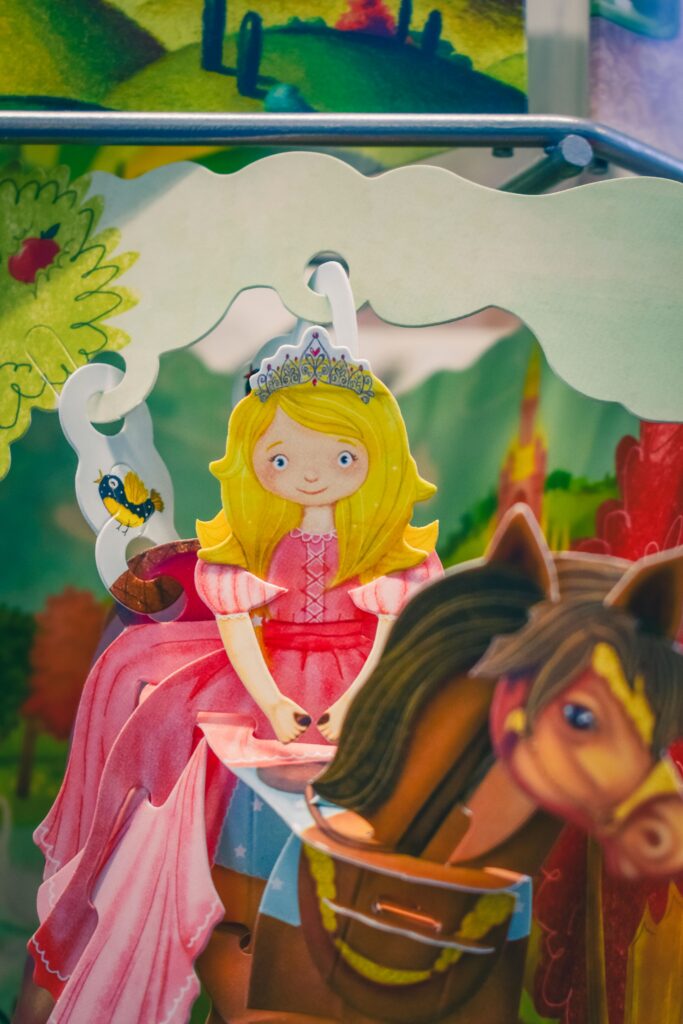
paper princess (white, blonde hair, femme) on a horse

Instead of banning traditional stories, we as educators can use them as a starting point for critical thinking. Young children love the magic behind fairy tales and that engagement serves as our hook. Once students are fully engaged  introduce targeted questions that challenge societal norms. You can ask questions such as “Why does the prince get to make all the decisions?”, “Is beauty a requirement for being a good person?” or “What if the princess saves herself, or does the prince need rescuing?”. You will find that children are just as outraged as you are, often instantly spotting  structural unfairness. 

2. Validate Students’ Concerns 

During a breakthrough moment in my classroom, I realised that children were naturally questioning these scenarios. We were reading Sleeping Beauty, and the moment the prince kissed her without asking, a little boy shouted out, “That’s a stranger! You’re not supposed to touch people when they are asleep!”. It completely stopped the reading. Whenever we read stories, they routinely asked questions such as “Why don’t they have jobs? Is she crazy marrying a man she doesn’t know?”. When students ask questions and voice concerns, don’t brush them off to finish the book or keep up with the timings of the curriculum. Instead, pause and let them lead the discussion. When we allow our students to steer the conversation, we show them that their instincts about justice are correct and they shift from passive listeners to agents of change. 
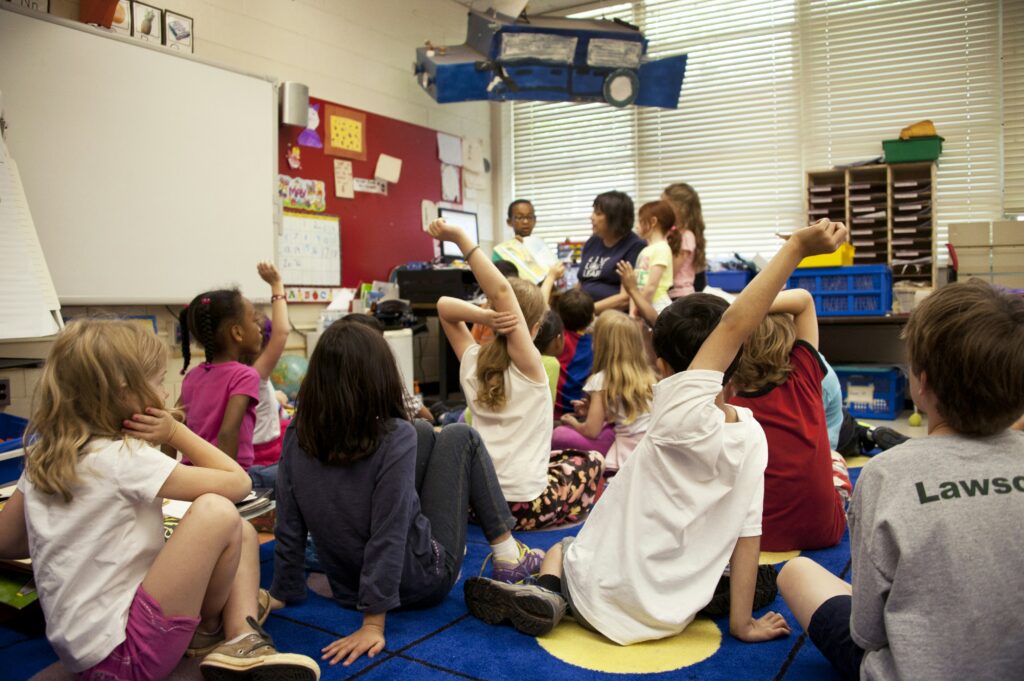
a classroom of engaged young learners

In my own classroom, I have introduced further activities whereby students have a bell and when we are reading a traditional tale, they ring the bell whenever they notice something unjust. We pause throughout the story to unpack our thoughts, feelings, and the wider systems that make these situations seem normal. Overall, we can use their scepticism  to initiate open discussions on real-world issues such as consent, racism and rigid gender conformity.

3. Introduce Counter-Narratives 

Pair traditional tales with unconventional, modern adaptations to show students that narratives can be rewritten. Use classic feminist texts such as Robert Munsch’s The Paper Bag Princess, where Princess Elizabeth rescues an ungrateful and judgmental prince and then promptly ditches him to flee with the dragon, to dismantle female submission. To support boys, introduce stories such as The Story of Ferdinand, the gentle bull who prefers to smell flowers rather than fighting, to explicitly validate that boys do not have to be aggressive or tough to be the hero.  
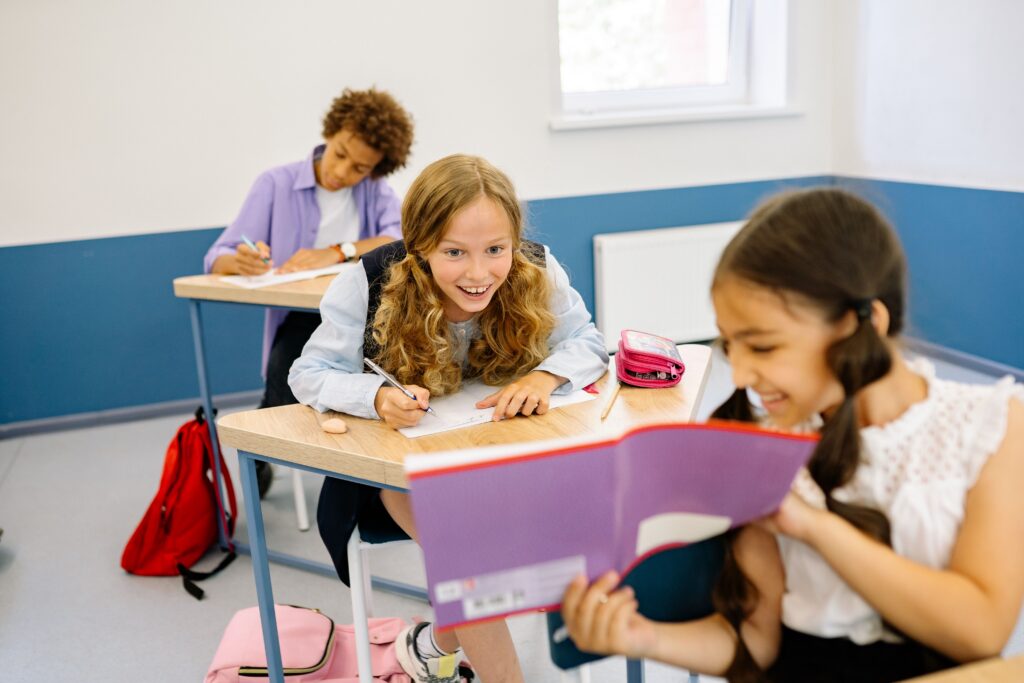
children in classroom share work

Students can take a traditional story and rewrite the ending, giving them a chance to go from passive listeners to agents of change.  

Thirteen years ago, I thought teaching fairy tales would be a professional life sentence. Today, I see them completely differently. They provide a safe space where young children can explore the vital skills of challenging societal norms. As feminist educators, we will always encounter lessons and materials that conflict with our personal morals, but this is where the real work begins. By being open and inviting our students to question, speak up, and flip the script, we can help ensure their own happily ever after is one of their own choice and making. 

Images:

Image by Fathromi Ramdlon from Pixabay
Picture by Chris F from Pexels
Photo by CDC on Unsplash
Photo by Yan Krukau on Pexels

Want to write for us? Find out more here!
two smiling young Black girls smiling at each other

Black Girlhood in Europe Symposium 2026 – Are you Down? 

By Dr Silhouette Bushay

A young Black girl in a red top

It is astonishing that a conference on Black British Girlhood Studies was convened for the first time in Britain in 2025, and we support and applaud this shift and look forward to many more – nonetheless, this truth is telling of the intellectual and political space that we are in. It also reflects a wider issue of epistemic whiteness and neocolonial violence which permeates and bolsters academic and wider institutional practices and agendas. For Black girls, their communities/families, and Black girlhood orientated scholars, researchers, practitioners, and professionals, the field is unsupported and requires research, funding, and more coordination and movement to build momentum, and consequently, drive progress. 

a young Black girl typing on a laptop

In recognition of the work that is required to contribute towards building the field of Black Girlhood Studies in Britain and other countries in Europe, Black Girl Streams C.I.C. is launching the Black European Girlhood Studies Association (BEGSA) which is also convening/co-hosting Black Girlhood in Europe Symposium 2026 – Black Girlhood at the Intersections: Health, Disability and Neurodivergence, and it’s first Special Interest Stream (SIS), the Black British Girlhood – Health, Disability and Neurodivergence SIS.   

Co-hosted by the Centre for Social Change and Justice (CSCJ), and funded by the School of Childhood and Social Care, CSCJ, and Student Life at the University of East London, the main objective of the symposium is to delve into some of the complexities involved in Black British Girlhood as a site for understanding a range of ideas around race, ethnicity, culture, gender, health, community, dis/ability and neurodivergence.  It will grapple with Black girl experiences with consideration community, embodiment, and institutions such as school, social care, and technology – to name a few. 

This is an interdisciplinary discussion where Black girls (18 and over) and women, academic, practitioner, students, policy and other professionals and stakeholders are welcome to contribute and collaborate in moving the agenda forward. 

The symposium takes place on the 11th March 2026 at the University of East London, UK. 

Come join us – see our online platform for more information and to reserve your free spothttps://blackgirlstreams.com/symposium  


Follow us on social media: 
LinkedIn: https://www.linkedin.com/company/black-girl-streams/  
Instagram: https://www.instagram.com/blackgirlstreams/  
YouTube: https://www.youtube.com/channel/UCY_e9pIyMXYC_EGNZziZ3QA (launches on the 2nd March 2026)


If you have any enquiries regarding Black Girl Streams or more specifically BEGSA including the Special Interest Stream, email: info@blackgirlstreams.com  

I am Dr Silhouette Bushay, Senior Lecturer and Course Leader at the University of East London, and Founder, Executive Director and Lead Scholar at Black Girl Streams C.I.C.  

https://uk.linkedin.com/in/dr-silhouette-bushay-81419838  

Image credits:
@eyeforebony https://src.nappy.co/photo/oWGwCNU7llU-MQ4x_SjG4 
Photographer: 5DMedia https://picnoi.com/people/6566/ 
Photographer: Monstera https://picnoi.com/people/6443/

The Importance of Girl Things

Why are girl things so despised? Consider the derisive response to music girls like, movies and television shows girls watch, social networking sites girls inhabit, activities in which girls engage, and the clothes girls wear. The criticism is always snide and condescending: girl things—which appeal to, attract, star, and represent girls—are considered, at best, vacuous and, at worst, distasteful. In a 1999 article, gender and cultural studies scholar Catharine Driscoll argues anything perceived as a “girl thing” is instantly dismissed without consideration of the importance it might have in the lives of real girls. While the Spice Girls and their fans offer an infamous example of this girl-targeted derision, there are no comparable examples of bashing boy-things; no ubiquitous hatred for boys and their things. Continue reading “The Importance of Girl Things”

‘Keeping it Real’: teenage girls and everyday feminism

It is an overcast Friday in mid-October as the Cardiff University contingent (that’s us!) pull up outside a rated-but-dated business hotel in Newport; we are attending the #KeepingItReal conference for teenage girls, run by the South Wales charity Full Circle, who seek to support aspiration in young people, and as we find our way into the conference suite the atmosphere of excitement and enthusiasm is already building. A large room is decked out as if an awards ceremony is about to take place, with over a dozen huge round tables, bedecked with linen and festive balloons, arranged in front of a stage where a sound check is underway. The walls are lined with exhibitors from local charities promoting sexual health, domestic violence services, and education opportunities, and what we thought to be a big purple bouncy castle in the corner turns out to be an inflatable ‘Big Brother Diary Room’ for the teenage attendees to record their thoughts about their lives and the conference away from adult eyes. No bouncing for us then, we sigh, and set up our stall nearby.  Filling the table with pamphlets and adverts for our gender and sexualities research group, we also lay out our GEA leaflets and journal copies, later eagerly seized by both teachers and charity representatives alike. Continue reading “‘Keeping it Real’: teenage girls and everyday feminism”

Physics Education: It’s Different for Girls?

Back in the late eighties I was one of two girls out of thirty pupils in my 5th form Physics class. While girls were happy to take up the Biology and Modern Language options, in my Physics class I languished- ignored by the boys that did not care to pair up for experiments with lens and pendulums with these odd girls that had bizarrely chosen this apparently most ‘male’ of subjects. Sadly, my experience in the Physics lab mirrored that of the sports playing field. Last to be picked, my teenage love of hockey and Physics soon waned.  It seems little has unfortunately changed in the intervening decades. Continue reading “Physics Education: It’s Different for Girls?”

Bad Animals Sitting Sweetly: Some Thoughts on Naughtiness, Gender and What We Learn in School

Let it be known that my six-year-old daughter is a child rife with frolicsome mischief.  

The experience of parenting said child fostered my interest in naughty youngsters, the connections between misbehavior and personhood and how all children—especially girls– are socialized in schools. Thus socialized through behavior management practices, many are taught to equate obedience with learning and conformity with personhood. Recently I came across two different pieces in the mainstream media that piqued my interest along these lines: The first was Bill Lichtenstein’s September 9th New York Times reflection on the all-too-common strategies for ‘managing students in US schools and the second was a BBC interview with Michael Kenny, the first male graduate of Norland College.   Continue reading “Bad Animals Sitting Sweetly: Some Thoughts on Naughtiness, Gender and What We Learn in School”