Girls, Graduate Jobs and the Gender Chasm

Reports from across the world last week were claiming that we are no longer facing a gender gap but rather a gender chasm. Drawing on a new gender gap’report these articles claim that even though a number of countries see more young women going to university than young men, it is men who tend to end up faring better in employment (rising to higher levels of seniority and earning more than their female counterparts). Continue reading “Girls, Graduate Jobs and the Gender Chasm”

Modern Girlhoods: Growing up in the 21st Century

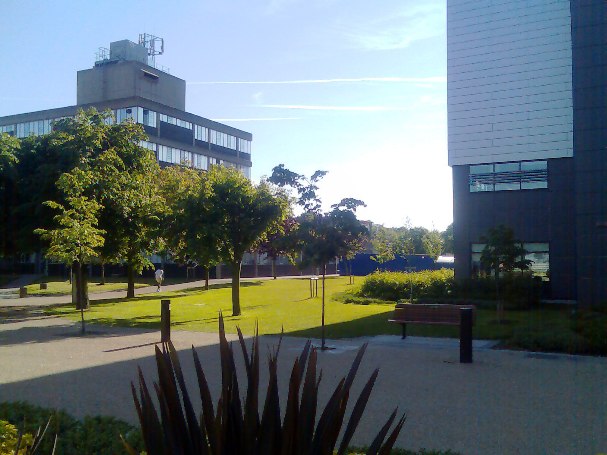
Brunel University, Uxbridge, UK
Wednesday 8th February 2012
10.30-5pm

The Gender & Education Association with the Centre of Youth Work Studies and the Educational Department at Brunel University, and the British Sociological Association’s Youth Study Group are holding a 1 day seminar on Modern Girlhoods on 8th February 2012.

Recent years have seen a growing interest in the social and cultural lives of girls within scholarly and policy literature. The theme of the day: Modern Girlhood in the 21st century, aims to be broad enough to focus on the range of public, policy and scholarly debates that focus on the lives of young women. Keynote speakers for the day include Prof. Valerie Hey (University of Sussex) and Dr Farzana Shain (Keele University). Continue reading “Modern Girlhoods: Growing up in the 21st Century”

A ‘Worrying’ Trend or a Cause for Celebration? Girls’ Exam Success at 16

Once more the gap between girls’ and boys’ GCSE results (taken at 16) has been in the UK news (the results in Scotland were announced earlier in the year and did not attract the same kind of attention). Although it cannot be said that this has been the usual slow news Summer – we have had so far the Norwegian killings, riots and their aftermath in England, uprisings in Libya and Syria, stock market turbulence etc. etc. – this is generally the time of the year when journalists are looking for a story and try to make one up with the publication of the GCSE results. It is also the time of year when straw dogs are set up to be knocked down.  In my last post I noted how lone mothers and women teachers were being blamed for the riots. Well they are also being blamed for boys’ relative lower performance compared with girls, although other factors mentioned include over-use of course-work and grade inflation. Continue reading “A ‘Worrying’ Trend or a Cause for Celebration? Girls’ Exam Success at 16”

Straight A and Okay? Researching Academically Successful Girls in the Wake of Post-Feminism

We began studying academically successful girls in 2007. Some researchers and the popular media had already been asking “What about the boys?” for over a decade, but the discourse was becoming a runaway train in the new millennium. Everywhere we looked, magazine covers and newspaper headlines anxiously suggested that girls were now the “new dominant sex,” and that their success had come as a result of a “feminized” education system and at boys’ expense. So ingrained was this panic that whenever we discussed our interest in girls’ academic success, someone would invariably ask, “Why are you studying girls? I thought boys were the ones who needed to be studied now.” Continue reading “Straight A and Okay? Researching Academically Successful Girls in the Wake of Post-Feminism”

Learner identity, space and Black, working class young women

“It’s almost like she’s two different people; one in English Literature class and another in song-writing club.  I’d like to think the second one is the true her” (English teacher, inner London post-16 college)

This comment refers to a student who appeared to inhabit very different learner identities within two distinct contexts in her college: her academic English Literature class and an extra-curricular song-writing group.  Within her English Literature class she had a reputation among her teachers for being disengaged, unproductive and sometimes disruptive; she was at risk of being removed from the course and frequently expressed her own desire to “drop out”.  Within her song-writing club, she impressed staff members with her commitment, patience and creativity; she expressed positive feelings about this learning experience and the work she was producing. Continue reading “Learner identity, space and Black, working class young women”

‘Study reveals extent of the Oxbridge divide’: Whatever happened to gender equality?

It is most remarkable that neither the Sutton Trust nor the media have noticed changing forms of inequality in access to elite universities over the last 30 years. Whilst it is true that access to Oxbridge remains highly privileged as the recent Guardian article suggests, there is a major change that has been overlooked. 2 of the 5 schools mentioned in your report have co-educational sixth forms, and a third is a girls’ school. Only two schools are single sex boys’ schools (Eton and St Pauls). Relatively equal numbers of boys and girls now access higher education, including Oxbridge and indeed girls slightly outperform boys in degree results overall. It is strange indeed that changing forms of gender equality in education are not celebrated in the rush to try to get poor or disadvantaged students into the elite universities. This is being encouraged in last week’s white paper: HE: putting students at the heart of the system. What a pity attention is not focused on trying to change the culture of the political elites who still maintain their male privilege, and continue to exclude not only the poor and disadvantaged but their middle class sisters in the higher echelons, despite their academic achievements.

Miriam David, GEA Executive