GENDER AND EDUCATION CONFERENCE – 24TH – 26TH JUNE 2015

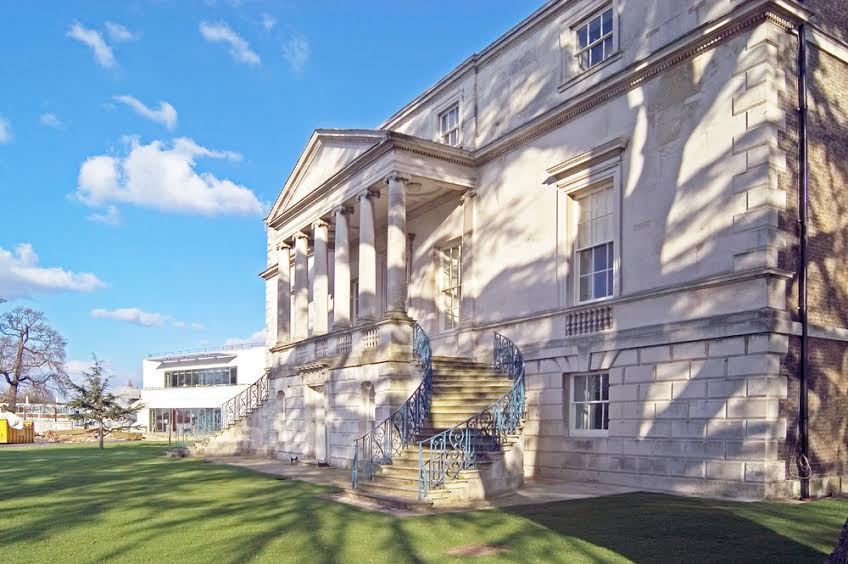
The TENTH international biennial conference of the Gender and Education Association is now less than a week away. Hosted by The University of Roehampton,  Feminisms, Power and Pedagog is sure to be an informative, engaging and thoroughly enjoyable event and we hope to see you there!

There is still time to book your place via the Roehampton events page 


Keynote speakers:
Dr Katarina Eriksson Barajas, Linköping University, Sweden
Prof. Penny Jane Burke, University of Roehampton, UK
Prof. Marília Carvalho, Universidade de São Paulo, Brazil
Prof. Farzana Shain, Keele University, UK
Prof. Lois Weis, State University of New York, USA

For more information on speakers, abstracts and programme order, please click here

CALL FOR PAPERS

We are pleased to announce the following calls for papers; all three are fantastic opportunities and promise to be exciting events!


1. Neoliberalism, work and gender education (deadline for abstracts is  6 July)

2. Distance learning (deadline for abstracts is 10 July)

3. Theorising curriculum in colour and curves (deadline for abstracts is 5 July)

TC FINAL CfP


Good luck!

images

White Working-Class Boys’ Learner Identities in Neoliberal Times

Garth Stahl, now at the University of South Australia, discusses his research in London, UK, on white working class boys. Garth’s book Identity, Neoliberalism and Aspiration: Educating White Working-class Boys is now available from Routledge.

————————————————————————————————

In recent years there has been growing concern over the pervasive disparities in academic achievement that are highly influenced by ethnicity, class and gender. Within the neoliberal policy rhetoric, there has been concern over the underachievement of working-class young males in the United Kingdom, specifically white working-class boys. The historic persistence of this pattern, and the ominous implication of these trends, has led to a growing chorus that something must be done to intervene.  However, as evidenced by Parliamentary hearing on the Underperformance of White Working Class Children in February 2014 (Select Committee on Education, 2014), the phenomenon of white working-class ‘underperformance’ is incredibly complex.

My research examines the identities of white working-class boys in school and problematises some of the barriers that are commonly (and crudely) associated with white working-class culture in educational contexts, such as lack of aspiration, parental attitudes toward school, insufficient work ethic and poor attendance (Evans, 2006; Demie and Lewis, 2010). We must consider how high levels of so-called ‘disaffection’ towards education in white working-class communities actually represent a certain struggle to negotiate an identity out of limited repertoires of social and cultural resources within these institutions. My focus is on how white working-class boys make sense of social mobility and aspiration in their school contexts and how it shapes their subjectivities (Gillborn and Kirton, 2000; McLeod, 2009).

Today’s urban youth construct their identities in ‘local/global contexts’ (McLeod, 2009) and the participants of this study are ‘working out their “place” and “legitimacy” within urban arrangements that are, at their best, residual spaces of surplus meaning pointing to previous forms of intense working-class resilience’ (Dillabough and Kennelly, 2010: 105). Such identity negotiations may result either in them ‘finding’ or ‘losing’ certain traditional working-class identities (Reay, 2001; Skeggs, 2004).

The data collection for this study occurred immediately following the financial crisis of 2007–2008 and during the July 2011 riots in London, Manchester and Birmingham. Both events shaped discourses around economic austerity, benefit culture and anti-social behavior.  The young men in my study exist in urban spaces which are continually pathologised as ‘“unfit” and undesirable’ (Archer et al., 2010) or ‘rubbish’ and ‘shit’ (Lucey and Reay, 2002). Therefore, the intermeshings of ‘place’, ‘legitimacy’ and ‘respectability’ are considered to be crucial components of both social and learner identity construction.  It has become increasingly difficult for these young males to establish a so-called ‘good life’ within an era of high neoliberalism (Stahl, 2012).

The current neoliberal discourse, which prioritises a view of aspirations that is competitive, economic and status-based, shapes the subjectivities of these young males and contributes to the formation of counternarratives. Through observation, interviews and focus groups over the course of nine months, I collected evidence which strongly indicated how boys centered their ‘identity work’ on what I call egalitarianism, an egalitarian habitus, defined as the internal process of reconciling dispositions, which allowed them to constitute themselves as ‘having value’ in the hegemonic neoliberal discourses of ‘best’ and ‘worst’ where they are often devalued.

Egalitarianism is defined through a disposition toward ‘fitting in’ and being ‘loyal to oneself’, where everyone has an ‘equal say in the world’ and where ‘no one is better than anyone else’ or ‘above their station.’  With egalitarianism, there are strong echoes here of traditional working-class dispositions toward historic, solidarist, communal values.  The boys often articulated their desire to disassociate themselves from being classified as aspirational subjects; interestingly, such disassociations came from their conceptions of their own social class and masculine identities.  As a counter-habitus to the neoliberal ideology, egalitarianism is how the boys come to understand the cards they have been dealt in life. I explore egalitarian habitus as a process of internalizing future academic failure where there are overlaps with Bourdieu’s theoretical framework of symbolic violence (Bourdieu and Wacquant 1992).

With this investigation of white working-class boys we see the tangled relationship between school structures and practices. I am interested in how social class is (re)formed through identities and historic cultural practices rather than a simple reflection of economic capital and occupations.  In investigating classed identities I consider how white working-class boys are ‘socially positioned and discursively constituted subjects within educational sites’ (Burke, 2007: 412).  Simultaneously, the research considers the influence of different discourses of aspiration that youth draw upon.

About the author: Garth Stahl (@GarthStahl) is a Lecturer in Literacy and Sociology at University of South Australia.  He is a theorist of sociology of education. His research interests lie on the nexus of neoliberalism and socio-cultural studies of education, identity, equity/inequality, and social change.  Currently, his research projects and publications encompass theoretical and empirical studies of learner identities, gender and youth, sociology of schooling in a neoliberal age, gendered subjectivities, equity and difference, and educational reform.  Of particular interest to him is exploring counternarratives to neoliberalism around ‘value’ and ‘respectability’ for working-class youth.

 References in the text:

Archer, L., Hollingworth, S. and Mendick, H. (2010) Urban youth and schooling: The experiences and identities of educationally ‘at risk’ young people. Berkshire: Open University Press.

Bourdieu, P. and L. Wacquant, 1992. An Invitation to Reflexive Sociology. Cambridge, Polity Press.

Brown, P. (2013) Education, opportunity, and the prospects for social mobility. British Journal of Sociology of Education, 34(5–6), 678–700.

Burke, P. (2007) Men accessing education: Masculinities, identifications and widening participation. British Journal of Sociology of Education, 28(4), 411–424.

Demie, F. and Lewis, K. (2010) White working class achievement: An ethnographic study of barriers to learning in schools. Educational Studies, 33(2), 1–20.

Dillabough, J.A. and Kennelly, J. (2010) Lost youth in a global city: Class, culture and the urban imaginary. New York: Routledge.

Evans, G. (2006) Educational failure and working class white children in Britain. Palgrave: Macmillan.

Gillborn, D. and Kirton, A. (2000) White heat: Racism, under-achievement, and white working-class boys. Inclusion and Special Educational Needs, 4(4), 271–288.

Lucey, H. and Reay, D. (2002) Carrying the beacon of excellence: Social class differentiation and anxiety at a time of transition. Journal of Education Policy, 17(3), 321–336.

McLeod, J. (2009) Youth studies, comparative inquiry, and the local/global problematic. Review of Education, Pedagogy, and Cultural Studies, 31(4), 270–292.

Reay, D. (2001) Finding or losing yourself? Working-class relationships to education. Journal of Education Policy, 16(4), 333–346.

Select Committee on Education. (2014) Underachievement in Education by White Working Class Children. 1st Report. Session 2013–2014. London: UK Parliament, House of Commons.

Skeggs, B. (2004) Class, self, culture. London: Routledge.

Stahl, G. (2012) Aspiration and a good life among white working-class boys in London. Journal of Qualitative and Ethnographic Research, 7(8–9), 8–19.

Wexler, P. (1992) Becoming somebody: Toward a social psychology of school. London: The Falmer Press.


Gender and economic equality in Scotland: mission (im)possible?

Unequal access to life opportunities continues to constitute a chronic impediment to education, participation in civic society and work, and health and well-being in Scotland, especially so of girls and women.

It is a striking paradox that, while the people of Scotland optimistically view their small country on the periphery of Europe as an avowedly equal and democratic polity, evidence suggests that ‘as part of the UK, Scotland is one of the most unequal countries in the developed world’ (Cooper 2014).  Irrespective of the outcome of the recent Independence Referendum, issues of inequality, poverty and disadvantage remain at the fore of a devolved Scotland.

Scotland’s wealthiest households are nearly 3000 times better- off than the poorest.  More than one on five Scottish children lives in poverty. Scots living in rich neighbourhoods can expect to live 10 to 15 years longer than Scots living in the most deprived neighbourhoods (Oxfam, in Cooper, 2014, p4).

Over 220,000 children in Scotland live in poverty and the Institute for Fiscal Studies estimates that by 2020 this number will increase by a further 100,000 (Child Poverty Action Group in Scotland 2014).  By all accounts, urgent action is needed: to understand and address inequalities, poverty and the effects of these for socio-economic marginalization, exclusion and civic non-participation in Scotland.

The transfer of First Ministerial power in Scotland’s Government in 2014 signified a renewed commitment to tackling social inequality related to economic wealth and poverty.  But is there a similar urgency, for instance, to address the issue of gender-based inequality and its complex effects for the poverty and well-being of girls and women?

Research studies conducted by the Scottish Independent Schools Project (SISP) (2006-to date) show that gender remains a salient issue for Scotland at the level of educational and social policy and governance (see e.g. Forbes, Öhrn & Weiner 2011), in schools and communities (Forbes & Weiner 2012, 2013) in learning and teaching and in the reproduction of particular practices and student embodiments (Forbes & Lingard 2013, in press).

The SISP analyses reveal markedly differentiated gender-power regimes operating in each of the independent schools investigated.  For example, a girls’ school was explicitly committed to (liberal) feminist knowledge and a research-informed approach to learning and teaching; a boys’ school sought, as a response to global market forces, to renegotiate its previous traditional, male military and sporting, gender regime so as to incorporate a wider range of cosmopolitan and urbane masculinities; and a co-educational school promoted conventional masculinities and femininities through practices predominantly of benefit to males.  Each school regime had critical effects for the research, including, for example, on ease – or otherwise – of access, research relationships, and feedback to schools (Forbes & Weiner 2013, 2014a).

The SISP research uncovered ways in which gender and other structural categories were interlinked to inequalities such as social class and economic wealth.  Also influential were schools’ historic, social and cultural identifications and the socio-economic fraction from which each school drew its current and future students (Forbes & Weiner 2014b).  So the demographic of pupils in each school varied – according to whether parents desired a ‘traditional’, ‘academic girl-centred or some other kind of education for their offspring, and/or the preferred employment destination in the professions, business and commerce, or elsewhere (Commission on Social Mobility and Child Poverty Commission 2014).

Sociologists of education have over the decades shown the impact of ‘intersectionalities’ on schooling in the maintained sector (Crenshaw 1991).  Less research has been carried out on the independent school sector in the UK generally and even less on the independent sector in Scotland.  The insights gained from the SISP studies, we propose, suggest the need for more research aimed at unravelling the operations of intersectionalities of gender, class and wealth – and other such as ethnicity and religion in independent schools, particularly in Scotland.

Reported widely, the administration of First Minister Nicola Sturgeon is now the first – and only – government executive in the UK countries in which cabinet appointments are equally shared amongst women and men.  And, in announcing the legislative programme of her government, Ms Sturgeon made it clear that a priority, indeed her ‘personal mission’, as Scotland’s first female First Minister, is to tackle social inequality.

Will First Minister Sturgeon’s first confident and progressive declarations on gender and inequalities remain rhetorical or symbolic? Or will poverty alleviation – and specifically the elimination of gender-based inequalities in the distribution of income and wealth, become the hallmark of the Sturgeon administration?

Blog post by Joan Forbes University of Aberdeen and Gaby Weiner, University of Sussex

References

Child Poverty Action Group in Scotland (2014) Child Poverty in Scotland. Retrieved 27 November 2014 from: http://www.cpag.org.uk/scotland/child-poverty-facts-and-figures

Commission on Social Mobility and Child Poverty Commission (2014) Elitist Britain? Retrieved 01 December 2014 from: https://www.gov.uk/government/uploads/system/uploads/attachment data/file/347915/Elitist Britain – Final.pdf

Cooper, S. (2014) Mission possible: tackling inequality. The National newspaper. Tuesday November 25, 2014. Pp4-5.

Crenshaw, K. (1991) Mapping the margins: Intersectionality, identity politics and violence against women of colour. Stanford Law Review, 43.6, 1241-1299.

Forbes, J. & Lingard, B. (2013) Elite school capitals and girls’ schooling: understanding the (re)production of privilege through a habitus of assuredness. In Privilege, agency and affect. Understanding the production and effects of action. Maxwell, C. & Aggleton, P. (eds) pp50-68. London: Palgrave MacMillan.

Forbes, J. & Lingard, B. (2015) Assured optimism in a Scottish girls’ school: habits and the (re)production of global privilege. British Journal of Sociology of Education, 36.1, 116-136. http://dx.doi.org/10.1080/01425692.2014.967839

Forbes, J. Ohrn, E. & Weiner, G. (2011) Slippage and/or symbolism: gender, policy and educational governance in Scotland and Sweden. Gender and Education, 23.6, 761-776.

Forbes, J. & Weiner, G. (2012) Spatial paradox: Educational and social in/exclusion at St Giles. Pedagogy, Culture & Society, 20.2, 273-293.

Forbes, J. & Weiner, G. (2013) Gendering/ed research spaces: insights from a study of independent schooling. International Journal of Qualitative Studies in Education, 26.4, 455-469.

Forbes, J. & Weiner, G. (2014a) Gender power in elite schools: methodological insights from researcher reflexive accounts. Research Papers in Education, 29.2, 172-192.

Forbes, J. & Weiner, G. (2014b) Gender sensitive research in schools: insights and interventions on gender, social class, economic wealth, and other intersections. Paper given at the Scottish Universities Insight Institute Seminar Series 2013-14: Children’s Rights, Social Justice and Social Identities in Scotland: Intersections in Research Policy and Practice. Seminar Three: Intersecting childhood identities, inequalities and social justice: Intersectionality, methods and research. The Scottish Universities Insight Institute, Glasgow, 23 June 2014.

The Smith Commission (2014) Report of The Smith Commission for the further devolution of powers to the Scottish Parliament. Retrieved 27 November 2014 from: https://www.smith-commission.scot/wp-content/uploads/2014/11/The_Smith_Commission_Report-1.pdf

Gender and Education in the Asia-Pacific: Possibilities and Provocations: a report from the Melbourne Conference

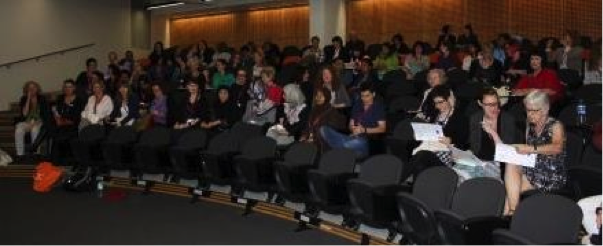
The Gender and Education Interim Conference hosted by three universities in Melbourne in December was a truly inspiring occasion.

hall

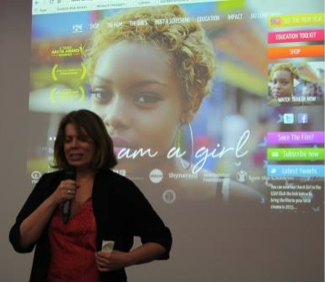
Three outstanding key notes were followed by three inspirational panels organized around Rebecca Barry’s remarkable film ‘I am a girl’; the expanding and diversifying role of digital media in education and public pedagogies; and Gender Jamming including the Australian Research Center in Sex, Health and Society.

delegates 4delegates 3

To provide just a taste of the key notes, Mary Lou Rasmussen spoke about the conundrum that, as more families are turning away from Christianity so more are sending their children to religious schools, and some of the implication this has for lifestyles and sexual freedom.  Simone Ulalka Tur shared her life and experience teaching Indigenous education topics to emphasis that curricular are highly contested spaces. For more information you can still access the Conference site here.

delegate 1 delegate 2

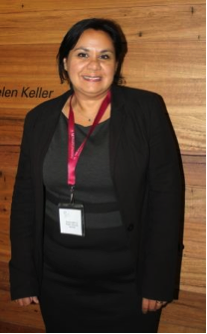
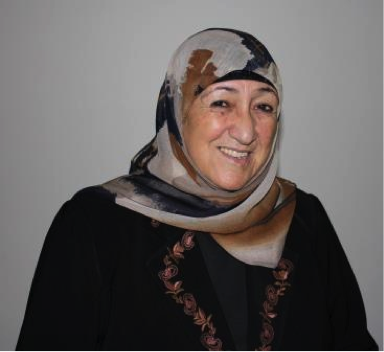
I want to highlight the work of the third key note speaker at the recent Gender and Education Interim Conference  Dr. Sakena Yacoobi and extoll members to read more about her inspirational work in developing education for girls in Afganistan under the most dangerous conditions during the rule of the Taliban.  The organizing committee of the Melbourne conference have asked that members think about making a donation to her charity, the Afghan Institute of Learning (AIL) to support this important on-going work.

yacoobi

Dr Yacoobi is the Executive Director and founder of AIL. Established in 1995 to provide grassroots education and health services, AIL has served more than 11 million Afghans and was the first organization to offer human rights and leadership training to Afghan women.  AIL has developed innovative education programs to meet the ever changing needs of Afghans, programs ranging from underground homeschools during the rule of the Taliban, to beginning Women’s Learning Centers in lieu of schools, to a new literacy class which utilizes texting to increase the rate of literacy acquisition.

Dr. Yacoobi spoke passionately about her experiences working within the cultural context of Afghanistan, finding culturally appropriate ways to bring education and healthcare to those who need it and how others might be able to apply these lessons to their situations.

delegates 5

The GEA Executive would like to thank the organisers for an excellent conference, and look forward to the next conference Gender, Power and Pedagogy, to be held in London on 24-26 June 2015, at the University of Roehampton.

Blog post by Gabrielle Ivinson

Photos provided by Penny Tinkler

Towards a politics of hope? Activism and gendered labour

In this blog post Janet Newman, Emeritus Professor at the Open University introduces her recent book Working the Spaces of Power: activism, neoliberalism and gendered labour.  She asks, in these dire times, how might it be possible to hold onto a sense of hope? And, given the collapse of trust in political parties (at least in Britain), how can we find the resources for political agency?

———————————————————————-

Whenever I look at the ‘big picture’ narratives of the rise of neoliberalism, or the exhaustion of feminism and other social movements, I lose heart. But when I talk to women trying to take their political beliefs into their working lives I regain a sense of hope – and inspiration. My own research traces how women negotiate institutional regimes to find spaces where political agency is possible. In ‘Working the spaces of power’ (Bloomsbury 2012) I draw on interviews with some 60 women over 4 generations, all bringing political expertise and experience to projects of social and economic transformation. They linked governmental programmes to community politics; worked ‘in and against the state’ in local and central government; sought to bring feminist and antiracist politics into policy reform; and brought new forms of research and action into the academy, think tanks and entrepreneurial spaces.

janet newman

Education was at the core of their work, even if not employed in the education sector. Some sought to educate civil servants and local government actors, bringing them into conversation with those directly affected by policy shifts or organising events exposing them to alternative ideas and experts. Some were involved in development projects in local communities, seeking to empower those in poverty – particularly women – to take collective action. Some worked in think-tanks, universities and research centres. Their work was flexible and creative; and of course was sometimes vulnerable to cooption by governments looking for new solutions.

But I want to explore in particular how women brought political agency into their work in Higher Education, where two rather different political strategies became evident. One concerned challenging the power relationships between teacher and student, or between researcher and research subject. The language here was of partnership, of coproduction, of involvement. Others set out to challenge hierarchies of expertise in academic knowledge; for example the turn to post-structuralism, embodiment and affect in social theory is largely down to feminist academics. Both strategies of course are vulnerable to critique: the former because of its conception of power, the latter because of its implications for solidaristic forms of politics. But that is not my point: both continue to have a transformative power in and beyond the academy.

The stories of the women I interviewed are not always of success. They faced daily negotiations with institutions and systems that were hostile, or that imposed conditions that took the politics out of their achievements (as was the fate of much of the liberal equality legislation of the past). They had periods of retreat and exhaustion, but what the interviews show is how they tended to move on to a different sphere of action rather than withdrawing from political life. They worked ‘inside/outside’, looking both ways: to their political networks that sustained them, and to the organisations that they sought to change. Such work is becoming more difficult as a result of cuts, redundancies and new forms of contract, all of which make women’s employment particularly vulnerable. But it nevertheless continues, often prefiguring new kinds of social and political action. And it is this that offers me – and I hope others- a sense of possibility, of hope.

by Janet Newman, Open University


2015 Biennial Conference of the GEA Association: Keynote speakers’ short bios and abstracts

2015 Biennial Conference of the GEA Association: Keynote speakers’ short bios and abstracts

Prof. Katarina Eriksson Barajas, Linköping University, Sweden

The Power of Fiction as a Pedagogical Tool for Eliciting Gender Discourses

My paper examines discussions of gender values in everyday life, elicited by books, film and theatre. The analysis draws on three Swedish data sets: 1) teacher-led book talk sessions that raise gender issues in small groups of pupils in Grades 4-7, 2) the use of a feature film (Lilya 4-ever, about sex trafficking) to instill gender equality values in upper secondary school, and 3) discussions of gender issues among adults after leisure-time visits to movies and theaters. The data is analyzed using a discursive approach (Edwards and Potter 1992) combined with poststructuralist feminist research on (children’s) reading (Davies and Banks 1992; Walkerdine 1990). The idea that we learn and develop fundamental values, such as gender equality, through fiction, coincides with research findings indicating that we develop empathy by reading good literature (Kidd and Castano 2013). My presentation contributes some empirical knowledge about how people are “doing equality” in natural everyday settings. The analyses show that gender stereotypes are, at times, transcended in discussions around fiction, regardless of the gender content in the book, film or play in question. Additionally, the analyses show that, even outside of educational contexts, fiction is spontaneously used by participants to address gender equality issues. The idea that fiction can open one’s mind follows Swedes throughout their education, and is apparent among adult film enthusiasts and theater-goers, and also relates to research of everyday learning and adult education (cf. Larsson 1996).

Davies, B. and Banks, C. 1992. ‘The Gender Trap: A Feminist Poststructuralist Analysis of Primary School Children’s Talk about Gender’. Journal of Curriculum Studies 24: 1-25.

Edwards, D. and Potter, J. 1992. Discursive psychology. London: SAGE.

Kidd, D.C. and Castano, E. 2013. ‘Reading Literary Fiction Improves Theory of Mind’. Science 342: 377-380.

Larsson, S. 1996. ‘Vardagslärande och vuxenutbildning’.

Walkerdine, V. 1990. Schoolgirl fictions. London: Verso.

Keywords: Every day life, popular culture, fiction, gender equality.

Katarina Eriksson Barajas is Professor of Education in the Department of Behavioral Sciences and Learning at Linköping University, Sweden. She is interested in child studies, comparative literature, discursive psychology, gender studies, and reader-oriented research. Her research focuses on needs and uses of fiction by applying a discursive approach on everyday practices concerning literature, film and theater. One such practice is the use of fiction as a didactic tool.


Prof. Penny Jane Burke, University of Roehampton, UK

Gender, Emotion and Difference

Feminist insights have contributed a richer understanding of the profound relationship between the histories of gendered subjectivity, ontology and epistemology and the vacating of the emotional from the world of the academy. In this keynote I will explore the emotional layers of pedagogic experiences not only to illuminate ‘fear as emotion’ but also ‘fear of emotion’ (Leathwood and Hey, 2009: 435). Such fear is entangled in the destructive forces of multiple political frameworks operating simultaneously to reform processes of misrecognition and symbolic violence, even as higher education policy is demanding that universities evidence inclusive practice as part of their commitment to diversity. Underpinning the hegemony of neoliberalism, meritocracy, and globalisation, and related undercurrents of misogyny, racism and classism, is the construction of ‘difference’ through fixing and pathologising identity positions. Difference and emotion are posed as dangerous forces that require homogenising and neutralising via technologies of managerialism and through the fixing of socially constructed categories. Such manoeuvres are deeply bound to moves towards hyper-individualism in which specific performative and instrumentalist models of success are being mobilised. New formations of patriarchy within neoliberalism ensure that characteristics associated with difference in HE, such as ‘being emotional’ or ‘caring’, are regulated and controlled through a range of new disciplinary technologies, including of teaching. Pedagogical relations are thus deeply implicated in the gendered politics of (mis)recognition, and profoundly connected to the impact of the emotional on the body and the self (Ahmed, 2004) and to the politics of difference. I will argue that we need to re/imagine difference not as a problem to be regulated for neoliberal processes of standardisation and homogenisation but as a critical resource to reflexively develop collective and ethical participation in pedagogical spaces. Such collective participation is not based on a notion that we can overcome power relations, but an understanding that power is complex and fluid and an inevitable dimension of pedagogical relations in which difference is and should be part of the dynamics in which we create meaning and understanding.

Ahmed, S. (2004) The Cultural Politics of Emotion. New York: Routledge.

Leathwood, C. and Hey, V. (2009) Gender/ed discourse emotional sub-texts: Theorising emotion in UK higher education. Teaching in Higher Education. Vol. 14 (4), pp. 429-440.

Key words: emotion, pedagogy, fear, managerialism

Penny Jane Burke is Professor of Education at Roehampton University, London, where she is co-Founder and Director of the Paulo Freire Institute-UK (PFI-UK) and Research in Inequalities, Societies & Education. She is also Global Innovation Chair of Equity and Co-Director of the Centre of Excellence in Equity in Higher Education at the University of Newcastle, Australia. Penny is passionately dedicated to developing methodological, theoretical and pedagogical frameworks that support critical understanding and practice of equity and social justice in higher education. Her research expertise includes gendered formations, higher education access and participation, pedagogical experiences and practices and student and professional identities. She has published extensively in the field of equity in higher education. After returning to study via an Access to Higher Education course, followed by a BA Honours and MA, Penny was awarded a full-time Economic and Social Research Council doctoral studentship from 1998-2001, which resulted in the publication of her book Accessing Education effectively widening participation (2002). Her most recent sole-authored book The Right to Higher Education: Beyond widening participation was published by Routledge in 2012. Her co-authored book Reconceptualising Lifelong Learning: Feminist Interventions (with Sue Jackson) was nominated for the 2008 Cyril O. Houle World Award for Outstanding Literature in Adult Education. Penny was recipient of the Higher Education Academy’s prestigious National Teaching Fellowship award in 2008 and she is the Access and Widening Participation Network co-Convenor for the Society for Research in Higher Education (SRHE). She is Editor of Teaching in Higher Education and a member of SRHE’s Governing Council and Publication Committee. Penny has held the posts of Professor of Education at the University of Sussex and Reader of Education at the Institute of Education, University of London.


Prof. Marília Carvalho, Universidade de São Paulo, Brazil

To move toward greater democracy in global production of knowledge

In international social science journals, including those with a feminist focus on gender, such as Gender and Education, articles about countries in the global South often show their location in their titles. In these articles, one finds explanations about the geographic and socio-economic context, the educational or political system, historical roots and so forth. But when a paper has no contextualization, and the authors use general words like girls, boys, women or teachers, then it probably comes from the metropole.

These points show some of the imbalances in global knowledge politics and despite the particular attention that gender studies developed to power relations, this situation is true also for our field. These questions have been debated for decades, all around the world, and they pointed out that the conceptual tools of metropolitan social science present themselves as universal and able to decode all societies. So the relevance of metropolitan theory and research is previously warranted by the universality from which it tacitly begins.

We, who produce knowledge from the global South, are used to translating in the broad sense of translation, which goes far beyond transferring linguistic meanings from one language to another. We are used to explaining and contextualizing, in order to make our ideas understandable. And besides translating our own texts and contexts, we also need to understand the locales in which the metropolitan research was conducted and the metropolitan theories were developed.

Behind this set of issues there is actually a wide-ranging epistemological debate about the possibility and need for universalization. But for now, I only intend to suggest a seemingly simple posture that can help us to move toward greater democracy in global production of knowledge, paying particular attention to feminist knowledge: an effort to clarify the contexts, an ongoing effort to shift towards the other, and to realize the necessary mediations to make the ideas of each one understandable for those who do not share the same cultural background.

Key words: North/South division of intellectual labor; translation; social science journals

Marília Pinto de Carvalho is Professor of Sociology of Education and Educational Policies in the School of Education at the University of São Paulo, Brazil. Her research interests focus on sociology of education, relating to gender and teachers’ work and also gender and school achievement of boys and girls. She is especially concerned with how gender, race and class work together in the context of institutional settings such as schools. Her current research is about how family socialization contributes (or not) to girls’ academic success in poor urban area schools.


Prof. Farzana Shain, Keele University, UK

Feminisms, imperialism and the ‘war on terror’  

More than thirty years ago, Amos and Parmar’s  groundbreaking paper ‘Challenging Imperial Feminism’, published in Feminist Review  (alongside other seminal works including Hazel Carby’s  ‘White women Listen’ and Mohanty’s ‘Under Western Eyes’)  sparked productive debate among feminists about the limits of ‘global sisterhood’ and about Western feminism’s uncomfortable support of imperialist interventions.   Since then, intersectionality, the concept alluded to by Amos and Parmar and later introduced by Kimberle Crenshaw to denote the multiple and interlocking systems of oppression that shape the lives of black women, seems to have been mainstreamed in academic work and policy discourse, though not without critique (Anthias, 2007).  However, the use of feminist rhetoric by Western leaders after 9/11 to justify the global ‘war on terror’ as well as some open endorsement provided by mainstream human rights and liberal feminist organisations has led to a renewed debate in the last decade about the relationship between imperialism and feminism. Drawing on the recent dialogue between US based feminists (Kumar; Toor; Tax) about the legacy of the global ‘war on terror’ for feminist politics and activism, and with a particular emphasis on the way girls and women’s rights to education have been used to justify such interventions, this paper takes a critical look at the issues to reflect on the direction that has been travelled by feminisms since the 1980s.

Key words: ‘war on terror’, feminist politics, intersectionality, imperialism and feminism

Farzana Shain is  Professor of Sociology of Education in the School of Public Policy and Professional Practice at Keele University.  Her early research  focused on the impact of neoliberalism on educational policy and practice in the further education sector in England.  More recently, her research and writing has focused on young people’s gendered, raced and classed experiences of schooling and also on young people’s understandings of the politics of oil.  She is the author of The New Folk Devils: Muslim Boys and Education (Trentham: 2011), and The Schooling and Identity of Asian Girls (Trentham: 2003), which collectively  explore the social and political identifications of young people in a schooling context in England against the backcloth of the global ‘war of terror’.


Prof. Lois Weis, State University of New York, USA

Class/Gender Formation in 21st Century United States: Probing Intersectionality in the New Upper Middle Class in Markedly Altered Global and National Circumstances

Unprecedented levels of executive compensation and finance largely drive well-documented inequalities of income and wealth, with resulting explosive growth in wealth among the top 1% in the United States, in particular (Piketty, 2014; Piketty and Saez, 2012; Saez 2013). As a consequence, the vast majority of highly educated professionals in the US and elsewhere, as well as those who inherited wealth from their parents, find their relative positions substantially eroding in relation to a class of super-rich financiers and senior managers..

This well-documented realignment has deep implications for the extent to which and ways in which relatively privileged parents strive to position their children for future advantage. Based on two years of extensive ethnographic investigation in three representative affluent and elite secondary schools in the United States (Weis, Cipollone & Jenkins, 2014), I argue that as relatively privileged women increasingly engage in a form of “mother work” designed to position their children for access to highly valued postsecondary destinations (at a time when such access can no longer be assumed), women become centrally located in new forms and enactments of “class warfare.” As I will suggest, the stark insertion of gender and gendered labor into new class processes/ productions fundamentally alters the fulcrum of class struggle in current historic moment, thereby setting the stage for class structural arrangements of the 21st century. Where men arguably sat at the center of class analysis and class struggle/warfare of the not too distant past via industrial workplace struggles and/or accumulation and management of massive economic capital, it is now women, via the kind of intricate class positioning such as that explored in this lecture, who sit at the epicenter of new class productions, formation, and outcomes. Turning class/gender intersectionality “on its head” so to speak, sets the stage for future important work on class/gendered productions in a range of class fractions in nations differentially positioned in relation to globalizing culture and capital.

Key words: intersectionality, class, globalization, ‘mother work’, gendered labor

Lois Weis is State University of New York Distinguished Professor of Sociology of Education at the University at Buffalo, State University of New York. She has written extensively about the current predicament of White, African-American, and Latino/a working class and poor youth and young adults, and the complex role gender and race play in their lives in light of contemporary dynamics associated with the global knowledge economy, new patterns of emigration, and the movement of cultural and economic capital across national boundaries. She is the author and/or editor of numerous books and articles relating to race, class, gender, education and the economy. Her most recent volumes include Class Warfare: Class, race, and college admissions in top-tier secondary schools (with Kristin Cipollone and Heather Jenkins, University of Chicago Press, 2014); Education and Social Class: Global perspectives (edited with Nadine Dolby, Routledge, 2012); The Way Class Works: Readings on school, family and the economy Routledge, 2008); and Class Reunion: The remaking of the American White working class (Routledge, 2004).

Lois Weis is a winner of the outstanding book award from the Gustavus Meyers Center for the Study of Bigotry and Human Rights in North America, as well as a seven-time winner of the American Educational Studies Association’s Critic’s Choice Award, given for an outstanding book. She is past-president of the American Educational Studies Association and past Editor of the American Educational Research Journal-Social and Institutional Analysis section. She sits on numerous editorial and advisory boards, including the International Advisory Group of the Forum for Youth, Participation and Democracy housed at the University of Cambridge, UK. She is member of the National Academy of Education (NAEd), an Honorary Fellow of the American Educational Research Association, and has delivered invited lectures worldwide.

We need inclusive, intergenerational feminist debate

By Vesela Harizanova

Recent years have seen a revival of feminist thought and activism, often described as ‘the fourth wave of feminism’, which is facilitated by the accessibility of social media and mobile technology, enabling multiple forms of interconnectedness, involvement, and instant action. Different generations of women around the world are increasingly engaging in dialogues about their experiences of inequality, discrimination, and oppression. Alongside these rapid developments, there has been a huge effort to push feminist debate into mainstream popular culture. While women have been ‘leaning in’, ‘leaning out’ and ‘hashtag-ing’ their thoughts away on Twitter and Facebook, stakeholders and politicians have been taking carefully measured steps towards putting feminism back into their lexicon, convincing everyone of their genuine concern and powerful address of women’s issues.

These and many other aspects of the contemporary feminist landscape were the topics of a successful panel discussion on Intergenerational Feminisms and Media Cultures, which took place on November 6th 2014 at the Marx Memorial Library in London. The event was part of the ESRC’s Festival of Social Science and was organised by Jessalynn Keller and Alison Winch from Middlesex University. A wide range of audience members, from public activists and media professionals to secondary school students and academics, attended the panel discussion and contributed with thought provoking questions and comments. The panel speakers were Ikamara Larasi from Rewind & Reframe, Jessica Ringrose from the Institute of Education, the teenagers Rosa Tully and Lucy Parfitt who set up a feminist society at their school, and Lynne Segal from Birkbeck, University of London. Their candid personal and passionate testimonies sparked inspirational discussions not only among the attendees but also on Twitter where users were able to follow the debates under the hashtag ‘#ESRCInterGenFems’.

The panellists agreed that contemporary feminism is being torn up by conflicting representations, values, and demands. The meaning of ‘feminism’ and ‘being feminist’ is constructed in various ways across different mediated conversations. One of the recurring themes of the event was the phenomenon of commodification and ‘rebranding’ of feminism by commercial and political organisations whose representatives are powerful celebrity figures. Ironically, sexualised pop-stars like Beyoncé and Miley Cyrus are the so-called modern-day feminist icons that today’s young girls may aspire to be like. Instead of questioning hypersexualised representations of women, sexualisation gets appropriated in the guise of individual empowerment. With all this continuous pressure on body image and self-empowerment, it is no surprise that so many young girls and women suffer from low self-esteem and eating disorders.

In addition, this phenomenon contributes to the construction of a selectively defined version of feminism that is consumer-driven, individualistic, and exclusionary. For example, Elle’s December 2014 special feminist issue featuring Emma Watson on the cover was dedicated to women’s empowerment and pursuit of equality(#ELLEFeminism). However the magazine narrows down the meaning of the complex concept of empowerment to a set of aspirational tips for lifestyle and personal improvement. This is telling women that they could ‘have it all’ if only they could transform their attitude and behaviour. To put it in Sheryl Sandberg’s terms the key to equality is in ‘leaning-in’ and instigating a revolution from within ourselves. This kind of feminist pedagogy teaches subjects to accept full responsibility for their own wellbeing and self-care whilst overlooking the intricate cultural and economic mechanisms that create inequality in the first place.

Elle even launched a product line in collaboration with the online retailer Whistles and The Fawcett Society, causing massive uproar about the alleged ‘sweatshop’ conditions their ‘feminist’ t-shirts were made in. As if the sheer price of £85 for a long sleeve tee was not enough to aggravate everyone with a clear sense of justice.

So the apparent problem here, raised by many of the audience members at the event, is that feminism should not be left in the hands of a few occupying positions of power. For as long as they have vested interest in perpetuating the capitalist status quo and business commitments related to the making of profit above all else, they cannot offer a credible platform for feminism.

Therefore, the conclusion that was reached during the event was that a grassroots approach towards feminism is needed to effectively address complex issues of inequality operating on structural, political, and representational level. Each instance of inequality is an intersection of issues of gender, race, class, and religion, just to name a few. Intersectional feminism is an approach that understands and appreciates the complexity of identity. It also manifests the idea of a future society with a lot more compassion where cultural differences do not serve to divide people but are rather celebrated as unique traits making every single person an individual.

Twitter @VessyHarizanova


10th Biennial Conference of the Gender and Education Association

Feminisms, Power and Pedagogy: 10th Biennial Conference of the Gender and Education Association

University of Roehampton 24-26 June 2015

The tenth international biennial conference of the Gender and Education Association, Feminisms, Power and Pedagogy, will be hosted by the School of Education and Paulo Freire Institute (PFI)-UK & Research in Inequalities, Societies and Education (RISE), at the University of Roehampton, London, UK.

We are seeking contributions that engage with questions of power and pedagogy, broadly defined, in relation to gender and other ‘differences that make a difference’ (such as nation, geography, race, class, sexuality and dis/ability), on local, national and global levels.

Keynote speakers:
Dr Katarina Eriksson Barajas, Linköping University, Sweden
Prof. Penny Jane Burke, University of Roehampton, UK
Prof. Marília Carvalho, Universidade de São Paulo, Brazil
Prof. Farzana Shain, Keele University, UK
Prof. Lois Weis, State University of New York, USA

Submission deadline extended to 10 January 2015
Notification for successful submissions: 31 January 2015 

CONFERENCE THEMES 
PROPOSALS
FREE CONFERENCE WORKSHOP ON GETTING PUBLISHED 
VISAS and FEES AND BURSARIES
TO BOOK YOUR PLACE PLEASE VISIT http://estore.roehampton.ac.uk