Generating ‘Good’ Ideas, Writing Good Papers and Reviewing Journal Articles: A free workshop for doctoral students and early career researchers who have not yet published in refereed academic journals

As part of the 2015 Gender and Education Association conference, the Gender & Education editorial team will be running a free workshop for doctoral students and early career researchers who have not yet published in refereed academic journals. It is only open to conference participants, who will need to book a place.

To access more information about the writing workshop, please click on this link:

Writing workshop


Gender and economic equality in Scotland: mission (im)possible?

Unequal access to life opportunities continues to constitute a chronic impediment to education, participation in civic society and work, and health and well-being in Scotland, especially so of girls and women.

It is a striking paradox that, while the people of Scotland optimistically view their small country on the periphery of Europe as an avowedly equal and democratic polity, evidence suggests that ‘as part of the UK, Scotland is one of the most unequal countries in the developed world’ (Cooper 2014).  Irrespective of the outcome of the recent Independence Referendum, issues of inequality, poverty and disadvantage remain at the fore of a devolved Scotland.

Scotland’s wealthiest households are nearly 3000 times better- off than the poorest.  More than one on five Scottish children lives in poverty. Scots living in rich neighbourhoods can expect to live 10 to 15 years longer than Scots living in the most deprived neighbourhoods (Oxfam, in Cooper, 2014, p4).

Over 220,000 children in Scotland live in poverty and the Institute for Fiscal Studies estimates that by 2020 this number will increase by a further 100,000 (Child Poverty Action Group in Scotland 2014).  By all accounts, urgent action is needed: to understand and address inequalities, poverty and the effects of these for socio-economic marginalization, exclusion and civic non-participation in Scotland.

The transfer of First Ministerial power in Scotland’s Government in 2014 signified a renewed commitment to tackling social inequality related to economic wealth and poverty.  But is there a similar urgency, for instance, to address the issue of gender-based inequality and its complex effects for the poverty and well-being of girls and women?

Research studies conducted by the Scottish Independent Schools Project (SISP) (2006-to date) show that gender remains a salient issue for Scotland at the level of educational and social policy and governance (see e.g. Forbes, Öhrn & Weiner 2011), in schools and communities (Forbes & Weiner 2012, 2013) in learning and teaching and in the reproduction of particular practices and student embodiments (Forbes & Lingard 2013, in press).

The SISP analyses reveal markedly differentiated gender-power regimes operating in each of the independent schools investigated.  For example, a girls’ school was explicitly committed to (liberal) feminist knowledge and a research-informed approach to learning and teaching; a boys’ school sought, as a response to global market forces, to renegotiate its previous traditional, male military and sporting, gender regime so as to incorporate a wider range of cosmopolitan and urbane masculinities; and a co-educational school promoted conventional masculinities and femininities through practices predominantly of benefit to males.  Each school regime had critical effects for the research, including, for example, on ease – or otherwise – of access, research relationships, and feedback to schools (Forbes & Weiner 2013, 2014a).

The SISP research uncovered ways in which gender and other structural categories were interlinked to inequalities such as social class and economic wealth.  Also influential were schools’ historic, social and cultural identifications and the socio-economic fraction from which each school drew its current and future students (Forbes & Weiner 2014b).  So the demographic of pupils in each school varied – according to whether parents desired a ‘traditional’, ‘academic girl-centred or some other kind of education for their offspring, and/or the preferred employment destination in the professions, business and commerce, or elsewhere (Commission on Social Mobility and Child Poverty Commission 2014).

Sociologists of education have over the decades shown the impact of ‘intersectionalities’ on schooling in the maintained sector (Crenshaw 1991).  Less research has been carried out on the independent school sector in the UK generally and even less on the independent sector in Scotland.  The insights gained from the SISP studies, we propose, suggest the need for more research aimed at unravelling the operations of intersectionalities of gender, class and wealth – and other such as ethnicity and religion in independent schools, particularly in Scotland.

Reported widely, the administration of First Minister Nicola Sturgeon is now the first – and only – government executive in the UK countries in which cabinet appointments are equally shared amongst women and men.  And, in announcing the legislative programme of her government, Ms Sturgeon made it clear that a priority, indeed her ‘personal mission’, as Scotland’s first female First Minister, is to tackle social inequality.

Will First Minister Sturgeon’s first confident and progressive declarations on gender and inequalities remain rhetorical or symbolic? Or will poverty alleviation – and specifically the elimination of gender-based inequalities in the distribution of income and wealth, become the hallmark of the Sturgeon administration?

Blog post by Joan Forbes University of Aberdeen and Gaby Weiner, University of Sussex

References

Child Poverty Action Group in Scotland (2014) Child Poverty in Scotland. Retrieved 27 November 2014 from: http://www.cpag.org.uk/scotland/child-poverty-facts-and-figures

Commission on Social Mobility and Child Poverty Commission (2014) Elitist Britain? Retrieved 01 December 2014 from: https://www.gov.uk/government/uploads/system/uploads/attachment data/file/347915/Elitist Britain – Final.pdf

Cooper, S. (2014) Mission possible: tackling inequality. The National newspaper. Tuesday November 25, 2014. Pp4-5.

Crenshaw, K. (1991) Mapping the margins: Intersectionality, identity politics and violence against women of colour. Stanford Law Review, 43.6, 1241-1299.

Forbes, J. & Lingard, B. (2013) Elite school capitals and girls’ schooling: understanding the (re)production of privilege through a habitus of assuredness. In Privilege, agency and affect. Understanding the production and effects of action. Maxwell, C. & Aggleton, P. (eds) pp50-68. London: Palgrave MacMillan.

Forbes, J. & Lingard, B. (2015) Assured optimism in a Scottish girls’ school: habits and the (re)production of global privilege. British Journal of Sociology of Education, 36.1, 116-136. http://dx.doi.org/10.1080/01425692.2014.967839

Forbes, J. Ohrn, E. & Weiner, G. (2011) Slippage and/or symbolism: gender, policy and educational governance in Scotland and Sweden. Gender and Education, 23.6, 761-776.

Forbes, J. & Weiner, G. (2012) Spatial paradox: Educational and social in/exclusion at St Giles. Pedagogy, Culture & Society, 20.2, 273-293.

Forbes, J. & Weiner, G. (2013) Gendering/ed research spaces: insights from a study of independent schooling. International Journal of Qualitative Studies in Education, 26.4, 455-469.

Forbes, J. & Weiner, G. (2014a) Gender power in elite schools: methodological insights from researcher reflexive accounts. Research Papers in Education, 29.2, 172-192.

Forbes, J. & Weiner, G. (2014b) Gender sensitive research in schools: insights and interventions on gender, social class, economic wealth, and other intersections. Paper given at the Scottish Universities Insight Institute Seminar Series 2013-14: Children’s Rights, Social Justice and Social Identities in Scotland: Intersections in Research Policy and Practice. Seminar Three: Intersecting childhood identities, inequalities and social justice: Intersectionality, methods and research. The Scottish Universities Insight Institute, Glasgow, 23 June 2014.

The Smith Commission (2014) Report of The Smith Commission for the further devolution of powers to the Scottish Parliament. Retrieved 27 November 2014 from: https://www.smith-commission.scot/wp-content/uploads/2014/11/The_Smith_Commission_Report-1.pdf

Gender and Education in the Asia-Pacific: Possibilities and Provocations: a report from the Melbourne Conference

The Gender and Education Interim Conference hosted by three universities in Melbourne in December was a truly inspiring occasion.

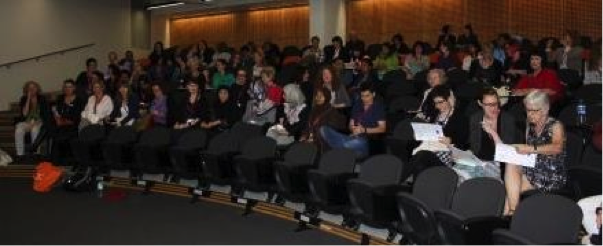
hall

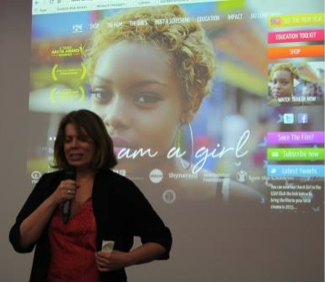
Three outstanding key notes were followed by three inspirational panels organized around Rebecca Barry’s remarkable film ‘I am a girl’; the expanding and diversifying role of digital media in education and public pedagogies; and Gender Jamming including the Australian Research Center in Sex, Health and Society.

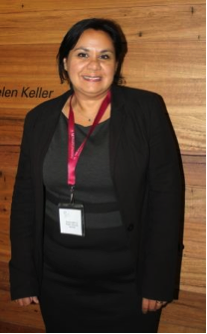
delegates 4delegates 3

To provide just a taste of the key notes, Mary Lou Rasmussen spoke about the conundrum that, as more families are turning away from Christianity so more are sending their children to religious schools, and some of the implication this has for lifestyles and sexual freedom.  Simone Ulalka Tur shared her life and experience teaching Indigenous education topics to emphasis that curricular are highly contested spaces. For more information you can still access the Conference site here.

delegate 1 delegate 2

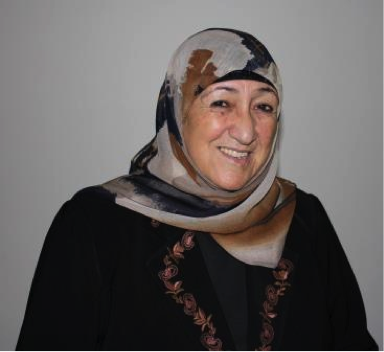
I want to highlight the work of the third key note speaker at the recent Gender and Education Interim Conference  Dr. Sakena Yacoobi and extoll members to read more about her inspirational work in developing education for girls in Afganistan under the most dangerous conditions during the rule of the Taliban.  The organizing committee of the Melbourne conference have asked that members think about making a donation to her charity, the Afghan Institute of Learning (AIL) to support this important on-going work.

yacoobi

Dr Yacoobi is the Executive Director and founder of AIL. Established in 1995 to provide grassroots education and health services, AIL has served more than 11 million Afghans and was the first organization to offer human rights and leadership training to Afghan women.  AIL has developed innovative education programs to meet the ever changing needs of Afghans, programs ranging from underground homeschools during the rule of the Taliban, to beginning Women’s Learning Centers in lieu of schools, to a new literacy class which utilizes texting to increase the rate of literacy acquisition.

Dr. Yacoobi spoke passionately about her experiences working within the cultural context of Afghanistan, finding culturally appropriate ways to bring education and healthcare to those who need it and how others might be able to apply these lessons to their situations.

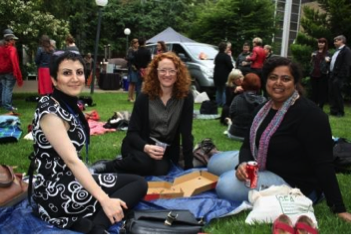
delegates 5

The GEA Executive would like to thank the organisers for an excellent conference, and look forward to the next conference Gender, Power and Pedagogy, to be held in London on 24-26 June 2015, at the University of Roehampton.

Blog post by Gabrielle Ivinson

Photos provided by Penny Tinkler

Towards a politics of hope? Activism and gendered labour

In this blog post Janet Newman, Emeritus Professor at the Open University introduces her recent book Working the Spaces of Power: activism, neoliberalism and gendered labour.  She asks, in these dire times, how might it be possible to hold onto a sense of hope? And, given the collapse of trust in political parties (at least in Britain), how can we find the resources for political agency?

———————————————————————-

Whenever I look at the ‘big picture’ narratives of the rise of neoliberalism, or the exhaustion of feminism and other social movements, I lose heart. But when I talk to women trying to take their political beliefs into their working lives I regain a sense of hope – and inspiration. My own research traces how women negotiate institutional regimes to find spaces where political agency is possible. In ‘Working the spaces of power’ (Bloomsbury 2012) I draw on interviews with some 60 women over 4 generations, all bringing political expertise and experience to projects of social and economic transformation. They linked governmental programmes to community politics; worked ‘in and against the state’ in local and central government; sought to bring feminist and antiracist politics into policy reform; and brought new forms of research and action into the academy, think tanks and entrepreneurial spaces.

janet newman

Education was at the core of their work, even if not employed in the education sector. Some sought to educate civil servants and local government actors, bringing them into conversation with those directly affected by policy shifts or organising events exposing them to alternative ideas and experts. Some were involved in development projects in local communities, seeking to empower those in poverty – particularly women – to take collective action. Some worked in think-tanks, universities and research centres. Their work was flexible and creative; and of course was sometimes vulnerable to cooption by governments looking for new solutions.

But I want to explore in particular how women brought political agency into their work in Higher Education, where two rather different political strategies became evident. One concerned challenging the power relationships between teacher and student, or between researcher and research subject. The language here was of partnership, of coproduction, of involvement. Others set out to challenge hierarchies of expertise in academic knowledge; for example the turn to post-structuralism, embodiment and affect in social theory is largely down to feminist academics. Both strategies of course are vulnerable to critique: the former because of its conception of power, the latter because of its implications for solidaristic forms of politics. But that is not my point: both continue to have a transformative power in and beyond the academy.

The stories of the women I interviewed are not always of success. They faced daily negotiations with institutions and systems that were hostile, or that imposed conditions that took the politics out of their achievements (as was the fate of much of the liberal equality legislation of the past). They had periods of retreat and exhaustion, but what the interviews show is how they tended to move on to a different sphere of action rather than withdrawing from political life. They worked ‘inside/outside’, looking both ways: to their political networks that sustained them, and to the organisations that they sought to change. Such work is becoming more difficult as a result of cuts, redundancies and new forms of contract, all of which make women’s employment particularly vulnerable. But it nevertheless continues, often prefiguring new kinds of social and political action. And it is this that offers me – and I hope others- a sense of possibility, of hope.

by Janet Newman, Open University


2015 Biennial Conference of the GEA Association: Keynote speakers’ short bios and abstracts

2015 Biennial Conference of the GEA Association: Keynote speakers’ short bios and abstracts

Prof. Katarina Eriksson Barajas, Linköping University, Sweden

The Power of Fiction as a Pedagogical Tool for Eliciting Gender Discourses

My paper examines discussions of gender values in everyday life, elicited by books, film and theatre. The analysis draws on three Swedish data sets: 1) teacher-led book talk sessions that raise gender issues in small groups of pupils in Grades 4-7, 2) the use of a feature film (Lilya 4-ever, about sex trafficking) to instill gender equality values in upper secondary school, and 3) discussions of gender issues among adults after leisure-time visits to movies and theaters. The data is analyzed using a discursive approach (Edwards and Potter 1992) combined with poststructuralist feminist research on (children’s) reading (Davies and Banks 1992; Walkerdine 1990). The idea that we learn and develop fundamental values, such as gender equality, through fiction, coincides with research findings indicating that we develop empathy by reading good literature (Kidd and Castano 2013). My presentation contributes some empirical knowledge about how people are “doing equality” in natural everyday settings. The analyses show that gender stereotypes are, at times, transcended in discussions around fiction, regardless of the gender content in the book, film or play in question. Additionally, the analyses show that, even outside of educational contexts, fiction is spontaneously used by participants to address gender equality issues. The idea that fiction can open one’s mind follows Swedes throughout their education, and is apparent among adult film enthusiasts and theater-goers, and also relates to research of everyday learning and adult education (cf. Larsson 1996).

Davies, B. and Banks, C. 1992. ‘The Gender Trap: A Feminist Poststructuralist Analysis of Primary School Children’s Talk about Gender’. Journal of Curriculum Studies 24: 1-25.

Edwards, D. and Potter, J. 1992. Discursive psychology. London: SAGE.

Kidd, D.C. and Castano, E. 2013. ‘Reading Literary Fiction Improves Theory of Mind’. Science 342: 377-380.

Larsson, S. 1996. ‘Vardagslärande och vuxenutbildning’.

Walkerdine, V. 1990. Schoolgirl fictions. London: Verso.

Keywords: Every day life, popular culture, fiction, gender equality.

Katarina Eriksson Barajas is Professor of Education in the Department of Behavioral Sciences and Learning at Linköping University, Sweden. She is interested in child studies, comparative literature, discursive psychology, gender studies, and reader-oriented research. Her research focuses on needs and uses of fiction by applying a discursive approach on everyday practices concerning literature, film and theater. One such practice is the use of fiction as a didactic tool.


Prof. Penny Jane Burke, University of Roehampton, UK

Gender, Emotion and Difference

Feminist insights have contributed a richer understanding of the profound relationship between the histories of gendered subjectivity, ontology and epistemology and the vacating of the emotional from the world of the academy. In this keynote I will explore the emotional layers of pedagogic experiences not only to illuminate ‘fear as emotion’ but also ‘fear of emotion’ (Leathwood and Hey, 2009: 435). Such fear is entangled in the destructive forces of multiple political frameworks operating simultaneously to reform processes of misrecognition and symbolic violence, even as higher education policy is demanding that universities evidence inclusive practice as part of their commitment to diversity. Underpinning the hegemony of neoliberalism, meritocracy, and globalisation, and related undercurrents of misogyny, racism and classism, is the construction of ‘difference’ through fixing and pathologising identity positions. Difference and emotion are posed as dangerous forces that require homogenising and neutralising via technologies of managerialism and through the fixing of socially constructed categories. Such manoeuvres are deeply bound to moves towards hyper-individualism in which specific performative and instrumentalist models of success are being mobilised. New formations of patriarchy within neoliberalism ensure that characteristics associated with difference in HE, such as ‘being emotional’ or ‘caring’, are regulated and controlled through a range of new disciplinary technologies, including of teaching. Pedagogical relations are thus deeply implicated in the gendered politics of (mis)recognition, and profoundly connected to the impact of the emotional on the body and the self (Ahmed, 2004) and to the politics of difference. I will argue that we need to re/imagine difference not as a problem to be regulated for neoliberal processes of standardisation and homogenisation but as a critical resource to reflexively develop collective and ethical participation in pedagogical spaces. Such collective participation is not based on a notion that we can overcome power relations, but an understanding that power is complex and fluid and an inevitable dimension of pedagogical relations in which difference is and should be part of the dynamics in which we create meaning and understanding.

Ahmed, S. (2004) The Cultural Politics of Emotion. New York: Routledge.

Leathwood, C. and Hey, V. (2009) Gender/ed discourse emotional sub-texts: Theorising emotion in UK higher education. Teaching in Higher Education. Vol. 14 (4), pp. 429-440.

Key words: emotion, pedagogy, fear, managerialism

Penny Jane Burke is Professor of Education at Roehampton University, London, where she is co-Founder and Director of the Paulo Freire Institute-UK (PFI-UK) and Research in Inequalities, Societies & Education. She is also Global Innovation Chair of Equity and Co-Director of the Centre of Excellence in Equity in Higher Education at the University of Newcastle, Australia. Penny is passionately dedicated to developing methodological, theoretical and pedagogical frameworks that support critical understanding and practice of equity and social justice in higher education. Her research expertise includes gendered formations, higher education access and participation, pedagogical experiences and practices and student and professional identities. She has published extensively in the field of equity in higher education. After returning to study via an Access to Higher Education course, followed by a BA Honours and MA, Penny was awarded a full-time Economic and Social Research Council doctoral studentship from 1998-2001, which resulted in the publication of her book Accessing Education effectively widening participation (2002). Her most recent sole-authored book The Right to Higher Education: Beyond widening participation was published by Routledge in 2012. Her co-authored book Reconceptualising Lifelong Learning: Feminist Interventions (with Sue Jackson) was nominated for the 2008 Cyril O. Houle World Award for Outstanding Literature in Adult Education. Penny was recipient of the Higher Education Academy’s prestigious National Teaching Fellowship award in 2008 and she is the Access and Widening Participation Network co-Convenor for the Society for Research in Higher Education (SRHE). She is Editor of Teaching in Higher Education and a member of SRHE’s Governing Council and Publication Committee. Penny has held the posts of Professor of Education at the University of Sussex and Reader of Education at the Institute of Education, University of London.


Prof. Marília Carvalho, Universidade de São Paulo, Brazil

To move toward greater democracy in global production of knowledge

In international social science journals, including those with a feminist focus on gender, such as Gender and Education, articles about countries in the global South often show their location in their titles. In these articles, one finds explanations about the geographic and socio-economic context, the educational or political system, historical roots and so forth. But when a paper has no contextualization, and the authors use general words like girls, boys, women or teachers, then it probably comes from the metropole.

These points show some of the imbalances in global knowledge politics and despite the particular attention that gender studies developed to power relations, this situation is true also for our field. These questions have been debated for decades, all around the world, and they pointed out that the conceptual tools of metropolitan social science present themselves as universal and able to decode all societies. So the relevance of metropolitan theory and research is previously warranted by the universality from which it tacitly begins.

We, who produce knowledge from the global South, are used to translating in the broad sense of translation, which goes far beyond transferring linguistic meanings from one language to another. We are used to explaining and contextualizing, in order to make our ideas understandable. And besides translating our own texts and contexts, we also need to understand the locales in which the metropolitan research was conducted and the metropolitan theories were developed.

Behind this set of issues there is actually a wide-ranging epistemological debate about the possibility and need for universalization. But for now, I only intend to suggest a seemingly simple posture that can help us to move toward greater democracy in global production of knowledge, paying particular attention to feminist knowledge: an effort to clarify the contexts, an ongoing effort to shift towards the other, and to realize the necessary mediations to make the ideas of each one understandable for those who do not share the same cultural background.

Key words: North/South division of intellectual labor; translation; social science journals

Marília Pinto de Carvalho is Professor of Sociology of Education and Educational Policies in the School of Education at the University of São Paulo, Brazil. Her research interests focus on sociology of education, relating to gender and teachers’ work and also gender and school achievement of boys and girls. She is especially concerned with how gender, race and class work together in the context of institutional settings such as schools. Her current research is about how family socialization contributes (or not) to girls’ academic success in poor urban area schools.


Prof. Farzana Shain, Keele University, UK

Feminisms, imperialism and the ‘war on terror’  

More than thirty years ago, Amos and Parmar’s  groundbreaking paper ‘Challenging Imperial Feminism’, published in Feminist Review  (alongside other seminal works including Hazel Carby’s  ‘White women Listen’ and Mohanty’s ‘Under Western Eyes’)  sparked productive debate among feminists about the limits of ‘global sisterhood’ and about Western feminism’s uncomfortable support of imperialist interventions.   Since then, intersectionality, the concept alluded to by Amos and Parmar and later introduced by Kimberle Crenshaw to denote the multiple and interlocking systems of oppression that shape the lives of black women, seems to have been mainstreamed in academic work and policy discourse, though not without critique (Anthias, 2007).  However, the use of feminist rhetoric by Western leaders after 9/11 to justify the global ‘war on terror’ as well as some open endorsement provided by mainstream human rights and liberal feminist organisations has led to a renewed debate in the last decade about the relationship between imperialism and feminism. Drawing on the recent dialogue between US based feminists (Kumar; Toor; Tax) about the legacy of the global ‘war on terror’ for feminist politics and activism, and with a particular emphasis on the way girls and women’s rights to education have been used to justify such interventions, this paper takes a critical look at the issues to reflect on the direction that has been travelled by feminisms since the 1980s.

Key words: ‘war on terror’, feminist politics, intersectionality, imperialism and feminism

Farzana Shain is  Professor of Sociology of Education in the School of Public Policy and Professional Practice at Keele University.  Her early research  focused on the impact of neoliberalism on educational policy and practice in the further education sector in England.  More recently, her research and writing has focused on young people’s gendered, raced and classed experiences of schooling and also on young people’s understandings of the politics of oil.  She is the author of The New Folk Devils: Muslim Boys and Education (Trentham: 2011), and The Schooling and Identity of Asian Girls (Trentham: 2003), which collectively  explore the social and political identifications of young people in a schooling context in England against the backcloth of the global ‘war of terror’.


Prof. Lois Weis, State University of New York, USA

Class/Gender Formation in 21st Century United States: Probing Intersectionality in the New Upper Middle Class in Markedly Altered Global and National Circumstances

Unprecedented levels of executive compensation and finance largely drive well-documented inequalities of income and wealth, with resulting explosive growth in wealth among the top 1% in the United States, in particular (Piketty, 2014; Piketty and Saez, 2012; Saez 2013). As a consequence, the vast majority of highly educated professionals in the US and elsewhere, as well as those who inherited wealth from their parents, find their relative positions substantially eroding in relation to a class of super-rich financiers and senior managers..

This well-documented realignment has deep implications for the extent to which and ways in which relatively privileged parents strive to position their children for future advantage. Based on two years of extensive ethnographic investigation in three representative affluent and elite secondary schools in the United States (Weis, Cipollone & Jenkins, 2014), I argue that as relatively privileged women increasingly engage in a form of “mother work” designed to position their children for access to highly valued postsecondary destinations (at a time when such access can no longer be assumed), women become centrally located in new forms and enactments of “class warfare.” As I will suggest, the stark insertion of gender and gendered labor into new class processes/ productions fundamentally alters the fulcrum of class struggle in current historic moment, thereby setting the stage for class structural arrangements of the 21st century. Where men arguably sat at the center of class analysis and class struggle/warfare of the not too distant past via industrial workplace struggles and/or accumulation and management of massive economic capital, it is now women, via the kind of intricate class positioning such as that explored in this lecture, who sit at the epicenter of new class productions, formation, and outcomes. Turning class/gender intersectionality “on its head” so to speak, sets the stage for future important work on class/gendered productions in a range of class fractions in nations differentially positioned in relation to globalizing culture and capital.

Key words: intersectionality, class, globalization, ‘mother work’, gendered labor

Lois Weis is State University of New York Distinguished Professor of Sociology of Education at the University at Buffalo, State University of New York. She has written extensively about the current predicament of White, African-American, and Latino/a working class and poor youth and young adults, and the complex role gender and race play in their lives in light of contemporary dynamics associated with the global knowledge economy, new patterns of emigration, and the movement of cultural and economic capital across national boundaries. She is the author and/or editor of numerous books and articles relating to race, class, gender, education and the economy. Her most recent volumes include Class Warfare: Class, race, and college admissions in top-tier secondary schools (with Kristin Cipollone and Heather Jenkins, University of Chicago Press, 2014); Education and Social Class: Global perspectives (edited with Nadine Dolby, Routledge, 2012); The Way Class Works: Readings on school, family and the economy Routledge, 2008); and Class Reunion: The remaking of the American White working class (Routledge, 2004).

Lois Weis is a winner of the outstanding book award from the Gustavus Meyers Center for the Study of Bigotry and Human Rights in North America, as well as a seven-time winner of the American Educational Studies Association’s Critic’s Choice Award, given for an outstanding book. She is past-president of the American Educational Studies Association and past Editor of the American Educational Research Journal-Social and Institutional Analysis section. She sits on numerous editorial and advisory boards, including the International Advisory Group of the Forum for Youth, Participation and Democracy housed at the University of Cambridge, UK. She is member of the National Academy of Education (NAEd), an Honorary Fellow of the American Educational Research Association, and has delivered invited lectures worldwide.
We need inclusive, intergenerational feminist debate

By Vesela Harizanova

Recent years have seen a revival of feminist thought and activism, often described as ‘the fourth wave of feminism’, which is facilitated by the accessibility of social media and mobile technology, enabling multiple forms of interconnectedness, involvement, and instant action. Different generations of women around the world are increasingly engaging in dialogues about their experiences of inequality, discrimination, and oppression. Alongside these rapid developments, there has been a huge effort to push feminist debate into mainstream popular culture. While women have been ‘leaning in’, ‘leaning out’ and ‘hashtag-ing’ their thoughts away on Twitter and Facebook, stakeholders and politicians have been taking carefully measured steps towards putting feminism back into their lexicon, convincing everyone of their genuine concern and powerful address of women’s issues.

These and many other aspects of the contemporary feminist landscape were the topics of a successful panel discussion on Intergenerational Feminisms and Media Cultures, which took place on November 6th 2014 at the Marx Memorial Library in London. The event was part of the ESRC’s Festival of Social Science and was organised by Jessalynn Keller and Alison Winch from Middlesex University. A wide range of audience members, from public activists and media professionals to secondary school students and academics, attended the panel discussion and contributed with thought provoking questions and comments. The panel speakers were Ikamara Larasi from Rewind & Reframe, Jessica Ringrose from the Institute of Education, the teenagers Rosa Tully and Lucy Parfitt who set up a feminist society at their school, and Lynne Segal from Birkbeck, University of London. Their candid personal and passionate testimonies sparked inspirational discussions not only among the attendees but also on Twitter where users were able to follow the debates under the hashtag ‘#ESRCInterGenFems’.

The panellists agreed that contemporary feminism is being torn up by conflicting representations, values, and demands. The meaning of ‘feminism’ and ‘being feminist’ is constructed in various ways across different mediated conversations. One of the recurring themes of the event was the phenomenon of commodification and ‘rebranding’ of feminism by commercial and political organisations whose representatives are powerful celebrity figures. Ironically, sexualised pop-stars like Beyoncé and Miley Cyrus are the so-called modern-day feminist icons that today’s young girls may aspire to be like. Instead of questioning hypersexualised representations of women, sexualisation gets appropriated in the guise of individual empowerment. With all this continuous pressure on body image and self-empowerment, it is no surprise that so many young girls and women suffer from low self-esteem and eating disorders.

In addition, this phenomenon contributes to the construction of a selectively defined version of feminism that is consumer-driven, individualistic, and exclusionary. For example, Elle’s December 2014 special feminist issue featuring Emma Watson on the cover was dedicated to women’s empowerment and pursuit of equality(#ELLEFeminism). However the magazine narrows down the meaning of the complex concept of empowerment to a set of aspirational tips for lifestyle and personal improvement. This is telling women that they could ‘have it all’ if only they could transform their attitude and behaviour. To put it in Sheryl Sandberg’s terms the key to equality is in ‘leaning-in’ and instigating a revolution from within ourselves. This kind of feminist pedagogy teaches subjects to accept full responsibility for their own wellbeing and self-care whilst overlooking the intricate cultural and economic mechanisms that create inequality in the first place.

Elle even launched a product line in collaboration with the online retailer Whistles and The Fawcett Society, causing massive uproar about the alleged ‘sweatshop’ conditions their ‘feminist’ t-shirts were made in. As if the sheer price of £85 for a long sleeve tee was not enough to aggravate everyone with a clear sense of justice.

So the apparent problem here, raised by many of the audience members at the event, is that feminism should not be left in the hands of a few occupying positions of power. For as long as they have vested interest in perpetuating the capitalist status quo and business commitments related to the making of profit above all else, they cannot offer a credible platform for feminism.

Therefore, the conclusion that was reached during the event was that a grassroots approach towards feminism is needed to effectively address complex issues of inequality operating on structural, political, and representational level. Each instance of inequality is an intersection of issues of gender, race, class, and religion, just to name a few. Intersectional feminism is an approach that understands and appreciates the complexity of identity. It also manifests the idea of a future society with a lot more compassion where cultural differences do not serve to divide people but are rather celebrated as unique traits making every single person an individual.

Twitter @VessyHarizanova


Call for Papers for a Special Issue of Gender and Education

If not now, when? Feminism in contemporary activist, social and educational contexts

Special Issue Guest Editors: Olivia Guaraldo and Angie Voela

Political and socio-economic developments in recent years have created new opportunities and new battlegrounds for feminism, with women taking to the streets and demonstrating against the status quo, corruption, sexism, austerity and capitalism. On February 13th 2011, demonstrations took place in various Italian cities, with over a million participants in total.

They were coordinated by the feminist coalition Se Non Ora Quando? (If not now, when?). The demonstrations voiced the urgent need to reassert women’s dignity and renewed faith in the effectiveness of a popular feminist movement.

There seems to be a pervasive optimism that feminism is now entering a new era, as evidence from different countries seems to suggest. At the same time, it is said that the advance of neoliberalism and the indisputable gains of feminism in the last thirty years have resulted in de-politicisation and a decline of interest in feminism. The mainstreaming of feminism has also raised concerns about its independent and autonomous existence.

‘If not now, when?’ invites potential contributors to consider the present moment of feminism and the presence of feminism on the streets and in mainstream society. It is seeking both theoretically informed and more empirical contributions on feminist endeavours, the strategies they employ and the values they uphold, the lessons learnt, and the new or emerging debates and challenges. In the context of a broadly defined feminist education, ‘If not now, when?’ also wishes to explore the pedagogical aspect of contemporary feminism, as well as testimonies of politicisation and mobilisation relevant to the formation of a feminist consciousness, especially in higher education.

Further, and focusing on the present, it invites contributions on the theoretical ideas that are most relevant for feminism today. We are particularly interested in the notion of timeliness or kairos, the right time for something to happen as opposed to chronos or linear time. This temporal aspect of the contemporary feminism needs to be analysed and fully understood in the light of debates over the future of democracy, the welfare state, neoliberalism and globalisation. As evidence from the ‘periphery’ of Europe and the Mediterranean show that feminists decide to take to the streets again, we particularly welcome contributions that speak about the present and recent past of feminism in that part of the world, especially in the light of the significant political, social and economic changes in the region.

Contributions might address the following topics:

  • Feminist alternatives to patriarchy and neoliberalism: contemporary strategies, theoretical ideas and practices;
  • Feminism in the academia and beyond: reflections on the past, emerging issues in the present, pedagogical prospects;
  • Contemporary feminist activism in the South of Europe and beyond: what do know,
  • Feminism, ethical values and the role of the individual;
  • Feminism and the idea time and timeliness (Kairos);
  • Is feminism still transformative or has it become too mainstream and confluent with
  • How could the insight, issues and strategies of popular movements be transformed into permanent advantages for feminism?
  • How does academic feminism respond to ideological, political and cultural demands

Proposals should be for original works not previously published (including in conference proceedings) and that are not currently under consideration for another journal or edited 350-500 word abstracts should be emailed to Olivia Guaraldo and Angie Voela by 5 January. 

If your proposal is accepted for the special issue, a full-length paper (5000-8000 words) will be required by 29 May 2015. The editors are happy to discuss ideas prior to the deadline.

Peer-reviewing and final editorial decisions will be reached by the end of 2015.

Abstracts and queries should be sent to: Olivia Guaraldo, University of Verona, Italy olivia.guaraldo@univr.it and Angela Voela, University of East London, UK a.voela@uel.ac.uk

Call for Papers for a Special Issue of Gender and Education: Taking Stock

Special Issue Guest Editors: Alexandra Allan and Penny Tinkle

This special issue will initiate a process of taking stock of gender and education; our hope is that subsequent issues of the Gender and Education journal will take this further forward.

‘Taking stock is to think carefully about a situation or event and form an opinion about it, so that you can decide what to do’ (Cambridge Definition Online). The phrase is an English idiom, but its meaning has international resonance. ‘Taking stock’ is an everyday activity, but this special edition focuses on ‘taking stock’ as an important and timely aspect of our practice as scholars of gender and education.

It is our view that taking stock involves thinking about the relationship between the present and the past. We do not, however, expect papers to be historical in the traditional sense of the word, but contributors may find it useful to mobilise what Tinkler and Jackson call ‘historical sensibility’ (See Gender and Education 26(1) 2014). If you would like to discuss your ideas for a paper in advance of submitting an abstract, please email Alexandra Allan.

There are various ways of ‘taking stock’. In this special issue we welcome papers that either:

1] Take stock by evaluating contemporary gender and education issues. We particularly welcome papers that address issues pertinent to countries where the field of gender and education is fairly young or newly emerging.

2] Take stock by appraising developments in the field of gender and education studies. We welcome papers on all aspects of theoretical and methodological developments in gender and education, especially those that have broadened the field beyond its initial preoccupation with white and western education contexts, for example developments relating to conceptualisations of race or methodologies for incorporating global perspectives.

This special issue of Gender and Education is edited by Alexandra Allan (Exeter University) and Penny Tinkler (Manchester University). If you would like to contribute, please email a 500 word abstract and a 1-2 page CV to Dr Alexandra Allan (A.j.Allan@exeter.ac.uk) by 2 January 2015.

Deadline dates

Invitations to submit full papers/ interviews will be sent to authors by 12 Jan 2015, with full papers / interviews to be completed by 9 March 2015. Peer-reviewing will be completed and final editorial decisions reached by 29 Sep 2015 .


Feminisms, Power and Pedagogy: 10th Biennial Conference of the Gender and Education Association

Third and Final Call for Papers

DEADLINE EXTENDED TO 10 January 2015

University of Roehampton, 24-26 June 2015

The tenth international biennial conference of the Gender and Education Association, Feminisms, Power and Pedagogy, will be hosted by the School of Education and the Paulo Freire Institute (PFI)-UK & Research in Inequalities, Societies and Education (RISE), at the University of Roehampton, London, UK.

We are seeking contributions that engage with questions of power and pedagogy, broadly defined, in relation to gender and other ‘differences that make a difference’ (such as nation, geography, race, class, sexuality and dis/ability), on local, national and global levels. Feminisms are also defined broadly to include a range of ways of understanding gender and power and how these concepts relate to other inequalities. Similarly education and pedagogy include not only the formal, apparent pedagogies offered in educational institutions, such as schools and universities, and the hidden curricula of such organisations, but also the informal and often unnoticed pedagogies of, for example, material and popular cultures and pedagogies deployed by activists in NGOs and political movements. We are especially keen for this conference to be a forum for feminist engagements with education and pedagogy from across the world.

Keynote speakers:

Dr Katarina Eriksson Barajas, Linköping University, Sweden

Prof. Penny Jane Burke, University of Roehampton, UK

Prof. Marília Carvalho, Universidade de São Paulo, Brazil

Prof. Farzana Shain, Keele University, UK

Prof. Lois Weis, State University of New York, USA

Plenary panel: Activists in Conversation

We are very excited to announce our plenary panel of activists to take place on the first day of the conference. This will be a conversation between feminist activists working in and outside academia, about how activism can educate, what academics and activists can learn from each other, and how they can support each other.

The speakers are: 

Nelly Ali, a doctoral student, blogger and effective activist for street children everywhere, but specially in Egypt: http://www.bbk.ac.uk/geds/our-research/phd-students/nelly-ali and www.nellyali.wordpress.com.

Lucy Lake, chief executive of CAMFED: https://camfed.org/about/team/lucy-lake/.

Fahma Mohamed, Integrate Bristol, who spearheaded and is still active in the campaign to combat Female Genital Mutilation (FGM): http://integratebristol.org.uk/# for Integrate Bristol’s website and http://integratebristol.org.uk/2014/02/22/fahma-appeals-to-michael-gove-junior-trustee-of-integrate-bristol-launches-massive-campaign-with-the-guardian-and-change-org/.

Amaranta Thompson, Director of Development and Operations with the International Women’s Initiative: http://www.internationalwomensinitiative.org/#!management-team/c220n.

Key questions:

The conference aims to address the following key questions from feminist perspectives:

How can feminist theories of gender, education and pedagogy benefit from scholars from different parts of the world working together?

How do feminist activists around the world work to promote equality?

How can activists and academics work together to develop and promote equality through feminist and other approaches to pedagogy?

How can we build our understandings of education and/or pedagogy through critical analyses of power relations drawing on, for instance, feminist, subaltern, critical race and postcolonial theories?

How does power operate and influence educational and pedagogic processes, at local, national and global levels?

How do the political, economic and organisation contexts for the production of knowledge impact on the knowledge produced by feminist researchers and others, and what are the implications for social justice?

How can feminist and other approaches to education and pedagogy (e.g. Freirean, subaltern, critical race and postcolonial) reinforce, enrich and build on each other?

All papers, symposia and workshops should engage with educational/pedagogic issues, broadly defined. Within this broad context, examples of what the proposals for papers and symposia may cover include: feminist perspectives from different worldviews and political and theoretical perspectives; feminisms, social movements and pedagogies; the emergence and structuring of gender and education as a field of study in a range of national contexts; masculinities and femininities in education and/or pedagogy; popular culture, pedagogy and gender; policy, politics and practice in education; and neo-liberalism, globalisation and gender. However, this is in no way a comprehensive list and participants should not feel constrained by our suggestions, as we will finalise the conference streams in light of the papers, symposia and workshops accepted.

While contributions will critically engage with feminist theories, they may do so from a variety of fields and subject areas (e.g. gender studies, education, sociology, history, philosophy, linguistics, etc.) and theoretical perspectives. We invite proposals for individual papers and/or symposia from academics, students, policy makers and activists.

GEA featured symposia and workshops:

Featured symposia acknowledge the commitment of GEA to honour and showcase current and outstanding research and/or activism relating to gender and other differences that make a difference in education, broadly defined.  Symposia may consist of one or more two-hour sessions. If organised in a conventional format, each session should consist of a minimum of four and a maximum of six papers (including a discussant if any). We would also be interested in receiving proposals for symposia or workshops that do not follow this conventional format but are more innovative in their organisation. To be featured symposia or workshops, the proposal must show that it has widespread appeal, and explores contemporary and/or historical issues relevant to the aims and purposes of GEA. Please note that each submission will be assessed separately against each of the criteria (relevance to the work of GEA, outstanding research and/or activism). Normally however the symposium/workshop proposer should identify a convenor/chair/facilitator and may identify a discussant for the session. Non-conventional formats should be described and justified in the overview of the symposium or workshop.

Fahma Mohamed and Habiba Said, of Integrate Bristol, will be running a workshop at the conference on teaching about FGM in school and we are in the process of arranging other workshops. If you would like to offer a workshop, please contact Debbie.Epstein@roehampton.ac.uk to discuss this.

Proposals:

Proposals for individual papers, symposia and/or workshops should be sent to Julia.Noyce@roehampton.ac.uk for blind-peer review by 10 January 2015. Proposals for papers should give an abstract of no more than 250 words. Proposals for symposia consisting of four to six papers (or double sessions consisting of eight to 12) should give an overall summary of the theme of the symposium proposed in 250 words or less and brief abstracts (up to 150 words) of the individual papers to be included in it.

Please save your proposal for an individual paper with author name followed by ‘GEA_2015’ (e.g. NAME_ GEA_2015) with a brief biography and contact details on a separate page. For symposia, please give the symposium organiser’s name followed by ‘GEA_2015’ and contact details, plus the names and brief biographies of all contributors on a separate page.

You will be informed whether your paper/symposium/workshop has been accepted by 31 January 2015.

Free conference workshop on getting published:

A free pre-conference workshop for doctoral students attending the conference on getting published in international refereed journals, run by the editors of Gender and Education, will also be held on the afternoon of 23 June. Space permitting, this will also open to other early career researchers who are in their first academic posts or have not got an academic job but preference will be given to research students who are not in academic jobs and who have not yet published in international refereed journals. If you wish to attend this workshop, please indicate this on your booking form. Acceptance will be on a first come first served basis.

Conference fees:

In addition to the conference fee, all delegates will need to pay for one year’s membership of GEA (£30) to begin on 23 June 2015 for those joining for the first time. If you are already a member, this year will be added on to the end of your existing membership. If you are a life member, please contact Julia Noyce by email.

Early bird fees (to be booked by 31 March 2015):

Early bird rates are available for bookings made before 20 March 2015. It is probable that after that date there will be no further residential bookings available. We cannot guarantee accommodation for bookings made before 20 March, but have reserved a large number of rooms so hope there will be enough for everyone wanting accommodation.

Please note that residential bookings include accommodation on the night of 23 June 2015 and breakfast on 24 June as the conference will start no later than 9.30 am.

£275 – Early Bird conference booking fee (non residential package, inclusive of lunches and dinners)

£375 – Early Bird conference booking fee (full residential package, inclusive of three nights accommodation, breakfasts, lunches and dinners but please note that those in residence on Tuesday 23 June will need to sort out their own dinner)

£400 – Early Bird conference booking fee (full residential package, inclusive of three nights accommodation with ensuite, breakfasts, lunches and dinners but please note that those in residence on Tuesday 23 June will need to sort out their own dinner)

£110 – Early Bird conference booking fee (daily rate, inclusive of lunch and dinner)

Standard booking fees (from 1 April 2015):

£305 – Standard conference booking fee (non residential package, inclusive of lunches and dinners)

£405 – Standard conference booking fee (full residential package, inclusive of three nights accommodation, breakfasts, lunches and dinners but please note that those in residence on Tuesday 23 June will need to sort out their own dinner)

£430 – Standard conference booking fee (full residential package, inclusive of three nights accommodation with ensuite, breakfasts, lunches and dinners but please note that those in residence on Tuesday 23 June will need to sort out their own dinner)

£125 – Early Bird conference booking fee (daily rate, inclusive of lunch and dinner)

Accommodation is provided on campus but is limited. It will be available on a first come first served basis.

We have made arrangements with an excellent local nursery to accept children up to the age of 5 (subject to availability of places) from 8.00am-6.00pm during the conference at a daily charge of £58. Please contact Julia Noyce for details. See, also, bursaries, below.

Bursaries:

We will be offering a limited number of bursaries to those who are giving a paper, are unwaged (including doctoral students on studentships) and whose institutions will not support them to come to the conference.

Full conference fee waiver. This will be available to those coming from other countries and who meet the conditions above. They will be awarded on a competitive basis, as judged through a process of blind refereeing.

Fee waiver of £100. This will be available to those from within the UK who meet the conditions above.

An additional fee waiver of £100 towards any extra costs of caring provision (e.g. for children or frail/ill adults) incurred by coming to the conference.

If you wish to apply for any of these three bursaries, please submit a short paragraph with your abstract explaining why you need such a fee waiver in order to attend the conference. Katja Jonsas (Katja.Jonsas@roehampton.ac.uk) and Kate Hoskins (Kate.Hoskins@roehampton.ac.uk) will be looking after bursary applications and will let you know before the Early Bird date whether you have been successful in gaining fee waiver or not. If you have any queries about bursaries, please contact one of them. Please do not make your booking until you have heard from them as you will need to indicate on your booking form that you are in receipt of a fee waiver.

Booking your place:

To book your place at the conference please go to the Roehampton ‘online store’ where you will find a link to the GEA conference. To book your place please visit the online store url.  

Important information about visas:

Please note that we do not send letters of invitation out to all conference participants though we will, of course, provide receipts. However, should you require a letter to support your visa application, we will provide this once you have booked and paid for your place. We can then send a letter to state that you are intending to take part in the conference, and that you have paid. If for any reason your visa application is unsuccessful, we will refund your fee as long as you let us know by email no later than 29 May 2015.

For further information and updates, please visit the conference webpage