Hanna Retallack: The State of Education Today: Feminism’s Fourth Wave

Is a new wave of feminism developing in schools? Hanna Retallack discusses how students are responding to issues of gender and sexuality to challenge the status quo.

In April this year, the Women and Equalities Committee launched the first parliamentary inquiry into an issue that feminist academics and campaigners have been researching for some time: sexual harassment and sexual violence in schools.

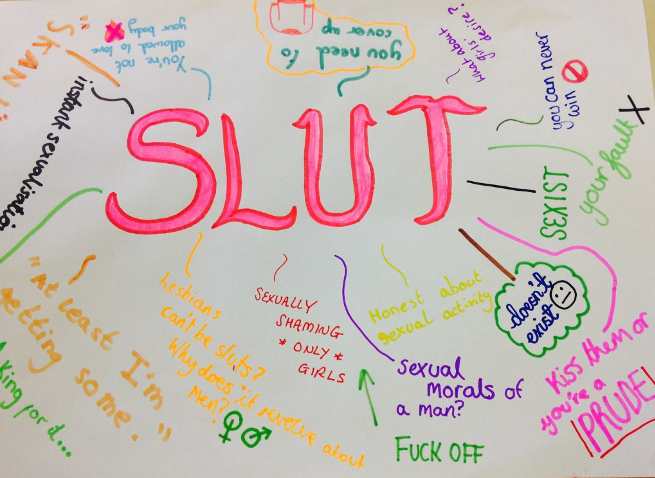
Prior to this inquiry, research had already found that the scale of sexism in schools was disproportionally affecting the well-being and mental health of teenage girls. In 2015 Girl Guiding UK [PDF] reported that 75% of girls and young women experienced anxiety over potential sexual harassment and a 2010 YouGov poll of 16-18 year olds found 29% of girls experienced unwanted sexual touching at school with a further 71% stating that they heard sexual name-calling (such as ‘slag’ or ‘slut’)  towards girls at school either daily or a few times per week. Perhaps most shockingly,data published by the BBC in September 2015 showed that 5,500 sexual offences were recorded in UK schools over a three year period, including 600 rapes.

“75% of girls and young women experienced anxiety over potential sexual harassment.”

Without any compulsory and regulated Personal, Social and Health Education in the UK, the teaching of sexuality in schools seems dangerously outmoded and fails to address issues related to gender, social media, sexualised bullying, pornography, consent and female sexual pleasure.

While this government inquiry is gathering evidence to establish the scale and effect of sexual violence and harassment in schools, it is the work that teenagers in schools are already doing to shake up school systems that concerns my on-going PhD research at the UCL Institute of Education into school-based feminist groups.

This research is conducted in the light of theories that we are witnessing a ‘fourth wave’ of feminism in which there is a resurgence in young people’s engagement with issues related to gender and sexuality. Despite previous research pointing towards a de-politicization of feminist projects in favour of individualized projects of the self, there is increasing evidence that a renewed and collectivised feminism has re-entered political and civic life.

“We are witnessing a ‘fourth wave’ of feminism in which there is a resurgence in young people’s engagement with issues of gender and sexuality.”

Neoliberal narratives tend to equate exam results with gender equality and so posit schoolgirls as ‘successful’ and as no longer needing feminism. However, we are seeing girls actively transgressing these post-feminist assumptions of equality by forming a new wave of feminist collectives within their schools.

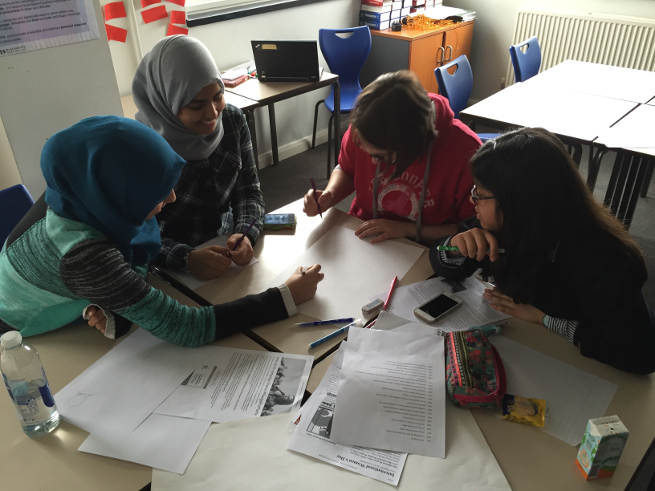
Feminist groups meet up on the school grounds outside of lesson time and are made up of teenagers who want to discuss the issues denied to them by the curriculum, including the intersectional inequalities that lie at the root of sexual violence and harassment, as well as the structural injustices affecting them both personally and politically.

While different groups in different schools all identify as feminist, this does not mean they have the same agenda. I took part in the UK wide project Feminism in Schools: Mapping impact in practice, co-ordinated by Professor Jessica Ringrose (UCL Institute of Education) and Professor Emma Renold(Cardiff University). We researched feminist clubs in seven highly diverse secondary schools across England and Wales, including mixed, single sex and fee-paying institutions and with young people from a range of religious, ethnic and socio-economic backgrounds.

“Neoliberal narratives tend to equate exam results with gender equality and so posit schoolgirls as ‘successful’ and as no longer needing feminism.”

What this project made clear was that the primary focus of these feminist groups varies hugely. It was often the context in which the school was situated that accounted for this difference. What connects the groups, however, is that they all provide spaces for young people to discuss and campaign about issues relating to feminism – from LGBTQ rights to #sayhername to everyday sexism to body positivity. They also all work to spread awareness of the topic throughout the school through peer-to-peer support or through whole-school assemblies.


Groups like these are situated within a history of consciousness-raising groups that originated partly in the second wave feminist movement in the US. Through meeting together and talking, women discovered their shared oppression. With a space to give what Adrienne Rich terms “definition and form” to what had previously been experienced as personal problems, they began to address patriarchal political institutions.

“Teenagers are engaging in collective consciousness-raising practices in their schools.”

A 2013 report by #FemFuture reported that while small consciousness-raising groups were the backbone of second wave feminism, online feminist blogs and forums are the consciousness-raising groups of the 21st century. What I would argue, however, is that we are also witnessing more direct versions of the second wave approach being taken on within schools, in which teenagers are engaging in collective consciousness-raising practices within the institutional context of their schools.

Being a secondary school teacher as well as a researcher, I am also interested in helping schools become more gender equal and supporting school students with their feminist activism. I co-foundedGELS (Gender Equality Leadership in Schools) which aims to assist with developing and running school-based activities such as student-led feminist clubs that provide young people with spaces to discuss and campaign around gender inequalities. GELS also helps connect up schools with non-governmental organisations who are working to promote gender equalities in education across England and Wales including The Great Men Project, Fearless Futures, UK Feminista and The Advocacy Academy, who in a range of ways, expertly open up discussion around power, privilege, gender, sexuality, social justice and the possibilities of advocating for change.

Ultimately, it is feminist work in schools that can enable a wider social movement toward gender equality for all. Teenagers are at the forefront of the fourth wave movement.

Hanna Retallack is a PhD student at the UCL Institute of Education where she is researching feminist groups in schools. Alongside her academic work, Hanna teaches secondary school English Literature and a feminist course in a London school as well as delivering feminist workshops in schools and community spaces.

Academisation: A Cautionary Tale From Holland

Toby Greany and Melanie Ehren.


The schools white paper brings together recent announcements from the budget and thefunding consultation as well as the provisions in the Education and Adoption Act to set out the next phase of school reform. The strategy is undoubtedly ambitious – in particular the aim to make all schools into academies by 2022 and the move to a National Funding Formula by 2019-20 – but is broadly consistent with the direction of travel towards a ‘self-improving’ systemsince 2010.

Given that direction of travel, many of the specific proposals in the white paper are focused on trying to address some of the acknowledged weaknesses of the existing system: for example through a concerted focus on building capacity in areas where school-led approaches are currently weak, to clarify a very different but still meaningful oversight role for Local Authorities, and to remove some of the perverse incentives in the accountability system.

What is the evidence that making every school an academy will make a positive difference to children’s outcomes? The changes since 2010 have been so rapid that it’s hard to say anything conclusive in relation to academies specifically; for example, NfER’s recent review highlights the complexity of comparing outcomes across the different academy types and phases, and while there is some evidence of improvement in sponsored academies and those in chains it is far from consistent or compelling so far. Looking at the wider evidence base, there is strongcorrelational evidence that school autonomy coupled with accountability can make a positive difference in school systems where school leadership and capacity are well developed.

The great weakness of policies premised on autonomous schools competing with each other for students and resources is that they make it harder to develop the high quality teachers and leaders that are key to effective schools. If schools compete with each other then teachers are not encouraged to share practice or spend time learning from their peers in other schools. To be fair, policy since 2010 seems to have recognised this weakness and encouraged schools to collaborate, primarily through the voluntary Teaching School Alliances and the hard governance Multi-Academy Trusts (MATs). Thirty-two per cent of all schools were part of a Teaching School Alliance by October 2014, while around 1 in 4 schools is now an academy and around 58% of all academies are in a MAT.

So the focus on building lateral networks to enable school to school support and collaborative professional development has potential, even if the current evidence of impact remains thin. The challenge is that while many confident schools seem to thrive on the school-led approach, others are at risk of becoming isolated, potentially leading to a two-tier system. For example, relatively few of England’s 5700 primaries with fewer than 200 pupils appear to have had the time or capacity to engage with the Teaching Schools so far and there are very few examples of such schools coming together to form viable MATs; so the white paper’s requirement that all small schools academise as part of a MAT may remain wishful thinking.

What can we learn from other school systems that have adopted England’s approach? Interestingly, the one OECD school system that has higher rates of school autonomy than England is the Netherlands, which is also relatively high performing in PISA international comparisons. Dutch schools face a similar accountability framework to England: for example with national tests and external inspections. What is particularly interesting is that School Boards, or federations, have developed to oversee groups of primary schools in Holland. These Boards have strong similarities to MATs: they are legally responsible for their constituent schools, overseeing areas such as pedagogy, curriculum, HR, budgets and school improvement (Education policy outlook 2014: Netherlands, OECD). School leaders are appointed by and accountable to the Board while larger federations employ a CEO or Superintendent to oversee strategic and operational development. There has been a gradual increase in the size and scale of the Boards over time, with 1,138 operating in total by 2013, many governing twenty or more schools (Ministry of Education, Culture and Science, 2013).

It is always important to avoid simplistic cross-cultural comparisons between education systems, but Holland’s School Boards do indicate two particular issues to consider as we develop a MAT-led system in England:

  • Weak financial management is associated with weak performance in Dutch Boards: The2012-13 Chief Inspector’s report notes that “the number of school boards that have been placed under special financial supervision has risen slightly” and that “risks in the financial sphere are often an indication of quality problems”. It seems that these Boards had often not predicted their pupil numbers accurately, an issue that could become increasingly difficult for MATs that straddle different Local Authority areas. Given the DfE’s recent difficulties in processing academy accounts and the growing number of MATs being given a Financial Notice to Improve, this seems something to watch.
  • School boards have not sustained their legitimacy in the eyes of staff and wider society. The2013-14 annual report makes a remarkably trenchant point here, almost worthy of Sir Michael Wilshaw! It quotes the Education Council, an official advisory body, which stated that ‘the local anchors of the education boards had been weighed’. The Dutch Chief Inspector herself concludes that ‘anchoring is exactly what is needed for.. legitimacy. This requires an active dialogue with the parties most closely involved, starting with the staff’.Waslander (2010) explores the issue of Dutch School Board legitimacy in more depth and finds that they have essentially had too few governance mechanisms for engaging the views of staff and parents in decision making.

Legitimacy for publicly funded schools has traditionally stemmed from the government’s democratic mandate but, as Dan Gibton has observed, this becomes increasingly confusing once England’s academies are run by MATs that are independent charitable companies commissioned by the Secretary of State via a funding agreement. Imagine a future scenario in which a significant group of parents in an area come to feel that their local academies are not meeting their needs: they will not be able to turn to the Local Authority or the school’s Local Governing Body for meaningful action, while the Regional Schools Commissioner may feel distant in both geographical and relational terms. Let’s imagine that the staff in one of these academies come to feel equally dissatisfied: they too may feel too far removed from the Board and CEO of their MAT to feel able to influence change. Meanwhile, the very current issues of fast rising CEO salaries and significant conflicts of interest are already raising concerns and a level of cynicism. The removal of the need for consultations with parents when a coasting school is moved into a MAT via the new Education and Adoption Act just seems likely to increase such legitimacy concerns.

The white paper does recognise these legitimacy concerns, particularly given that it will also remove the requirement for parent governors. It states that MATs will be required to ‘listen to the views and needs of all parents’ (para 4.55) but this feels a somewhat thin response when boards are equally trying to manage so many other competing priorities, not least a tightening budget situation for most schools.

Policy in England since the 1988 Education Reform Act has been largely focused on ensuring that individual schools succeed, founded on a quasi-market model of parental choice and competition between schools. The unit of analysis now needs to move from the individual school to the school group, represented by the Multi-Academy Trust. If the government’s ambitions come to fruition, the school system in the 2020s might resemble the retail sector today: national and regional chains offering standardised quality and choice, but with smaller boutique providers still continuing to offer something more unique. Of course, choosing where to buy your groceries is significantly less high risk than choosing a school for your child: let’s hope that the quasi-supermarket education system works out.

*originally posted on the UCL IOE blog 

Why I believe Brexit from the EU would harm UK higher education

*this is a guest post written by Sara Adkisson and originally posted on the UCL IOE blog 

Following Prime Minister David Cameron’s announcement that the European Union referendum will take place on June 23, there is now a clear possibility of an outcome that culminates in British exit from the EU. Voices from across British politics and public life are aligning themselves to different sides of the debate, and as head of one of the UK’s world-leading universities, I want to state my own position.

I believe that British exit would be bad for UCL and for higher education, research and innovation across Europe. This is my personal view, but it is also one that I see shared across our sector, both by individuals and by organisations.

Universities UK – the sector opinion on Brexit 

At a launch event for UUK last year, this collective, sector-wide body expressed the view that it would be a very negative outcome for UK higher education if we were to leave the European Union. Our sector should be considered seriously in the debate, since UK universities generate £73 billion for the UK economy and employ 380,000 people.

This was a one-sided launch event and was never intended to be anything else, but it nevertheless attracted criticism in a comment piece in the Conversation, which contrasted our stance with the silent approach taken by Scottish universities during the referendum on independence for Scotland.

I was personally amused by the view expressed in this piece that if the vice-chancellors of the country, either collectively or individually, said ‘no’ to Brexit, that it would inhibit debate within their institutions because members of staff might fear for their jobs. In my experience of nearly 12 years now at this level, if I say one thing, I can absolutely guarantee that many in the university would express the opposite view – seemingly as a matter of principle with respect to academic freedom and freedom of speech. As the Brexit debate intensifies, a wide range of views will be expressed at UCL – and long may that tradition continue.

The short answer as to why UUK has chosen to speak out for continued membership of the European Union is that UK universities believe that this is the right thing to do.

Why we should stay in – remaining as London’s global university

Let me lay out why I personally believe it is in UCL’s best interests for the UK to stay in the EU. Top of my list would be the importance of people from diverse EU backgrounds and cultures in both the student and staff bodies. We are London’s global university and somehow ‘global minus EU’ sounds far less convincing.

We live by the creation of ideas and we believe that inherent to that creativity and ability to problem solve is the wide diversity of cultures represented at UCL. It is our stated mission to be ‘recognised for our radical and critical thinking and its widespread influence: with an outstanding ability to integrate our education, research, innovation and enterprise for the long term benefit of humanity’.

We could do that significantly less well if we had far fewer students and research or academic staff from EU countries. Of course EU students could still come to study in the UK, but they would no longer qualify for fee loans from the UK government and they would be charged full international student fee rates.

In addition there would be no Erasmus mobility programme – EU student numbers would be highly likely to drop dramatically. Moreover there would be no development (for the UK at least) of the European Research Area and more limited movement of postdoctoral researchers or academic staff. The financial outcome from such large shifts of student numbers would be potentially devastating for UCL – at the moment in the order of 12% of our student body is from the EU, which would put about £40 million of tuition fee income at risk. The consequences of that don’t bear thinking about.

Consequences for research funding 

The impact of Brexit on our research funding would also be highly significant. We are currently the highest funded university in the whole of the EU for Horizon 2020 funding and we also rank in the top three for funding from the European Research Council (ERC). This funding supports roughly one in eight of our research staff, working on high quality international research programmes across fields as diverse as archaeology, infectious disease and cosmology.

The UK is a net recipient of research funds from the EU; we achieve more research grant funding than our UK contribution to this part of the EU budget, all of which we would eventually (or perhaps even precipitately) lose with Brexit. Some commentators have suggested that this would simply be replaced by the UK government, but that is, I suggest very unlikely to happen, and certainly not at the ‘enhanced level’ that we currently achieve.

An even more important consideration is that with Brexit, we would lose our ability to influence major research policy decisions and become marginalised and remote from both the research and innovation ecosystems of the EU and from the major European research partnerships. The UK was, for example, highly influential in the creation of the ERC in the first place, and the UK has benefited enormously since its inception.

There are, of course, many other reasons to be against or for Brexit. Those wider political, economic or geo-strategic reasons aren’t things which pose a direct or immediate threat to UCL’s interests. So on those – whether the Common Agricultural Policy, the Eurozone, Schengen or transatlantic relations – I’ll keep my opinions to myself. But when it comes to defending UCL and the UK Higher Education sector, that is my job.

‘Brexit’ debate and voices from the UCL community

I also want to emphasise the importance of encouraging wider debate within our universities. UCL and other higher education institutions should welcome and offer platforms to speakers to express an opinion on either side of the argument and encourage the expression of a wide range of views. In the case of UCL, our multidisciplinary nature means we are ideally positioned to bring our expertise to bear on many aspects of the Brexit question.

On that note, I hope that UCL staff and students will have a chance to engage with the referendum-related events and editorial arising from the UCL community. A good starting point might be the Brexit Divisions events series in March, hosted by the UCL European Institute, which will bring together the leaders of the UK’s Stronger In and Vote Leave campaigns along with a range of other experts in order to examine how campaigns can influence how people think and vote in referendums.

Elsewhere, UCL academics are expressing their views in blogs, open letters and opinion pieces on specific issues, from the potential impact of Brexit on the UK’s countryside through to how the Lisbon Treaty would govern the terms of British exit.

By 23 June, I am sure you will have engaged many points of view and aspects of the referendum debate. As President & Provost of UCL, here’s my personal conclusion for the mix: Brexit is not only highly problematic for UCL, but this outcome would adversely affect the global profile and standing of the whole of UK higher education.

Professor Michael Arthur is President & Provost of University College London

GEA Conference Updates

Our biennial conference is fast approaching – for up to the minute details, including flights, hotels, how to register and programme information see here


VITAL INFO:

The deadline for paper submissions has been EXTENDED until March 3rd 2016

The registration cost for attendees has been set at an early bird rate of SEK 1688 or approximately £150 (day rates are also available )


Guest Post: Sexism in Education

GEA are thrilled to have Lucy Rycroft-Smith write this exclusive post on sexism in education for our site.

Lucy Rycroft-Smith is a freelance writer and ex-teacher of ten years. She writes for the Guardian, the TES and various other publications on education, parenting and feminism. She blogs at www.introvertedteacher.co.uk and tweets at @honeypisquared

The children listen intently for their names, sitting up straight grinning nervously in anticipation.  A lad’s name is called, and he jumps up, quivering with self-importance.  The headteacher extends his hand, and the boy grasps it.
“No!” roars the head.  “Not like THAT!  Shake my hand like a MAN!”
The boy swallows and pumps his hand up and down in response. I shift uncomfortably in my seat.  I know what is coming next.  Sure enough, a tall dark girl in my class has her name called and strides gracefully to the front.  This time, the criticism is whispered intently, but I catch it.
“Not so hard. You’re a lady.  Shake it gently, and smile.”
This is not an isolated case. I’ve heard a PE teacher tell a year 8 boy to “man up” on the sports field. The time when a female teacher tried to join in a friendly playground football match and the male teachers laughed her off the pitch in front of the students. The time I heard colleagues grinning knowingly about a newly qualified teacher being employed “to brighten things up around here”. And the time a headteacher lumped all the “naughty boys” in the year together.
 
We may not live in an age or a country where overt sexism exists in education, but certainly an undercurrent unconsidered sexism pollutes many of our schools and classrooms. And in my experience, it often goes undetected or unchallenged.
 
Another example that really shocked me was a staff meeting in another school where we were discussing acceptable uniform.  One female child’s parents had asked to be able to wear trousers to school, for religious reasons; the headteacher was reluctant, as it might ‘set a precedent’. I asked if the management team had might consider allowing all the girls to wear trousers, particularly now the weather had turned colder. The headteacher turned to me and explained that he liked ‘girls  to look appropriate’, looking pointedly at my own trouser suit.  His wife – another teacher at the school – and every other person in the room looked away and said nothing.
 
Maybe you’re even guilty of it yourself. Have you ever caught yourself saying in surprise “he’s a sensitive boy” or “she’s an aggressive girl”, and considered the underlying assumptions?  Have you, hand on heart, marked books with different standards in mind for boys’ and girls’ presentation, because ‘girls are generally neater’?   Have you given female toddlers nurse outfits, dolls and play food to cook while keeping the fireman’s outfits, the cars and the dinosaurs for the boys?  Then you’re part of the problem.
 
We live in a world where indirect sexism makes both male and female lives worse in the manner of death by a thousand cuts.  Those female toddlers might grow up to be doctors who are continually mistaken for nurses; those male toddlers might want desperately to be ballerinas but feel the intense pressure to join their father’s mechanic business.  The Everyday Sexism Project and the #HeforShe Twitter campaign has shown us that assumptions about gender (“The way females dress provokes male behaviour they can’t control”; “Males should always be given the physical, dirty jobs to do”) have a huge impact on people’s behaviour.  The last thing our pupils need is those stereotypes being reinforced at school by thoughtless professionals who should know better.
Now is the time to start questioning these ideas.  Try not to split your class in terms of gender; there is rarely any need.  Distribute menial, physical tasks equally.  But more than anything, discuss these issues explicitly with the students.  Sexism will affect every single one of them, and they need to be taught the skills to deal with it.  Challenge – and encourage pupils to challenge – every incidence you see, no matter how small.  Instigate a phrase like “I wonder if you might be making an assumption there that is worth exploring” to promote polite debate. 
 
If you are in SLT or a headteacher, I urge you to explicitly consider your policy on sexism and what it looks like in practice in the classroom, the playground, the staffroom.  Have a meeting where you write or edit a formal policy, and use it as a springboard for honest discussion among staff. The excellent Channel 4 programme “The Last Leg” encourages viewers to tweet in about disability issues using the hashtag #isitok; why not have an agenda point on staff meetings where you discuss an ambiguous sexist issue in the same way.
 
One of the arguments for splitting pupils into gender is for PSHCE lessons.  How many females among us have had the ‘period talk’ well away from the boys, while they (presumably) talked about wet dreams and uncomfortable erections?  This makes me incredibly sad.  There is absolutely no reason why boys shouldn’t understand periods and pregnancy, or girls understand erectile function; in fact the very opposite is true.  Even worse, by segregating the sexes in this way we create an enigma and taboo around sexual issues that perpetuates myth and misinformation.
 
I tried an experiment yesterday.  I started a lesson by explaining that the girls in the room needed to pay more attention and listen harder than the boys, because female brains are smaller and we are notoriously worse at maths because it is ‘difficult for us to understand’.  No-one batted an eyelid.  
The power to influence young minds is ours, and we must acknowledge it can be transmitted in subtle ways as well as direct ones.  Encourage everyone to hold the door for everyone else. Stop viewing your pupils through “blue or pink” lenses: their gender is far from the most important thing about them. 

Moving Forward: Identities, Sexting, Schooled Bodies, and the Curriculum that Frames us

Dates: May 22, 2016 – May 25, 2016

Location: Western University, Faculty of Education, London, Ontario, Canada

This international Symposium is aimed at developing and extending a dialogue to address what appears both nationally and internationally as a growing concern for youth sexualized identities. This event centres on taking up a critical dialogue that will examine the education tensions in Canada and beyond that are currently emerging as schools gradually acknowledge  and develop curriculum that better reflects a changing reality of the complexity of youth identities.


Who should attend:

  • Academics
  • Graduate students
  • Health agencies
  • Researchers
  • Teachers

Abstract submissions for panel discussions could address any of the following either singularly or as they overlap and intersect:

  • Adolescent, youth bodies, school bodies
  • Bodies and the curriculum that names and frames youth
  • Body image
  • Bullying
  • Competing/antagonistic discourses of youth sexual identities
  • Curriculum
  • Dynamic dialogue
  • Femininities
  • Health and Physical Education
  • Homophobia
  • Masculinities
  • Pedagogy
  • Producing/disrupting/interrogating heteronormativity across youth through curricula
  • Schools as site for the (re)production of sexual identities
  • Sex education
  • Sexting, technology and youth identities
  • Sexual cultures of school children
  • Sexual surveillance of youth
  • Sexual violence against youth
  • Sexualities
  • Sexualized identities
  • Students as sexual subjects
  • The “myth of childhood innocence”
  • Youth identities, sexed, classed, raced
  • Youth subjectivities


more details can be found here 

How Attractive is a Career in Academia?


Author; William Locke

The growing pressures faced by universities have had an impact on academic careers. Changes to academic roles, contracts and career paths, along with increasing workloads, have created new challenges. Yet in today’s competitive global environment, academic career opportunities are key to universities’ future success.

A report for the Higher Education Academy (HEA) by Celia Whitchurch, Holly Smith, Anna Mazenod and me investigates these challenges and proposes a number of solutions.

The total number of academic staff in the UK grew by nearly 4.5 per cent between 2012/13 and 2013/14 according to Higher Education Statistics Agency (HESA) data. This is a huge jump compared to previous years, particularly given the economic crisis and the reduction of government funding for higher education.

However, the picture is more complicated than it seems. ‘Traditional’ academic roles involving both teaching and research actually slightly declined in number and, for the first time, constituted a minority. Instead it was the rise of teaching-only and research-only contracts that accounted for the growth.

Teaching-only and research-only contracts may seem attractive to universities for a number of reasons. Universities face increasing pressure to achieve high Research Excellence Framework (REF) rankings. There has also been a growing focus on teaching standards and the student experience, particularly with the imminent introduction of the Teaching Excellence Framework. An ‘academic workforce’ divided into specialist roles might promise more focused results, and help meet demands for improved efficiency.

Yet such changes have implications for academic careers and the professional development of staff. There is a perception that career options and opportunities are less important for those not in traditional teaching and research roles.

Furthermore, the advance of remote working in higher education has affected work-life patterns, and academic workloads are perceived to have substantially increased in the last 10-15 years. The most significant barrier to engaging with professional development opportunities faced by academics is a lack of time, and this problem is more acute for those on specialist contracts.

Academic career paths are also changing, and are far less stable than in the past. Early career academics often struggle to find secure employment and so are forced to take on fixed-term or part-time contracts (usually in specialist roles). Opportunities for career progression vary across different disciplines and universities. As a result, academics are increasingly moving to new positions – often to new subject areas – during the course of their careers. They are also moving into and out of jobs outside academia.

It is important for universities to understand these challenges and to adopt a holistic approach. Academic promotion should be seen to be based on wider criteria (including, for example, education, knowledge exchange and academic citizenship) to counter perceptions that universities focus principally on research and REF outputs.

The opportunities available to academics must also reflect the increasing diversity of academic roles. Equal recognition and reward are key. A ‘universal’ academic contract accommodating a number of different roles would allow more freedom. Academics would no longer be forced to follow a specialised career path but would instead have the opportunity to gain new experience and change direction.

A broader conception of academic career development could include informal and peer learning. Universities should also focus on building trust between managers and their staff to encourage feedback and use this to inform policy and practice.

Policy makers and sector bodies should consider how policies and funding arrangements will affect the career opportunities of academics. Will academia continue to be regarded as an attractive or viable career? The creation of a Concordat for teaching roles, such as the existing Concordat for researchers, could create more parity between teaching and research.

The Higher Education Academy is the national body at the centre of professional development for academics who teach. It will continue to review the UK Professional Standards Framework (UKPSF), the nationally recognised framework for benchmarking success within higher education teaching and learning support, to ensure it reflects the diversity of academic roles and complements other professional frameworks. The report also recommends that the HEA should continue to develop its engagement with university HR departments and Universities Human Resources (UHR). It is currently running a strategic enhancement programme with a group of HEIs looking at career progression and staff transitions.

Academics themselves need to recognise that a linear career progression is no longer the norm. They should make the most of career development opportunities when they are available. Early career academics should consider whether a teaching-only or research-only role will provide the opportunities they seek to develop their research activity or gain teaching experience.

Meeting these challenges is at the core of universities’ ability to survive and flourish, not just in a national system but, increasingly, in a global environment, where pressures and demands are even more complex.

*This post was originally posted on January 13th 2016 on The UCL IOE Blog 


Event; Compulsory Coupledom, Postfeminist Education and Imagined Futures


Compulsory Coupledom, Postfeminist Education and Imagined Futures


Dr. Kinneret Lahad, Tel-Aviv University

Respondent: Prof. Yvette Taylor, University of Strathclyde


Thursday 4th February 4pm & 6pm H229 Lord Hope Building, University of Strathclyde

See: http://www.strath.ac.uk/maps/


Register: https://www.eventbrite.co.uk/e/compulsory-coupledom-postfeminist-education-and-imagined-futures-tickets-20011496926

Abstract: A prevalent proverb addressed to children in many societies is the consolation, “By your wedding day you will feel better.” This reassuring and comforting promise predicts a pre-determined and ostensibly desired plan of adult life which is organized around compulsory coupledom. This proverb also dictates a linear heteronormative orientation to time, signifying respectability and social correctness. Drawing upon a textual analysis of a variety of contemporary cultural sources, I will demonstrate how heteronormative models of time also play a crucial role in limiting the range of future subjectivities available to girls and young women today.  In this vein, I also challenge some of the post-feminist messages in which “Girl Power” (Gonick 2006) or the “Having it All” (Negra 2009) rhetoric comes to represent unlimited possibilities (Ringrose and Walkerdine 2008).  I will present an alternative discourse of gendered futures through the case of long-term singlehood. Despite the growing rates of single persons worldwide long-term singlehood is rarely envisioned within the “happy ending” scripts (Ahmed 2010) and is consistently represented as a social failure and a tragedy.  In the last part of the presentation I will explore the ways in which certain feminist blogs and feminist web portals have become an important site through which the dominant scripts of the life directions women are expected to follow are continually challenged. The discussion of these issues aims to set a broader perspective and provide alternative ways of thinking about singlehood, gendered socialization and imagined futures.

Bio: Dr. Kinneret Lahad is an Assistant Professor, Tel Aviv University. She has written extensively on female singlehood and her book offers sociological and feminist readings of Singlehood and Social Time and has co-edited a book on mechanisms of denial and repression in Israeli society. Her current projects include independent and collaborative studies on women’s friendship practices, loneliness as an affect and social emotion, a discursive media analysis of old motherhood in Denmark and a comparative study on anti-ageing.


The Challenges of Doing Feminist Research: Reflecting on the Feminist Research Methodologies Conference

Sheffield University recently held a conference on feminist research methodologies – two members of GEA presented papers and the keynote was delivered by GEA chair, Professor Jessica Ringrose so the association was well represented. With that in mind, we have chosen to reblog this informative piece written by Rachel Handforth, a PhD student at Sheffield and organizer of the conference itself.

shef

This one day conference was held on Friday, 30th October and hosted by my department at Sheffield Hallam University- the Sheffield Institute of Education. It provided an opportunity for postgraduate researchers to share their experiences of doing feminist research, to generate discussions around feminist research across subject areas, and to build a national network of postgraduate students doing feminist research. It was was attended by 85 doctoral and masters students from across the  
UK.

After I did the welcome, Carol introduced the day by talking about why feminism continues to be important and relevant. She argued that feminism can be an incitement to combat social injustice, and that it has always been a means to confront the abuse of privilege and power in many different contexts. As a form of activism it connects the personal with the political, and is a ‘politics of hope’. She emphasised that feminism is about taking action, however small, to gain equality.

Carol then outlined the ongoing importance of feminist methodologies.  Feminist methodologies are about innovation and practices of experimentation, so that we can do research differently. They are about producing different sorts  of knowledge and ways of knowing in order to combat gendered forms of social injustices more effectively. Feminist methodologies are about the bridge between practice and research:  they open up spaces for thinking about profound questions about being, knowing and ethics.

The event highlighted some excellent examples of the innovative feminist research being done by postgraduate students. We’d like to talk about all of them but can’t so we focus here on two presentations! Alyssa Niccolini, an Education student from Colombia University, did a presentation on glitch methodologies. ‘Glitch’ is about using an app that can be downloaded which then ‘messes up’ or scrambles an image or text. As a methodological intervention, glitch is about introducing a gap, or an interruption, into the research process to try to capture affective moments. Glitching also highlights issues of researcher power and disrupts usual ways of doing research. Alyssa’s research into censorship moments in class illustrated how glitch methodology can open up questions about how data can be analysed and presented.

In the second parallel session of the day, Ben Vincentfrom the University of Leeds spoke about non-binary transfeminist methodological considerations. They highlighted that in doing research with this group, it was crucial to reflect on issues such as access, rapport and risk and to ensure that participants’ chosen pronouns were respected. They also discussed the ways in which transfeminist perspectives have been marginalised in the academy and argued that feminism must include all those who embrace non-binary identities.

Keynote speaker Professor Jessica Ringrose of the UCL Institute of Education spoke about the resurgence in feminist methodologies. Her presentation problematised the concept of ‘research impact’, and considered the different ways in which feminist researchers could interpret and re-imagine it. She argued that it is essential for feminist research to have an impact, in terms of having ‘making a difference at its heart’. However, she questioned the impact ‘agenda’ where demonstrating the impact of your research is vital to secure funding through the Research Excellence Framework, and critiqued this agenda as being part of the neo-liberal higher education system. Reflecting on her own practice in Education, she argued that feminist researchers should aim to generate interesting data but simultaneously to make changes in the world, and that researchers should ensure that they ‘lived their feminism’.

Professor Ringrose finished her speech by highlighting some key pieces of advice for newer feminist researchers, and reflected on Emma Renolds’ five top tips for research impact:

  • Connection- having a good online and offline presence, and making and sustaining networks;
  • Communication, in making research findings accessible;
  • Conviction that our research matters;
  • Compromise in ensuring that our research has ethical integrity;
  • Collaboration with others

She also noted that doctoral researchers in particular should be making connections with key individuals to publicise their research, for example linking with journalists and university press officers. She highlighted the advantages of utilising social media to communicate research to other audiences, and recommended strategies such as blogging for targeted audiences.

The day ended  with a panel which I chaired, which featured Professor Ringrose, Dr Carol Taylor and Professor Julia Hirst, Reader and Principal Lecturer in Sociology from Sheffield Hallam University, and gave students the opportunity to ask questions about the challenges involved in doing feminist research. Professor Hirst commented on the need for both schools and universities to recognise continuing gender inequality and urged those of us doing feminist research to acknowledge the scope we have for effecting positive change.

shef1

It really was a fantastic and inspiring day and I’m so glad it was worth all the effort of organising it! It was so good to meet other postgraduate researchers doing feminist research, and I look forward to keeping in touch with those who came along.  To see a Storify of all the tweets from the day click here. Also thanks to attendees Emily Nunnand Devina Lister who also wrote blogs about the event.

How much testing is too much? Is the 2% solution too strong, too weak or just wrong?

This post was written by Chris Husbands and first appeared on the IOE blog; https://ioelondonblog.wordpress.com on the 28/10/15

How much is too much? It’s a question we tend to ask when in the proximity of strawberry crèmes, or gin and tonics. One is fine, two could be great, but carry on and it all goes horribly wrong.   On Saturday 24 October, the Obama administration applied what we might call the strawberry crème principle to education testing. In the USA, education is the responsibility of each state, not the federal government – but over the past two decades, the federal government has developed programmes with aspirational titles such as No Child Left Behind, Race to the Top and Reach for the Sky (although I made the last one up).

Federal funding for education is tied to states’ agreement to accept accountability through testing. Tests developed rapidly, first in English and mathematics and then in formally non-tested subjects including PE and social studies – sometimes as a way of measuring pupil performance but also, and perhaps equally, as a way of managing teacher evaluation.

Opposition to testing was mounting. On the political right, conservatives argued that rapid development of testing – redoubled with the introduction of the ‘Common Core’ – was something like a federal takeover of education. This is anathema to most American conservatives who have believed in the importance of states’ right since before the Civil War. Towards the left, parent groups and teacher unions argued that the growth of testing was skewing the curriculum and, given the outsourcing of tests to large conglomerates, bringing commercialism into local traditions of American public schooling.

Tests tied to the Common Core led several states to abandon testing, and parents in some, largely suburban, areas (the fabled ‘middle America’) withdrew their children from tests. Faced with what appeared to be increasing bipartisan opposition to high-stakes testing, President Obama’s administration decided that things had gone too far. On Saturday, they encouraged school and school districts to make exams less burdensome and more meaningful. In a video on facebook, the President himself argued that “learning is about so much more than just filling in the right bubble [almost all American testing is multiple choice], so we’re going to work with states, school districts, teachers, and parents to make sure that we’re not obsessing about testing.”

The chosen tool for this was to propose a limit on assessment so that no child would spend more than 2% of classroom time taking tests. But is 2% too much, or not enough? As ever, no-one was quite satisfied. The Thomas B. Fordham Institute, a strong advocate of testing, argued that the cap was arbitrary. The indefatigable Diane Ravitch – once an enthusiast for testing as assistant secretary for education under the first President Bush – has become an energetic opponent of the testing regime. She drew on data to show that the 2% limit would represent anincrease in the time available for testing for most children in most classrooms.

It’s certainly the case that the 2% limit is clumsy, raising questions about what counts, the time spent on the test or time spent preparing for testing, and it avoids the powerful backwash effects that testing always has on the curriculum.

But for English readers there is an equally interesting question. Universally, by supporters and critics, the Obama move was seen as slamming the brakes on a federal policy which has seen strawberry crèmes, or testing, as a universal good: almost the only power the federal government has to whip public education into line. Policy developments, including charter schools (academies), performance related pay for teachers, and common core curricula have been swapped backwards and forwards across the Atlantic for a generation. The English government has seen test based accountability as perhaps its own principal lever for controlling what goes on in the classroom. It will be interesting to see whether the shift in Washington has implications for England.