Gender and Education Journal Role Available; Books Review Editor

The Gender and Education Journal is seeking a new Books Review Editor. The role involves circulating a ‘books for review’ list on a regular basis, selecting books for review, obtaining reviewers, managing the review submission process through to publication, and liaising with the Editors.

The Books Review Editor will produce a bi-annual newsletter and an annual report for the Gender and Education Editorial Board.

You will be a member of the journal’s Editorial Board, and will be invited to attend the annual meeting.

The deadline for applications is 30th November 2016

For more information and advice on where to apply, please see the attached job description

books-review-editor-advert-final

New Mediations of Feminist Sociology of Education

GEA is thrilled to announce an upcoming event to be held at UCL Institute of Education; New Mediations of Feminist Sociology of Education looks set to be a fantastic occasion with GEA members Jessica Ringrose  convening and Emilie Lawrence speaking on Social Media Feminist Humour as Popular Pedagogy.

A panel on Feminist Challenges in Higher Education will be leading the event;

Louise Morely, University of Sussex: Women in Higher Education Leadership in South Asia: Willfulness and Willingness

Pam Alldred, Brunel and Anne Chappell, Brunel University: Students, Societies, Sexual Violence and Support

In addition, feminist scholars will be speaking on Feminist Challenges in Schools and Online Spaces including Hanna Retallack who will be presenting affective abjections of the monstrous-feminist for teenage girls in a school-based feminist group, Shiva Zarabadi discussing Jihadi Bride-ism paradigm and rhizo-feminist assemblage and Jessie Bustillos focusing on young people’s learning about gender on Tumblr in an age of school crisis.

The event will be followed by a drinks reception and book launch celebrating Miriam David’s A Feminist Manifesto for Education (Polity Press)

It looks set to be a fantastic day – more details on times, location and speakers can be found on the attached flyer.

feminist-sociology-of-education


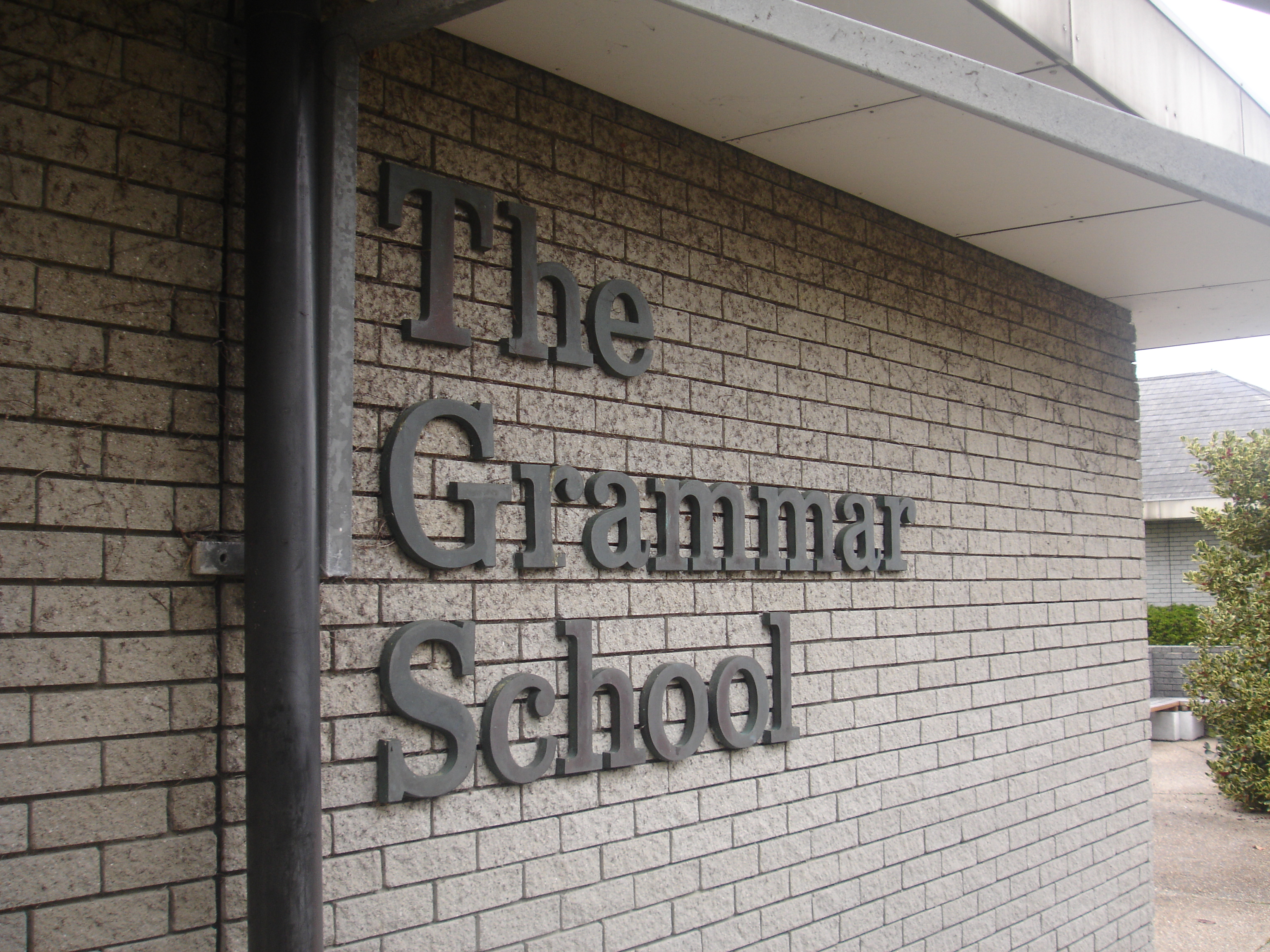
Grammar Schools: The Rise and Fall of ‘Evidence-Informed Policy’?

Much has been written on the subject of grammar schools in light of Prime Minister, Theresa May’s declaration to reintroduce selective schooling to England. Several counties currently still offer grammar schools as an option for students leaving primary school but May wishes to roll out many more across the country, citing ‘social mobility’ and ‘better chances’ for the country’s gifted as reason. Here, Geoff Whitty and Emma Wisby offer their take on what creating more grammar schools may mean in practice.

In her first major foray into domestic policy as Prime Minister, Theresa May has offered us more grammar schools. Not a return to the selective system of education that existed in England prior to the 1960s and still exists in modified form in a small number of local authorities; not the grammar school in every town envisaged by John Major in 1997; but new grammar schools where parents want them as part of the diverse mix of secondary schools that has developed in England over the past 30 years. We know that this would entail relaxing the restrictions on new or expanding grammar schools, as well as allowing existing non-selective schools to become selective in some circumstances. A fuller set of proposals will be subject to consultation in the light of a new Green Paper.

Our concern here is what to make of this development in relation to the rhetoric of evidence-based or evidence-informed policy that has been espoused by politicians of all three major political parties for some time now. On the face of it, it looks like a particularly stark illustration of how policy is in fact more often driven by ideology and the personal experiences and preferences of policy makers and their advisors – as well as the internal management of party politics. This is a point we made in our publication earlier this year, Research and Policy in Education. The conduct and outcome of the EU referendum has since added another slant to this in terms of the lack of traction ‘expert opinion’ had with politicians and the general public alike, such that the term ‘post-truth politics’ has now been widely applied to the British context. These aspects of contemporary politics are encapsulated in the remark by BBC Education Editor, Branwen Jeffreys that “this ffis post-referendum politics – where the symbolic status of grammars as a chance to better yourself has trumped the expert consensus”.

The debates around academic selection have always been emotive – to the point that an appeal to evidence has often seemed beside the point. The psychometrist Hans Eysenck, for example, saw fit to suggest that comprehensive schools were responsible for “millions of uneducated, practically illiterate and innumerate youngsters who are almost unemployable roaming the streets, making up the legions of football hooligans, and making Britain the laughing stock of Europe”. Compare this with Labour peer Roy Hattersley’s use of the language of ‘educational apartheid’ to characterise academic selection. The evidence base did make some political headway later on, with David Willetts’s careful weighing of the research on grammar schools in 2007 and his conclusion that they have not in fact been a driver of social mobility. Yet this did him few favours, and then Conservative leader David Cameron had to move him to appease the still strong thread of support for grammar schools within the Party.

However, the issue of selection is also an example of how using research evidence as a basis for policy is much less straightforward than is often suggested by advocates of this philosophy.The Grammar School Question, an IOE publication in 1999, reviewed what research evidence could tell us about the impact of competing systems – selective, comprehensive or diversified – especially on academic attainment. It had to conclude that, overall, the exercise had been ‘disappointing’ for those looking for decisive evidence to support one side of the debate or the other. As Jesson reported in 2013, a later review of the impact of grammars on academic attainment also brought ‘no conclusive finding justifying one position over another’.

Another strand of research has considered the impact of selective schooling on the wider political priority of ‘closing the gap’ and encouraging social mobility, emphasised by New Labour and even more so by the Coalition – see, for example, Harris and Rose (2013) and Burgess, Dickson and Macmillan (2014). These studies have not found that existing grammar schools contributed significantly to that cause, even where they identified some limited benefits for individual pupils – principally because so few children from disadvantaged backgrounds are accessing these schools. This finding seems particularly damaging to the cause of evidence-informed policy, given that Theresa May’s proposals have been presented as part of a wider move to create “a country that works for everyone”.

May’s plans do seem to address the problem of ensuring that grammar schools do more to help disadvantaged pupils. Specific proposals trailed in advance of the Green Paper’s publication included requiring new or expanding grammars to take a proportion of pupils from lower income households, or to establish “a new, high quality, non-selective free school”, or to sponsor a struggling academy. And yet, news reports have presented these elements more as a concession to sceptical Tory backbenchers and an unreformed House of Lords than as central to the policy. Equally, if they were to be genuinely a core part of the policy, this might mean that grammar schools were no longer recognizable as grammar schools. Some commentators are certainly clear that at the very least . So we might not see dramatic change anyway. The government is making much of the fact that they are proposing ‘grammar schools for the 21st century’ not a return to the 1950s and 1960s. Is this merely presentational, or will it lead to the backbench proponents of selection feeling let down? Perhaps as with the EU referendum, a policy move that might have been expected to ease internal party politics will do no such thing.

Grammar schools with significant numbers of ‘working class’ pupils, which Theresa May wants to encourage, could also have negative repercussions for her in electoral terms if middle class parents in marginal constituencies find themselves excluded from these schools. After all, political support for comprehensive education in the 1960s was as much fueled by disquiet among middle class parents whose children failed the eleven-plus as it was by academic evidence that the selective system was failing working class children. Today, such parents may be more attracted by wider policies of diversity and choice than by the new emphasis on grammar schools. In a further twist, the independent schools sector is reportedly predicting that the proposed new system will increase demand as middle class parents seek to avoid ‘second rate schooling’ for their children.

In a paper for Civitas written a couple of years ago, we pointed to something of a consensus among the major political parties that diversity and choice should be the hallmark of the English secondary school system and some degree of selection by aptitude, if not academic attainment, permitted within it. In view of this, we said, future governments may just try to tinker with the existing diverse system to encourage more or less selection within it. That is essentially what the new policy seems to be attempting, but the symbolic importance of grammar schools for both their advocates and their critics has meant it has been presented as something more. Ironically, this, in turn, has led to the defence of an existing political consensus on diversity and choice that itself is far from evidence informed. In the round, studies have shown its limited impact on academic attainment or closing the achievement gap, pointing instead to the far greater importance of improving the quality of teaching, as well as addressing inequalities in the early years.

More broadly, the government needs to be aware that, if it is really dedicated to creating a fairer Britain, high profile education initiatives are no substitute for a coherent overall approach. Only recently, in his British Academy lecture, John Goldthorpe warned that:

“What can be achieved through educational policy alone is limited – far more so than politicians find it convenient to suppose …To look to the educational system itself to provide a solution to the problem of inequality of opportunity is to impose an undue burden on it. Rather, a whole range of economic and social policies is needed.”

This is clear from recent empirical research that shows that, even when disadvantaged groups achieve success in the education system, we see a shifting of the goal posts and the creation of ‘class ceilings’ and ’glass floors’ that seem to protect the position of already advantaged groups. Note, for example, the Social Mobility Commission’s recent report on recruitment practices in the City and the role of what the commission’s chair described as ‘arcane culture rules’ over academic merit. In that context, some of Theresa May’s other initiatives, such as the review into how ethnic minorities and white working class people are treated by public services, may in theory at least, depending on what action follows, have more potential than a few new symbolic grammar schools.

Geoff Whitty is director emeritus of the IOE. Emma Wisby is head of policy and public affairs.

*This post was originally published on the IOE London blog and can be accessed here 

Putting Intersectionality To Work In GEA!

This past June’s 2016 GEA conference was the very first GEA conference to put ‘Intersectionality’ in the title! It was entitled ‘Gender Equality Matters: Education, Intersectionality and Nationalism’ at Linköping University, Sweden, 15-17 June 2016. Below GEA Executive member Victoria Showunmi reflects on ‘getting real’ about what this intersectionality means for her as a woman of colour occupying an executive position within GEA, and leading the conference event. As someone who has worked closely with Victoria for 7 years, I applaud her brave work in expressing the pain and anxiety of facing everyday racism and sexism in Higher Education.  Often viewed as a bastion of privilege, these elite institutions carry so much ‘white old man’ baggage that sometimes we lose sight of the work we need to do as diversely located ‘women’ to address and work through the pain of racism to get to ‘higher ground’ in our thinking and practice.  We are looking forward to comments and engagement from other women of colour scholars, particularly students and early career researchers whom we hope will find a space of encouragement, dialogue and support in Gender and Education Association, please consider joining now!

Professor Jessica Ringrose, GEA co-Chair

‘The only thing that separates women of colour from anyone else is opportunity’: Viola Davis (Sept 2015)

I was asked to stand in as the Chair for GEA’s 2016 conference which took place at Linkoping University on 15 – 17th June 2016. With both GEA Co-Chairs unable to attend the event, and the Membership Officer unable to fly in due to SAS strike, I was the only member of the GEA executive in attendance!  I had been given less than 24 hours notice.  It was one of those bizarre moments which needed to be turned into an opportunity for GEA.  Although my role was a small one within the scheme of the whole conference, I embraced the challenge. It was significant that I, as woman of colour, was representing GEA internationally for the first time in GEA’s history. GEA has another woman of colour on the Executive (Vanita Sundarum) besides me, but this was the first time a woman of colour was acting as the ‘face of GEA’.  As an organisation, GEA has, over the years, struggled with getting sufficient numbers of people (in particular women) of colour involved in the organisation, not surprising given the well documented institutionalised racism in Higher Education. There has always been a handful of women of colour internationally in GEA but not enough to make a real or longstanding difference in developing a powerful collective voice.

Why is this?

England is currently in a crisis – there are 18 number of women of colour who hold the post of Professor.  This shocking figure is not surprising due to institutionalised racism, but also greatly complicated by the difficulties in addressing racism between women. The long history of voices of women of colour being silenced by white feminisms is well documented (Carby 1996 Mohanty 1998). Fourth wave feminism makes the bold claim that it is tackling all ‘isms’ and is fully intersectional (Munroe, 2013). But accepting the way in which poverty, discrimination, microaggression (“daily verbal, behavioral, or environmental indignities, whether intentional or unintentional, that communicate hostile, derogatory, or negative racial slights and insults toward people of color.” Derald Sue 2013) are integral to the lived experiences that dominate women of colour’s agenda could be something considered to be too complex and somewhat negative to be included in the university context where neo-liberal competition reigns supreme. So is simply including the notion of ‘intersectionality’ in the title, as has become common in many contexts sufficient?


When women of colour try and explain to white women about their experiences of being a women of colour they are subjected to comments such as ‘how could you possibly face racism in your line of work?’ Whilst at the same time they have to listen to the same white women recounting their experience about sexism faced by male domination.  Women of colour do their best to engage white women in their discussion but can sadly fail to gain much response amongst colleagues. The refusal to acknowledge women of colours experiences as integral to feminist activism and scholarly meaning is disheartening.

Feminism without intersectionality is simply self-serving for whiteness and class privilege. But what does genuine intersectionality look like? How do we incorporate this into our everyday lives in HE? Women who fret about climbing the corporate ladder and shattering the class ceiling yet are indifferent to the violence, poverty and discrimination that women of colour face on a daily basis are looking out for themselves – or at the most protecting people just like themselves.

The dehumanisation of black women in the public media, for instance sheds light on everyday taken for granted racisms, Black women students researchers and lecturers, can also face where it is not only their intelligence called into question but their bodies. If we for example look the regular reporting of Serena Williams playing in White Wimbledon or even Michelle Obama. Both are subjected to direct and indirect racism for being women who are seen as too masculine in their physical appearance to be attractive women.  This of course is formed on the notion of whiteness and what is presented in being attractive. And of course we can’t leave out the discussion on shadeism which adds to the subjectiveness to what is appealing to the world of attractiveness. Shadeism and class is something that I too have had to grapple with both directly and indirectly as a woman of colour. It’s harder being a women of colour living and working in London than it was growing up and working in other parts of the United Kingdom.  It raises questions such as why and how could this be?  I am not at liberty to address  these questions it is something that I do want to come back to in a future paper.

At the personal level, acting as GEA Chair was, I knew, one of those peculiar times which would benefit both GEA and me. How was I going to act? Knowing myself, I always like to give any kind of opportunity away to somebody else thinking that others are more deserving. If I was not careful it could again be one of those moments where I let the opportunity slip by. Acting ‘dumb’ is something that women have been known to do when on their first dates.  Some women of colour apply the concept of dumbing down of who they are as a way to be accepted into the world of whiteness. Cast your minds back to hashtag campaign on the solidarity is for white women which were originally launched as a platform to discuss ways to talk about feminism.

On the one hand, I felt assured by the fact that at the same time as I had been asked to be Chair, GEA had resources in place with the fabulous group of students who support the organisation, such as Hanna Retallack, a PhD student, who was there to assist with the AGM and take minutes. That was reassuring. On the other hand, whilst I was excited about taking on the role I was having a bout of nervous anxiety. Why was I having these feelings when this was a chance to create a visual message for GEA: women of colour are needed and required in GEA. My anxieties stirred such emotions that I nearly pulled out of the conference and stepped down from the executive thinking “Oh dear, as a women of colour should it be me?” Perhaps I should pass it onto somebody else? Was I the going to be perceived as the authentic voice of colour? Of course, I knew that some of these anxieties were entangled with being raised as the only person of colour in my family and in the surrounding villages and towns in South West of England. Being the only person of colour is a recurring theme which has its moments which is something I have grappled with throughout my life. It means that you are the only one left fighting the good fight. I have always had to stand alone in the face of casual racism from people I speak with every day, and stand my ground. There are of course people who are tuned to the same frequency  and highly-sensitive, hyper-awareness that forces them to check their privilege before they speak. Being the only person of colour in the  higher education workplace is a feeling that’s hard to describe — a tightening of the stomach and a fluttering of the heart when something interesting that discusses race comes up, or the veiled bemusement cum irritation that presents itself when asked to explain something that could be solved by an easy internet search and an extra five minutes.

Before the meeting, I had a sudden surge of isolation. It felt like the whiteness was so overpoweringand stifling. “White privilege is the unquestioned and unearned set of advantages, entitlements benefits and choices bestowed on people solely because they are white. Generally white people who experience such privilege do so without being conscious of it” (Mcintosh,1989).Here I was as a Black women academic in relatively white space navigating my way around as a leader. Discussions on third or fourth wave of feminism that we have now moved into post-racial and we are done with race couldn’t prove more innnacurate!Whilst the conference provided a good selection of papers exploring the notions of intersectionality and how race plays an integral part ingaining a closer and better understanding of the relationship between gender, race, sexuality and class, the lived experience and posiitonality of the researchers as Patricia Hill Collins is keen to remind us is so critical, there were very few visible ‘minority’ people in this conference, and those experiences are felt keenly.

During the conference, I started to feel more at ease in the role.  Pre-conference nerves disappeared and I started to enjoy the role. Conference delegates were approaching me as the face of GEA, this was good as I was able to answer questions and point them in the direction of past executive members who were also really happy to support me.  It was an excellent conference and I appreciated the opportunity to step-up and let the light shine on me in the moment of GEA Chair.

Reflecting on the experience of acting as Chair and representative of GEA at the conference for me raises a range of different issues which need to be explored and addressed both by the GEA Executive and the organisation more broadly. Having an honest and open conversation will enable us to identity and then develop strategies to deal with the potential barriers which may be used as a defence barrier in not wanting change. It was so important to be accepted as woman and a woman of colour and just as important to know that we at GEA want to support younger generations of scholars in critical race and intersectional feminism in education to fill the very real gaps in representation, experience and teaching and learning.

Since being asked to write this blog I have agreed to take on the role as Equality and Diversity Lead for GEA.  The purpose of the role will be to guide and support GEA as an association to keep on track with issues regarding all aspects of equality and learn how to best support the educational sector in finding equality for all.

Thanks Dr Carol Taylor for encouraging me to put pen to paper and write a blog.

Dr Victoria Showunmi


Feminist Pedagogy

Introduction: Key tenets of feminist pedagogy

Feminist pedagogy is a way of thinking about teaching and learning, rather than a prescriptive method. As such, it is used in different ways and for differing purposes within and across disciplines and learning environments.

Definitions of feminist pedagogy vary widely, but there is common agreement on these three key tenets:

  • Resisting hierarchy: In the learning environment, the teacher figure and students work against the creation of a hierarchy of authority between teacher and student; the students also deliver ‘content’ and influence the design of the class.
  • Using experience as a resource: As well as using traditional sources of information, such as academic journals and books, the students’ and teachers’ own experiences are used as ‘learning materials’. The purpose of using experience as a resource is twofold: firstly, experiences which have not been documented in academic work are brought into discussion, and secondly the class participants experience transformative learning…
  • Transformative learning: Feminist pedagogy aims for the class participants (students and teachers) not just to acquire new knowledge, but for their thinking to shift in new directions. This may involve the realisation that personal interpretations of experience or of social phenomena can be re-read and validated in new, critical ways.

Those who are familiar with Critical Pedagogy, the work of Paulo Freire, or theories of Transformative Learning, may be asking: what is different about Feminist Pedagogy?

It is in defining the specific nature of feminist pedagogy that we encounter a variety of positions regarding the ‘feminist’ of ‘feminist pedagogy’. Who enacts feminist pedagogy? Feminist academics? Activists? Teachers with an interest in feminism? Teachers of Women’s Studies, Gender Studies, other subjects? Women? All women? Men? Some specific men? Donna Haraway (1991) explains that feminist pedagogy developed out of the exercises of experience-sharing in women’s community groups during the women’s liberation movement. But this is just one story of feminist pedagogy, a story that is firmly situated in a particular narrative…


How this resource page exemplifies feminist pedagogy

One of the biggest challenges to introducing or summarising feminist pedagogy is the challenge of resisting a single, dominant, institutionalised narrative. How to define feminist pedagogy without walling off the possibility of feminist pedagogies? It would be inappropriate to produce a resource page on feminist pedagogy without enacting the principles of this pedagogy in designing the page.

Rather than reduce feminist pedagogy to a single, fixed list of characteristics, with a canon of authoritative references to follow up, I have tried to portray feminist pedagogy as fragmented, as originating from and belonging to different people and places, as a continually developing phenomenon that invites teachers and students to contribute to its evolution. I work against hierarchical relations by presenting canonical texts alongside recent, experimental works. Moreover, by presenting numerous aspects of feminist pedagogy here, I resist the imposition of my singular interpretation of feminist pedagogy on you.

The sections covered are as follows:

  1. The development of feminist pedagogy
  2. BlackQueerFeminist Pedagogy
  3. Men/masculinities
  4. E-learning
  5. Subject-specific references for Dance, Economics, Geography, Psychology, Religious Studies, Research Methods, Science
  6. Country perspectives from Austria, Ethiopia and Japan.

In the ‘useful links’ section, I give the website addresses of the major Women’s Studies organisations in the UK, USA and Europe, on which international events, groups, and publications can be located.


1. The development of (and critiques of) feminist pedagogy

It is impossible to separate the development of theories of feminist pedagogy from the critiques of these theories because feminist scholars have deliberately built reflexivity into the tenets of feminist scholarship: a scholarship that does not critique its own mechanisms cannot be counted as feminist. As I show in the following sections, critical angles have importantly included the question of men in relation to feminist pedagogy, as well as the challenges to white Western feminism by black, postcolonialist and queer feminisms.

Challenges to feminist pedagogy have included queries of the very tenets listed above:

  • Resisting hierarchy: Where the teacher is paid and employed to assess students by the institution, how can the students gain equality with the teacher in the classroom?
  • Using experience as a resource: Who is able to speak out in the classroom? Which aspects of experience are further thrust into silence by the dominant voices of the classroom? How can students and teachers both talk of their ‘private’ experiences and engage in a professional assessor-assessed relationship? What is the line between ‘therapy’ and ‘academic discussion’? Who decides?
  • Transformative learning: What changes to ways of thinking can occur in an institutionalised learning environment? What if the ‘transformation’ is a negative or distressing realisation? Is the learning setting adapted to deal with high levels of emotion? Is there a risk of ‘transformation’ occurring as a reinforcement of a dominant feminist narrative?

It is important to note that these critiques have not heralded the end of feminist pedagogy, but can rather be said to be its achievements. Through the asking of these questions, the narratives of feminist pedagogy have been taken up and developed, inherited and re-questioned.

I list below some key texts on the development of feminist pedagogy. Each book of collected essays contains critical discussion of feminist pedagogy.


1980s

Bowles, G. and Klein, R. D. (1983). Theories of women’s studies. London: Routledge & Kegan Paul.

Bowles, G. (1984). Strategies for women’s studies in the 80s. Oxford: Pergamon Press.


1990s

Aaron, J. and Walby, S. (1991). Out of the margins : women’s studies in the nineties. London: Falmer Press.

Hinds, H., Phoenix, A. and Stacey, J. (1992). Working out : new directions for women’s studies. London: Falmer.

Rao, A. (1991). Women’s studies international : Nairobi and beyond. New York: Feminist Press.


2000s

Macdonald, A. A. and Sánchez-Casal, S. (2002). Twenty-first-century feminist classrooms : pedagogies of identity and difference. New York: Palgrave Macmillan.

Montgomery, F. and Collette, C. (1997). Into the melting pot : teaching women’s studies in the new millennium. Aldershot: Ashgate.


2. BlackQueerFeminist Pedagogy

Although feminist pedagogy is centred on cooperation, inclusion, equality, it is these very foundations that can – and have – led to exclusion and inequalities in the feminist classroom. It is common sense that in a group situation, if the dominant narratives of that group are not identified, members of the group who do not share those narratives will be marginalised. The interpretation of the ‘feminist’ of feminist pedagogy can lead to the validation of some experiences, some interpretations. Critiques of feminist pedagogy have outlined the exclusive nature of the so-called inclusive feminist classroom where experience is assumed to be white and heterosexual. I offer two recent articles to follow up this debate, as well as a bibliographical link.

Kishimoto, K. and Mwangi, M. (2009) Critiquing the Rhetoric of “Safety” in Feminist Pedagogy: Women of Color Offering an Account of Ourselves, Feminist Teacher, 19:2, 87-102.

Lewis, M. M. (2011) Body of Knowledge: Black Queer Feminist Pedagogy, Praxis, and Embodied Text, Journal of Lesbian Studies, 15:1, 49-57.

Black American Feminisms: Education Bibliography


3. Men/masculinities

A perennial question that bubbles over into the popular press every so often is that of men in relation to feminism. Does the ‘feminist’ of feminist pedagogy include men as students and/or teachers in the feminist classroom? If you believe that feminism is about women fighting oppression by men, then a man cannot be a feminist. If you believe that men too can fight against the oppression of women by men, then you may be torn between letting men in and keeping them away from the safe, women-only spaces. If you think that both ‘woman’ and ‘man’ are constructions, and that there is no real opposition, then you may consider that anyone could study and teach in this way who is interested in exploring the concept of ‘gender’. If you are teaching or studying within a discipline, you may feel that it is politically or theoretically important for the discipline to include a ‘feminist’ component. Follow up on this debate in the below papers:

Flood, M. (2011) Men as Students and Teachers of Feminist Scholarship, Men and Masculinities 14:2, 135-154.

James, P. (1999) Masculinities under Reconstruction: Classroom pedagogy and cultural change, Gender and Education, 11:4, 395-412.


4. E-Learning

One of the major developments in learning worldwide is the expansion of distance learning over the internet. There are special challenges posed to feminist pedagogy by this learning mode, as well as interesting potential benefits. How can hierarchies be challenged when the teacher sets up the session and watches for the students’ responses? How can students share their experiences in a formal written document with unknown peers? How can transformative learning occur when the students are removed from each other and the communications often lack spontaneity or immediacy? The online environment can flatten out equalities of voice where there is a divide between confidence in quickfire speaking versus written and edited writing. Students, who are increasingly adapted to social networking, may become more and more able to share their experiences in an online setting. The range of people who can access distance learning courses may open up the learning environment to more diverse experiences, and furthermore there is scope in the online environment to play with gender norms in portraying the self.

Kirkup, G. (2005). ‘Developing practices for online feminist pedagogy’. In R. Braidotti, A. v. Baren, ATHENA (Project) and Rijksuniversiteit te Utrecht (Eds), The making of European women’s studies : a work in progress report on curriculum development and related issues in gender education and research (pp. 252). Utrecht: ATHENA Advanced Thematic Network in Activities in Women’s Studies in Europe.

Kirkup, G., Schmitz, S., Kotkamp, E., Rommes, E. and Hiltunen, A.-M. (2010). ‘Towards a Feminist Manifesto for E-Learning: Principles to Inform Practices’. In S. Booth, S. Goodman and G. Kirkup (Eds), Gender issues in learning and working with information technology : social constructs and cultural contexts. Hershey, PA: Information Science Reference.


5. Subject-specific

Feminist pedagogy can be employed across a range of educational settings. I have included here a selection of recent articles focussing on feminist pedagogy within specific disciplines.


Dance

Shue, L. L. and Beck, C. S. (2001) Stepping out of bounds: Performing feminist pedagogy within a dance education community, Communication Education, 50:2, 125-143


Economics

Aerni, A. L., Bartlett, R. L., Lewis, M., Mcgoldrick, K. M., Shackelford, J. (1999) Toward A Feminist Pedagogy In Economics, Feminist Economics, 5:1, 29-44.


Geography

Dowler, L. (2002) The Uncomfortable Classroom: Incorporating Feminist Pedagogy and Political Practice into World Regional Geography, Journal of Geography, 101:2, 68-72.

Psychology

Kahn, J. S. and Ferguson, K. (2009) Men as Allies in Feminist Pedagogy in the Undergraduate Psychology Curriculum, Women & Therapy, 33:1-2, 121-139.


Religious Studies/Theology

McKinlay, J. E. (2000) Match or Mismatch? Attempting a Feminist Pedagogy for a Course on Biblical Criticisms,Teaching Theology and Religion, 3:3, 88-95.


Research Methods

Webb, L. M., Walker, K. L., Bollis, T. S. (2004) Feminist pedagogy in the teaching of research methods, International Journal of Social Research Methodology, 7:5, 415-428.


Science

Capobianco, B. M. (2007) Science Teachers’ Attempts at Integrating Feminist Pedagogy through Collaborative Action Research, Journal of Research in Science Teaching, 44:1, 1–32.


6. Country perspectives

I finally include three articles about feminist pedagogy in non-Anglophone countries. There is so much literature on feminist pedagogy from the USA that it is difficult not to construct the dominant narrative of feminist pedagogy from the publications of an academic culture. I resisted this narrative by actively searching for articles that demonstrate the international variety and commonalities of these discussions.


Austria

Franz, B. (2012) Immigrant Youth, hip-hop, and Feminist Pedagogy: Outlines of an Alternative Integration Policy in Vienna, Austria, International Studies Perspectives, 13, 270–288.


Ethiopia

White, A. M. (2012) Unpacking Black Feminist Pedagogy in Ethiopia, Feminist Teacher, 21:3, 195-211.


Japan

Fujimura-Fanselow, K. (1996) Women’s Studies and Feminist Pedagogy: Critical challenges to Japanese educational values and practices, Gender and Education, 8:3, 337-352.


Useful Links

Feminism and Women’s Studies Association (UK and Ireland)

National Women’s Studies Association (USA)

Women’s International Studies Europe (WISE)


General Further Reading

Crabtree, R. D. and Sapp, D. A. (2003) Theoretical, Political, and Pedagogical Challenges in the Feminist Classroom: Our Struggles to Walk the Walk, College Teaching, 51:4, 131-140.


Magolda, P. (2002) Pushing boundaries: An ethnographic study of life in and beyond a feminist classroom,International Journal of Qualitative Studies in Education, 15:5, 513-544.


Sinacore, A. L., Healy, P., Justin, M. (2002) “A Qualitative Analysis of the Experiences of Feminist Psychology Educators: The Classroom”, Feminism & Psychology 12:3, 339-362.


Tolan, F. and Ferrebe, A. (2012). Teaching gender. New York: Palgrave Macmillan.


Page Author: Emily F Henderson
Cracking the Phallus in Educational Research

 Cracking the Phallus in Educational Research


What does it mean to have our feminist work in education critiqued both in both the mainstream press and social media, but also deemed by our own colleagues as irrelevant, ‘silly’ or ‘dangerous’?

In this blog, Gender and Education Association members consider the full impact of pushing your research out there in the context of everyday sexism that penetrates academia and beyond.

Lucinda McNight’s piece ‘The phallic blogger’ documents her experiences of being the target of an educational blogger who deemed her paper ‘The Phallic Teacher’ at the Australian Association for Research in Education Conference “silly, abstruse and political.”

Generations of scholars have fought for social justice in education and would call their research ‘political’, so why is feminist research still singled out as ‘silly’?

As a scholar who has been called a ‘bra-burning feminist who has views 100 years out of date’ and had my research called ‘left-wing garbage’ (and a whole lot worse) by readers in the Daily Mail I get the feelings of indignation Lucinda discusses in her blog. Having been violently sexually trolled on Twitter for my feminist views, and even received hate mail -including a hate postcard delivered to my office – I also relate to the fear and despair these nasty attacks on our work can generate.

Indeed, it is not insignificant that the paper with the term ‘phallic’ in it was singled out…

Why does mention of the male member in connection with a world-view garner so much hatred?

Because it hits rather close to home!

In Emma Renold’s and my recent work on the ‘fleshy and symbolic’ phallus we explore charged incidents in schools over girls’ sexualisation.

[Renold, E. and Ringrose, J. (2016) Pin-balling and boners: the posthuman phallus and intra-activist sexuality assemblages in secondary school, In L. Allen and M. L. Rasmussen, Handbook of Sexuality Education, London, Palgrave]

The phallus raised its head when responses to the paradoxes of sexuality at school meant girls’ were disciplined and regulated, their bodies deemed inherent ‘distractions’ to male teachers and students.  Girls were the target of policy change because the same object relations that organise a phallic world view were in play in schools today.

What we need to tackle these power relations head on is creative, feminist-fueled, passionate educational research. Theories of phallocentric orientation in some ways work as well today as they did in the feminist ‘second wave’. This is because we STILL live in a context where un-contained misogyny and sexism (intersected with manifold other ‘isms) is able to flourish.

Unless we stand up and defend our ideas we may be tempted to ‘pull our heads in’ and retreat. But this is not an option! I stand with Lucinda McNight!

So read and enjoy this tenacious blog – we are looking forward to hearing back about what it excites for you!

Jessica Ringrose

Professor, Sociology of Gender and Education

UCL Institute of Education


The phallic blogger strikes: denigration of feminist early career research in education


In 2015, in my first year of full time employment as a lecturer,  I wrote a provocative title for my proposed Australian Association for Research in Education (AARE) conference paper, ‘Meet the phallic teacher: designing curriculum and identity in a neoliberal imaginary’. While I had already spoken at a 2014 Gender and Education Association conference, and published in Gender and Education on boys’ dominance in curriculum planning (10.1080/09540253.2015.1096920), I also wanted to share my work in the Australian educational mainstream. On publication of the conference program, an active educational blogger seized on my title (one of a tiny minority of titles that were clearly feminist) and launched a scathing attack on my paper as silly, abstruse and political. He and his commenters crowed that it was worthy of an Ig Nobel prize for BS education research apparently produced by a jargon generator.

Actual prizes

Meanwhile, the paper won the prestigious AARE Early Career Researcher Award, for the refereed conference paper with the most outstanding peer reviews. My thesis won our Deakin University Isi and Naomi Leibler prize for the most outstanding doctoral thesis in the social sciences, and then the 2016 Australian Literacy Educators’ Association award for an outstanding doctoral thesis with potential impact on educators’ lives and work. Six double blind peer reviewed papers and one book chapter are now either published or forthcoming, based on this BS research, conducted with a group of female teacher collaborators. The actual conference paper has now been re-written as an article and undergone double blind peer review again published in Australian Educational Researcher

http://link.springer.com/article/10.1007/s13384-016-0210-y

Yet the blog post denigrating my unread work has had 218,357 hits, hundreds of thousands more than my articles have received online.

The phallic blogger

The phallic teacher was imagined as a spectral figure that teachers negotiate in curriculum planning, the tooled-up teacher discursively created by neoliberal educational regimes. My papers have looked to the crude application of metrics and design rubrics in education (defining these as phallic tools) and the disavowal of creativity and girls’ culture in curriculum design. The phallic blogger emerges as a different but related figure, an apparently male avatar wielding social media as a powerful tool to both disavow and denigrate feminist research without engaging with it intellectually. He is both compelled and repelled by feminism, simultaneously looking at my paper and looking away. My writing remains unread, and abject, outside what can be countenanced and even explicitly defined as excreta (bullshit).

Impact… on the researcher

What does it feel like for feminist early career researchers to find their work treated this way? I felt both shamed, as these were the first public mentions of my research on social media, and also strangely thrilled. It was as if my paper was coming to life, generating evidence for its argument through its mere existence. I encourage all feminist early career researchers who face this kind of attack almost before they have begun their careers not to suffer in silence, but to put this vitriol to work for their own purposes and link it to broader cultural patriarchy.  I found support through my academic mentors, editors and colleagues, and look to finding creative and even humorous ways to speak back to these attacks, without feeding the trolls. Some of these ways are suggested in the phallic teacher paper. After all, it is said that the quickest way to detumesce a flasher is to point and laugh.

In this environment, in which to identify as a feminist, whether as a teacher or researcher is to invite ridicule, it is important to balance having our voices heard in broader fora with creating healthy working environments. These digital and physical spaces need to sustain our emergence as the next generation of educators seeking to challenge sexism, gender inequality and all the phallic bloggers out there.

Lucinda McKnight

Lecturer in Education (Pedagogy and Curriculum)

Deakin University, Melbourne, Australia

Dear Secretary of State for Education…


Here at GEA, we enjoy bringing you guest posts from leading academics and educators on topical issues. Here we have an article from experts at IOE, the world leading education institute, discussing the new appointment of Justine Greening as Secretary of State for Education and their suggestions for her as she moves forward in her new role.

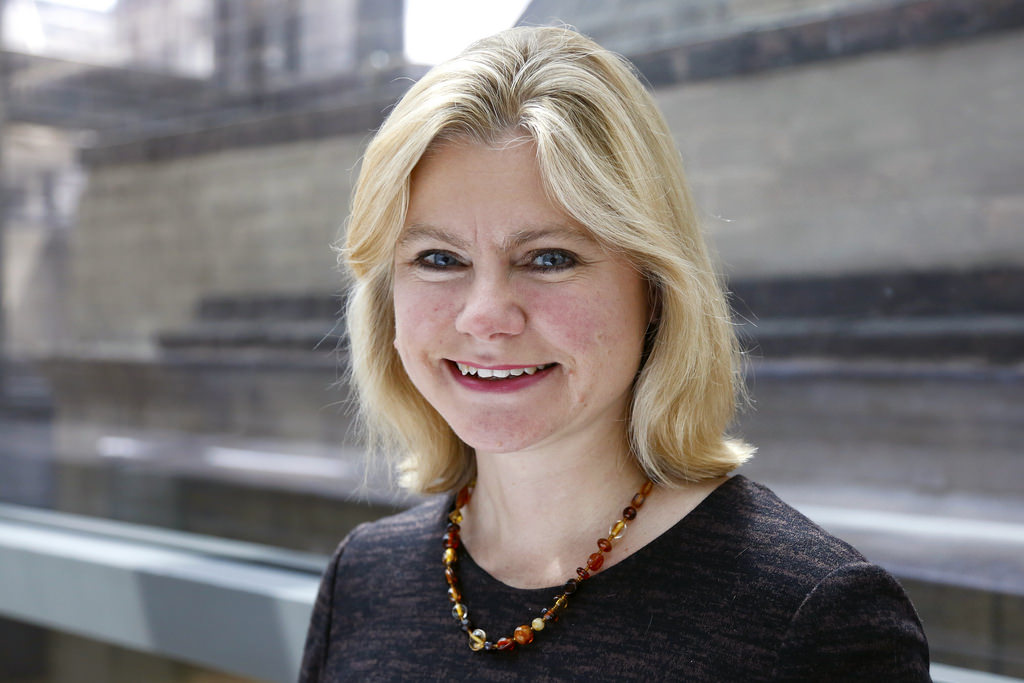
Now we know. Justine Greening, MP for Putney, Roehampton and Southfields, has become the new Secretary of State for Education and Minister for Women and Equalities. Her brief is to include higher education and skills, formerly under the Department for Business Innovation and Skills. Downing Street says the education department will take on responsibility for: “Reforming the higher education sector to boost competition and continue to improve the quality of education that students receive; and delivering more apprenticeships through a fundamental change in the UK’s approach to skills in the workplace”.

Ms Greening, one of the few education secretaries to have attended a non-selective state secondary school – Oakwood Comprehensive in Rotherham – was previously Secretary of State for International Development. The new education secretary has a background in accountancy.

While teacher supply –  discussed in a recent IOE blog post – will be at the top of her very full in-tray, she will also need to master a wide range of topics from Academies to Teacher education. As early as next week, she will have to steer the Higher Education and Research Bill through its second reading. Here, IOE experts suggest priorities for Ms Greening to consider in key areas of education policy.

Simon Marginson on higher education

  1. The system needs a stable regulatory structure. The Higher Education Funding Council for England (HEFCE) has served English higher education well in the public interest. It is crucial that the new mechanism is equally effective in providing for standards, good management and the effective use of scarce resources. The accumulated wisdom of the previous regulatory regime must be retained in the system.
  2. Crucial Brexit issues. It is urgent that students and staff receive firm guarantees on their long-term future in the UK and that – if necessary – a subsided scheme is introduced to replace two-way Erasmus student movement. Brexit diminishes  UK HEIs’ early access to the best research in Europe as well as sharply reducing income for research. Both are equally important. The problem is inescapable—a large scale government programme for research funding across all disciplines will be needed to fill the gap.
  3. Beyond Europe. Relations with emerging East and Southeast Asia, South Asia, Central Asia and Latin America have now become more important. The new education secretary will need to catalyse engagement with higher education in these world regions through both ministerial leadership and selective incentives.
  4. The Teaching Excellence Framework. The new Secretary of State must ‘hasten slowly’ to put in place comparative measures that are educationally valid, leading to genuine improvements in learning over time, rather than proxy measures that turn the TEF into a reputation race in which a nominal victory goes to institutions best equipped to manipulate the system, with little real improvement in learning taking place. It would also be a good idea to reconsider the proposal to link the TEF to funding.
  5. The Research Excellence Framework. The REF has become a UK back-patting exercise in which the rate of improvement is scarcely credible. More stringent international measures of the ‘world standard’ are needed. The REF is also too readily gamed by selective inclusion of research — universities should be required to submit data based on all of their academic staff.

Clare Brooks on teacher education

We hope the new secretary of state will:

  1. Recognise universities’ contribution to the development of professional teachers, who have a solid knowledge base and a thorough understanding of what teaching involves.
  2. Recognise the importance of the partnership between schools and higher education institutes (HEIs) in the initial and continuing education of teachers. HEIs play a large role in school-based teacher education and schools contribute enormously to the PGCE.
  3. Consider the international evidence which suggests that initial teacher education should comprise of a two-year integrated programme. Newly-trained teachers (NQTs) and recently-trained teachers (RQTs) need ongoing specialist support.
  4. Recognise the contribution of a range of research evidence on teaching and learning.
  5. Agree that all teachers should be educated to Master’s level. This enables them to engage thoughtfully with professional dilemmas, to diagnose problems effectively and to find solutions not just for tomorrow but well into the future.
  6. The system needs stability. Please don’t change it again.

Dominic Wyse on primary education

  • Plan for a major review of England’s national curriculum.
  • Move to national assessment based on national sampling rather than high stakes competitive assessments for all children.
  • As a matter of urgency commission a review of English in the national curriculum, including investigating the damaging effects of grammar teaching as currently configured.
  • Fund a new initiative on creativity in primary education.

Guy Roberts-Holmes on early childhood education

Young children need time and space to be allowed to play to build up confidence, resilience and social skills. Young children should not be tested and put into so called ability groups which can set low expectations for too many children.

Michael Reiss on secondary education

Allow some of the existing changes time to bed in.

  • Encourage stronger professional subject associations so that the focus is on excellent subject teaching in each classroom.
  • Widen the EBacc so that the arts and humanities are better represented.
  • Ensure better use is made of the pupil premium.
  • Change the tone so that good teachers feel valued – you will get more from them!

Ann Hodgson on further education

The independent Sainsbury Review of technical education and government’s Post-16 Skills Plan response recognised the strong and clear role for FE colleges and not-for-profit training providers in technical education and apprenticeships. However, building a strong technical education system requires considerably more funding than has been the case for FE programmes to date and the Post-16 Skills Plan hedges its bets on this score.

Moreover, considerable and careful work will be needed to design the new technical programmes, as well as the all-important ‘Transition Year’ and ‘Bridging Courses’ that potentially allow for progression into and transferability between academic and technical programmes and apprenticeships. It is very important that the new Institute for Apprenticeships and Technical Education makes full use of the experience and expertise of the educational practitioners  who will be implementing these reforms with real learners in different local contexts, as well as satisfying the needs of national employers and professional associations.  We have been here before (remember the unfortunate 14-19 Diplomas!). Getting it right this time requires the involvement of all stakeholders.

Chris Brown on research use

If we are serious about the English school system being one that meets the OECD call for schools to become learning organisations that innovate to improve student outcomes, then we need to ensure school leaders can:

  •  develop the ability of teachers to engage in and with research and data;
  •  foster school cultures that are attuned to evidence use (i.e. that make research-use a cultural norm);
  •  promote the use of research as part of an effective learning environment; and
  •  put in place effective structures, system and resource that facilitate research-use and the sharing of best practice. One way to achieve these might be the wider adoption of Research Learning Communities.

In a similar vein, the Department for Education should also seek to develop itself as a learning organisation. This will require educational policy makers to rigorously engage with research in a systematic way as part of the policy development process. Here policy learning communities can help, since they provide collegial environments within which to consider research along with policy-makers’ own knowledge and experience, and in relation to the values of the government of the day. This would help policy makers find the most effective way to address the wishes of ministers. Also key to making policy learning communities work  will be a meaningful partnership with universities – with HEIs providing key knowledge to help civil servants address pressing problems.

However for policy-making to become truly evidence-informed, policy makers need both the ability and the incentive to use evidence. The former can be addressed through culture change and an explicit requirement in the form of professional standards. The latter can be achieved through the development of skills.

Melanie Ehren on inspection and accountability

Arrangements for the accountability and monitoring of Multi-Academy Trusts (MATs) and the schools they run need to be simplified and streamlined. Head teachers tell us that the different frameworks used can cause confusion over which areas the school needs to improve on. Greater collaboration is needed between Ofsted, the Regional Schools Commissioners (RSCs) and the Education Funding Agency (EFA) in holding academies and their trust to account, with clear frameworks for evaluation, sharing of information, evaluating performance and supporting school improvement.

The arrangements need to address the functioning of the trust itself, not just the performance of its academies. New frameworks are needed which evaluate the quality of the trust in supporting school improvement and in creating synergy across the trust. These frameworks should evaluate the added value of the partnership such as ensuring that children have a good transition from primary to secondary school, the effectiveness of joint professional development or the efficient financing of centralised back office services. Such frameworks should be part of HMI focused inspections and current reviews of trusts, and included in Regional Schools’ Commissioners’ monitoring frameworks.

Rose Luckin on ICT and education

  • The automation of the workforce through robotics and artificial intelligence is increasing at an incredible rate. The routine cognitive skills that are emphasised in the current education system are the easiest and first to be automated. Learners and teachers must therefore be equipped with different skill sets: such as negotiation, collaborative problem solving and effective communication, as well as deep subject knowledge and understanding. Artificial Intelligence software for education (AIED)techniques can be used to equip learners and teacher with the new skills they need, such as collaborative problem solving, if investment is made in AIED software development.
  • There are significant educational advantages to be gained by reaping the potential of Big Data. Educationalists are starting to see the myriad of conceivable uses for the massive quantities of data collected about learners and teachers. These include: school and student demographic and performance data, predictive data (such as identifying students who are most at risk of falling below their potential in exams) and process data that enables the micro-analysis of how the learning and/or teaching takes place.
  • Better connections between educational technology researchers, educational technology producers and educators is essential. The UK is home to many world leading and cutting edge educational technology companies. For UK education to benefit from this, much better connections must be made between the above three key communities. Higher Education Institutions account for 24% of UK Research and Development expenditure and yet there is currently no space where researchers can collaborate with EdTech ventures to exploit research results and generate new or improved products. The UCL EDUCATE project, which starts in September 2016, will start to address this problem, but more work is needed.

Toby Greany on school leadership

The importance of high quality school leadership is critical in England’s high-autonomy-high-accountability school system. There are some significant risks ahead as Local Authorities are dismantled, a national funding formula is introduced (while budgets remain flat and real terms costs increase), pupil numbers rise, and schools must deal with relentless changes to the curriculum, assessment and accountability framework.

Meanwhile, school leaders must also work out how to form and lead successful Multi-Academy Trusts – an endeavour that will require enormous emotional energy as well as vision, skill and perseverance if we are to avoid a more fragmented system, a stagnation in results and/or a rise in expensive new bureaucracies. More needs to be done to help new MATs to succeed and to ensure communication and learning between, as well as within, trusts.

Leaders will need support, encouragement and enough space to succeed in the face of all these challenges. A priority should be to make sure that the recently announced DfE review of the National Professional Qualifications for leadership leads to sensible and well-enough funded proposals to ensure that there remains a core spine of high quality development for leaders. The NPQs have been under-funded and have lacked national impetus since the National College for School Leadership was neutered after 2010, but the answer cannot be to scrap them and let the marketplace prevail because that will lead to yet more fragmentation and a lowering of quality.

Brian Creese on adult education

How about a rediscovery of adult literacy and numeracy? In the six years no-one has paid any heed to this issue, the problem has not gone away. There is still a significant number of adults with very poor literacy and numeracy skills who should and could be helped by greater government investment in the sector. There are also many adults with poor skills who can get by but could do better in both work and personal lives with better basic skills. We used to lead Europe in this field, but as the rest of the continent have learned from us, we seem to have forgotten about the problem.

This article was previously published on the IOE blog and can be found here.

Brexit: How Education Loses Without the European Learning Area

GEA are devastated by the UK’s decision to leave the EU. Here, executive member, Professor Andrea Peto shares her views on the referendum results and what it may mean for education.

We are sitting in Brussels in one of the hopelessly grey and spiritless conference rooms of the European Commission. ‘We’ is a group of international gender experts who were invited to provide strategic advice to the European Commission on its research agenda for the coming years. The language of the discussion is of course English. The topic is how to ensure that gender knowledge is produced and disseminated and how Europe can be turned into a model of fair society. During the coffee break the topic of Brexit comes up and the gender experts share their concerns about this possibility. By today it is clear that our concerns were justified. The UK voted to leave the European Union.

The United Kingdom has not only produced a moderately mainstreamed film about the suffragettes but it has also pioneered the institutionalisation of women`s studies as a discipline and has contributed to the development of national and international organizations and societies supporting a dream. This dream is equality in education. Educational institutions reproduce inequalities based on class, gender, race more than any other institutions. In Brussels, during the advisory group meeting mentioned above, different European educational programs were mentioned. Many of these programmes aim, among other things, to support the development of a fairer European Union. The list is long from Erasmus, to Marie Curie Sklodowska Programs to Leonardo, all programmes which have attracted many students and scholars from the continent to Britain, and their UK counterparts to the continent. The number of international students involved in this programme has increased steadily over the years with, remarkably, men and women equally represented. These programs together with Erasmus Mundus channeled funding into the very hierarchical UK educational system.

Leaving the EU also means leaving the European Educational Arena. The internationalisation of the curriculum in the UK would not have been possible without EU funding bringing in people and knowledge. European education means strong support for gender equality, equal opportunities and social and geographical mobility. The benefits are mutual. For example, students and scholars have come to the UK from the continent, bringing along language skills at times when British universities talked of closing down their language departments. European Union funding was also crucial for the institutionalisation of women`s studies. As gender scholars, when getting into difficult discussion with university managers about budget issues, we could promise the steady flow of excellence based European money for research and for teaching. Most likely, leaving the European Educational Arena will also transform the curriculum.

Education is also a business: an increasingly influential and profit generating business. Leaving the European Educational Arena will not only mean the ‘provincialization’ of educational material and of teaching staff, but also increasing costs and decreasing access and opportunities. The benefits have been mutual. It was the UK which supported the Racial Equality Directive challenging the concept of Europe as a White continent. If the continent is losing that pressure we also risk losing an important aspect of the fight against inequalities. When we are discussing Brexit from the point of view of education we are discussing losing programs, networks and pedagogical content. As we agreed in Brussels during our meeting, we are all losing in the long run as internationally educated minds can play a key role in bringing equality and freedom.

GEA 2017 Biennial Conference CFP

Following on from the success of our fantastic conference hosted at Konsert & Kongress in Linköping, Sweden, we are now considering proposals for our next host venue.

The GEA executive committee welcome proposals to host the biennial conference from higher education institutions across national contexts and from conference teams spanning a variety of academic disciplines, theoretical backgrounds and fields.


The deadline for submission will be 28th September 2016.

Please see the attached document for details

Biennial 2017 CfP

Guest Post: Alison Malcolm on a Gender Action Plan for Colleges and Universities

The Scottish Funding Council (SFC) is aiming to tackle the gender imbalance in some key professions these include childcare, engineering, hair & beauty and construction. Alison Malcolm, Policy Analysis Officer at SFC outlines the plans.
 
Gender segregation in various occupations in Scotland stubbornly persists. Growing industries like engineering, technology and construction remain under-represented by women and similarly teaching, nursing and hairdressing by men. This is nothing new, however now there are ambitious plans for improvements in gender equality in Scotland’s colleges and universities.
 
The Scottish Funding Council (SFC), which invests around £1.5 billion of public money each year in the college and university sectors, has published guidance to address gender imbalance at a subject level. The SFC’s first Gender Action Plan, also includes aims for universities where male undergraduates, especially those from a deprived background, are currently underrepresented. It will be used to add gender equality targets for each institution to the outcome agreements from 2017. Outcome agreements set out what colleges and universities plan to deliver in return for their funding from the SFC.
 
Employers have told SFC that qualified male child carers are in high demand, yet this is one of the most imbalanced areas of study at this level. 96% of students studying childcare-related courses in Scottish colleges between 2011-15 were female. Female ICT and construction graduates are also highly sought after, in industries which are facing significant skills gaps and are actively seeking to be more representative of society as a whole.
 
In the Gender Action Plan Interim Report issued in February, with a final version later in the summer, the SFC hopes to start by tackling the most imbalanced ‘super-classes’ as a priority. Goals include: by 2030 to ensure that no subject has an extreme gender imbalance i.e. greater than 75:25. We also want to ensure the gap between the number of male and female undergraduates is reduced to just 5%.
 
Such imbalances continue to exist because of the gender stereotypes that all too often determine the subjects people choose at school and college. The choices students make about their courses affect career pathways and create “women’s jobs” and “men’s jobs”. This, in turn, affects wages, career earning potential and career progression opportunities.
 
When we were talking to people about developing the Gender Action Plan, we heard from many in Scotland’s further and higher education sectors who believe that, while they could do something about gender segregation at college and university, ultimately they are working with young people who already have ingrained beliefs about the instinctive abilities of girls and boys.  The solution has to be as multi-faceted as possible. A lot of people stressed the importance of a ‘whole system’ approach to tackling beliefs about the roles of women and men. SFC recognises the importance of this and is working with various partners including Education Scotland, the national body for learning and teaching in schools, to tackle gender equality at all stages of a person’s journey through education. We also recognise that today’s students are tomorrow parents, employers and educators and that by addressing gender inequality head on across further and higher education, we have a greater chance than ever to make change for the better.
 
We need to ensure that all students, regardless of background or personal circumstances, have the best chance of accessing the right education for them – one which leads them to sustainable employment. Whether or not Scotland, or any other country, can prosper and be economically successful depends upon the strengths and talent of all of its young people. Our belief is that the workforce in areas like Engineering or Early years education should not be restricted to the talent of half the population – it should be open to all.
This post was written by Alison Malcolm – SFC Policy Analysis Officer