It is astonishing that a conference on Black British Girlhood Studies was convened for the first time in Britain in 2025, and we support and applaud this shift and look forward to many more – nonetheless, this truth is telling of the intellectual and political space that we are in. It also reflects a wider issue of epistemic whiteness and neocolonial violence which permeates and bolsters academic and wider institutional practices and agendas. For Black girls, their communities/families, and Black girlhood orientated scholars, researchers, practitioners, and professionals, the field is unsupported and requires research, funding, and more coordination and movement to build momentum, and consequently, drive progress.
Co-hosted by the Centre for Social Change and Justice (CSCJ), and funded by the School of Childhood and Social Care, CSCJ, and Student Life at the University of East London, the main objective of the symposium is to delve into some of the complexities involved in Black British Girlhood as a site for understanding a range of ideas around race, ethnicity, culture, gender, health, community, dis/ability and neurodivergence. It will grapple with Black girl experiences with consideration community, embodiment, and institutions such as school, social care, and technology – to name a few.
This is an interdisciplinary discussion where Black girls (18 and over) and women, academic, practitioner, students, policy and other professionals and stakeholders are welcome to contribute and collaborate in moving the agenda forward.
The symposium takes place on the 11th March 2026 at the University of East London, UK.
If you have any enquiries regarding Black Girl Streams or more specifically BEGSA including the Special Interest Stream, email: info@blackgirlstreams.com
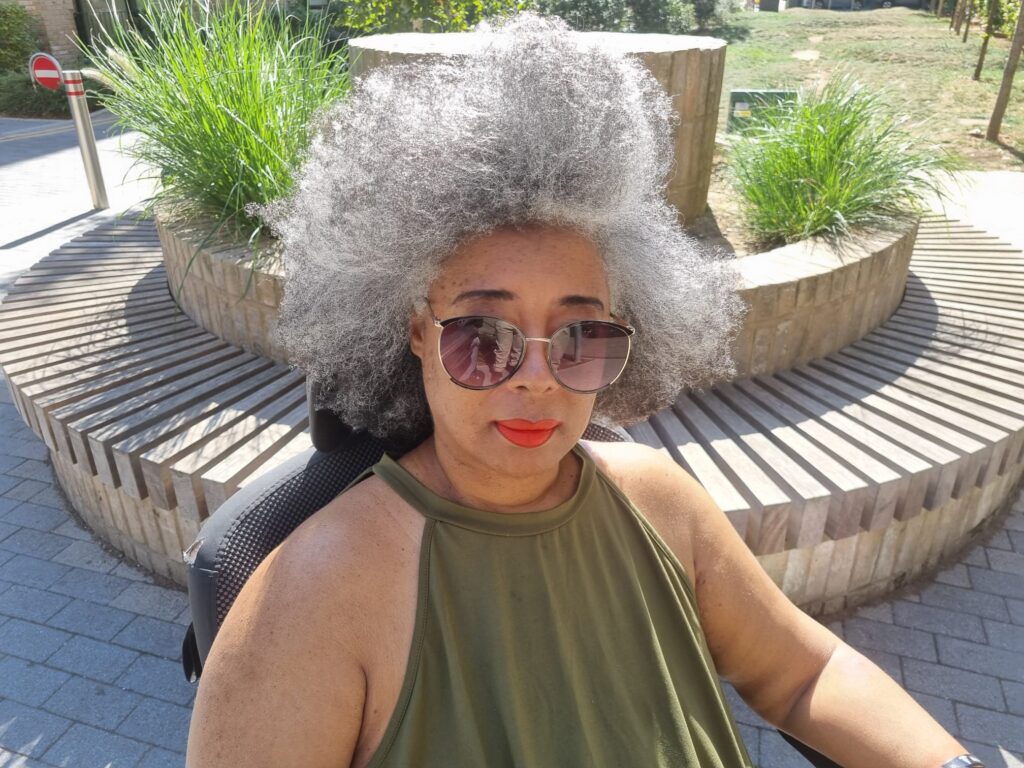
I am Dr Silhouette Bushay, Senior Lecturer and Course Leader at the University of East London, and Founder, Executive Director and Lead Scholar at Black Girl Streams C.I.C.
The intersectionality of class and gender is at the forefront of my experience and research as a PhD student exploring curriculum justice. In this blog post, I reflect on my higher education journey as a white, working-class, British woman and I touch upon how structural inequalities are embedded in curriculum design and delivery. I explore how neoliberal ideologies commodify education, marginalise working-class women, and erase diverse ways of knowing. My experience and reflections have shaped my commitment to advocating for curriculum reform that promotes epistemological justice, which has the potential to lead to broader social transformation.
A Moment To Reflect
Very recently, I attended a conference where one of the presenters mentioned that personal social injustices they face motivate them to change things for others. This resonated deeply with me and prompted me to reflect on my own intellectual journey through higher education, particularly my undergraduate studies. I reflected on how my experiences as a working-class white British woman not only shaped my path but also my research into gender and curriculum justice.
I vividly remember the look in my dad’s eyes when I told him I was intending to go to university after completing my A Levels. I caught a glimpse of the heart-stopping, stomach-dropping panic.
‘Are you sure?’
‘Have you thought about getting a job?’
‘You don’t have to because your friends are, you know?’
I knew I didn’t have to. I wanted to. Even in those self-absorbed teenage years, I did feel for my dad. I was asking for the equivalent of 2 years’ worth of food shopping for our working-class family of four, to be paid over the course of the next 3 years. Yet, with the most pained smile I will probably ever witness, he agreed.
I studied Music, and it wasn’t until my third year that I came across my first female lecturer, a guest lecturer from the Music Therapy Master’s course. It was then that I realised there were no female lecturers in the department. We did not learn about any female composers and anything aside from Western music was crammed into a one-semester elective module in the first year – ethnomusicology – taught by a very charming, but very white, middle-class male.
I didn’t think much of it at the time, but now I truly understand how teaching cannot be viewed as a matter outside of social class. Teaching is an overt genderised profession with evident historical roots within the capitalist system (Anyon, 1997; Arnot, 2002; hooks, 1994; Darder, 1991). I now question myself: Was it worth it? Is it worth it for working-class women now, after 20 years? What knowledge, or rather whose knowledge, are you paying for? These are just some of the questions I hope to answer through my research.
Working-Class Realities and the Cost of Aspiration
Class matters are deeply intertwined with gender and, needless to say, racial categories. (Davies, 2019; hooks, 1987; Darder, 1991) I have found that women are disproportionately affected by precarious work conditions, unpaid carer roles and responsibilities, as well as exclusion due to disability. Also, it is interesting to notice whose women one is referring to? In recent research, the UK Trades Union Congress (2025) revealed that women are 34% more likely to be on exploitative zero-hour contracts than men, BME women are 103% more likely than white men, and disabled women are 49% more likely.
When I started my undergraduate studies in 2005, university tuition fees in England were set at £1,500 a year. At that time, the National Minimum Wage was £5.05 per hour for those aged 22 and over, and £4.25 per hour for those aged 18 to 21. Fees were the equivalent of 297 hours’ and 353 hours’ worth of work, respectively. Have things got better? Unfortunately, no. The National Living Wage, as it is now known, is set at £12.21, and a year’s fees can be charged at a maximum of £9,535 in England and Wales: an equivalent of 781 hours. So, what kind of curriculum are you paying all this money for? What will you learn? Who benefits from ‘such learning’? Importantly, is it worth the mounting debt for the working class in particular? Alarmingly, if one pays attention to studies promoted by conservative psychologists, such as Jordan Peterson, equality policies, particularly in Scandinavian nations, have aggravated gender equality.
It is essential to recognise that prevailing societal ideologies influence the dominant forms of curriculum theory, design, and development. At present, as research documents, neoliberalism has been capable of imposing itself as a public pedagogy aiming for educational outcomes that are directed by primary market drivers. Students are treated as a commodity, like any other commodity, a captive mass of customers, and knowledge is viewed as a commodity as well (Apple, 2000; Giroux, 2011). There is an emphasis on ‘marketable skills,’ which reinforces capitalist values, namely, individualism, competition, and instrumental views of reason and existence. Since the market dictates education, pedagogy is compartmentalized and individualized to be in tune with those markets. In the course of my research so far, I have observed that the majority of online prospectuses foreground workplace skills that can be acquired during the course, before describing the degree content. For some, this isn’t very meaningful. The curriculum is designed to serve the labour market, not the students. It promotes skills for employability, assuming everyone is a potential worker, and adds little value for women who cannot work or are in insecure jobs, creating a sense of economic disempowerment. Notably, education is closely tied to a new emerging gendered class: the precariat. Distinct from the traditional working-class, the ‘precariat’ (a term originally coined in 2011 by British economist, Guy Standing (2014)) are characterised by their precarious employment, unstable living conditions and lack of rights both within and outside of the workplace.
From a progressive feminist perspective, this assumption overlooks structural inequalities (such as access to employment, leadership roles, and equal pay, to name but a few) that disproportionately affect women—particularly those in caregiving roles, precarious employment, or excluded from formal work altogether. It adds little value for the women who cannot work or are in insecure jobs, creating a sense of economic disempowerment. By prioritising individualised success and employability, neoliberal curriculum design erases collective struggles and reinforces gendered marginalisation within education.
Intersecting Inequalities: Who Is Left Behind?
Neoliberal framing also builds the curriculum as a site of power. Bernstein (1971) claims, “how a society selects, classifies, distributes, transmits and evaluates the educational knowledge it considers to be public reflects both the distribution of power and the principles of social control”. The curriculum, therefore, is a selective tradition (Williams, 1983): when you select, you make choices of what is ‘in’ and ‘out.’…and in so doing, you murder countless knowledge platforms. ‘Educated knowledge’ is often defined by dominant Western, patriarchal, and capitalist ideologies, and higher education is no exception. The curriculum has an epistemicidal nerve (Paraskeva, 2011). The general curriculum engages in epistemological looting (Paraskeva, 2016), privileging Western Eurocentric narratives while silencing indigenous, feminist, and non-Western epistemologies. ‘Objective’ knowledge is masculinised, whilst socially constructed ways of knowing and emotional experiences are feminised and devalued. Actually, in many aspects, they have been produced as non-existent (Santos, 2014). Epistemological violence (Paraskeva 2016) against working-class women and other disenfranchised individuals and communities has historically been rampant -not just in the West – and this rode upon the wave of colonisation to the South. Hence, women from indigenous communities face double the marginalisation and oppression from both patriarchal and colonial powers.
How do the politics of the curriculum impact working-class women? They are systematically neglected: the curriculum rarely reflects the lived experiences of the working-class, as their knowledge is often rooted in survival, care, and community, and is not considered ‘academic’ or ‘valuable’. This invisibility also means that others, outside of their community, do not understand their realities. Women’s invisibility in the curriculum matters has been consolidated through men’s visibility.
Additionally, the current curriculum perpetuates social hierarchies. As a result of the white, patriarchal Western Eurocentric norms embedded in the curriculum, working-class women are assumed to be uneducated and unskilled despite their different ways of knowing, reinforcing classism, ableism, racism, and sexism in both education and society. Constant exclusion from educational narratives and opportunities can lead to disempowerment and alienation, also limiting their ability to advocate for themselves or their communities.
Towards Epistemological Justice
I was fortunate enough to secure a full-time job, albeit at minimum wage, while attending school. Working full-time hours and studying on a full-time course was intense, and sure, I would have attained better marks if it had not been for cramming coursework in work breaks, but I managed to see myself through and come out with a piece of paper on the other side to show the world I had a degree. Looking back, however, it cost a lot more than money. My identity – my working-class ontology, my epistemology, and even my accent, which set me apart – all had to be shed for me to fit in with my peers and absorb white Western male knowledge. I am not ashamed to admit that, if it were not for employers covering the costs of my Master’s and PhD studies, nor for the fantastic support I receive from my supervisors, I would not be where I am today.
I was, and still am, lucky — and it is not fair. As a society, we need to strive for something better, and I hope this is where my research will lead me. I cannot see how we can change society without changing education and teacher education. Although I am not naïve, as education alone cannot transform society, the truth is that the social transformation we so desperately need requires a radical shift in the way we think about and approach education. I am making it my mission to explore curriculum theories that promote epistemological justice, embrace diverse and plural ways of knowing, and break away from a territorialised curriculum that is fixed, canonised, and built on colonial and patriarchal frameworks.
REFERENCES
Anyon, J. (1997). Ghetto Schooling. New York: Teachers College Press.
Apple, M. (2000). Official Knowledge. New York Routledge
Arnot, M. (2002) Reproducing Gender. New York: Routledge
Bernstein, B. (1971) ‘On the Classification and Framing of Educational Knowledge’. In M. F. D. Young (ed), Knowledge and Control. New Directions for the Sociology of Education (pp. 47- 69). London: Collier-Macmillan
Darder, A. (1991). Culture and Power in the Classroom. New York: Routledge
Davies, A. (2019) Woman, Race and Class. New York: Penguin.
Giroux, H. (2011) Education and the Crisis of Public Values. New York: Peter Lang
hooks, b. (1987) Ain’t I A Woman: Black Women and Feminism. London: Pluto Press.
hooks, b. (1994) Teaching to Transgress. New York: Routledge
Paraskeva, J. M. (2011) Conflicts in Curriculum Theory. New York: Palgrave
Paraskeva, J. M. (2016) Curriculum Epistemicides. New York: Routledge
Santos, B. (2014) Epistemologies from the South. Boulder: Paradigm
Standing, G. (2014) The Precariat: The new dangerous class. London: Bloomsbury
Recent years have seen a revival of feminist thought and activism, often described as ‘the fourth wave of feminism’, which is facilitated by the accessibility of social media and mobile technology, enabling multiple forms of interconnectedness, involvement, and instant action. Different generations of women around the world are increasingly engaging in dialogues about their experiences of inequality, discrimination, and oppression. Alongside these rapid developments, there has been a huge effort to push feminist debate into mainstream popular culture. While women have been ‘leaning in’, ‘leaning out’ and ‘hashtag-ing’ their thoughts away on Twitter and Facebook, stakeholders and politicians have been taking carefully measured steps towards putting feminism back into their lexicon, convincing everyone of their genuine concern and powerful address of women’s issues.
These and many other aspects of the contemporary feminist landscape were the topics of a successful panel discussion on Intergenerational Feminisms and Media Cultures, which took place on November 6th 2014 at the Marx Memorial Library in London. The event was part of the ESRC’s Festival of Social Science and was organised by Jessalynn Keller and Alison Winch from Middlesex University. A wide range of audience members, from public activists and media professionals to secondary school students and academics, attended the panel discussion and contributed with thought provoking questions and comments. The panel speakers were Ikamara Larasi from Rewind & Reframe, Jessica Ringrose from the Institute of Education, the teenagers Rosa Tully and Lucy Parfitt who set up a feminist society at their school, and Lynne Segal from Birkbeck, University of London. Their candid personal and passionate testimonies sparked inspirational discussions not only among the attendees but also on Twitter where users were able to follow the debates under the hashtag ‘#ESRCInterGenFems’.
The panellists agreed that contemporary feminism is being torn up by conflicting representations, values, and demands. The meaning of ‘feminism’ and ‘being feminist’ is constructed in various ways across different mediated conversations. One of the recurring themes of the event was the phenomenon of commodification and ‘rebranding’ of feminism by commercial and political organisations whose representatives are powerful celebrity figures. Ironically, sexualised pop-stars like Beyoncé and Miley Cyrus are the so-called modern-day feminist icons that today’s young girls may aspire to be like. Instead of questioning hypersexualised representations of women, sexualisation gets appropriated in the guise of individual empowerment. With all this continuous pressure on body image and self-empowerment, it is no surprise that so many young girls and women suffer from low self-esteem and eating disorders.
In addition, this phenomenon contributes to the construction of a selectively defined version of feminism that is consumer-driven, individualistic, and exclusionary. For example, Elle’s December 2014 special feminist issue featuring Emma Watson on the cover was dedicated to women’s empowerment and pursuit of equality(#ELLEFeminism). However the magazine narrows down the meaning of the complex concept of empowerment to a set of aspirational tips for lifestyle and personal improvement. This is telling women that they could ‘have it all’ if only they could transform their attitude and behaviour. To put it in Sheryl Sandberg’s terms the key to equality is in ‘leaning-in’ and instigating a revolution from within ourselves. This kind of feminist pedagogy teaches subjects to accept full responsibility for their own wellbeing and self-care whilst overlooking the intricate cultural and economic mechanisms that create inequality in the first place.
Elle even launched a product line in collaboration with the online retailer Whistles and The Fawcett Society, causing massive uproar about the alleged ‘sweatshop’ conditions their ‘feminist’ t-shirts were made in. As if the sheer price of £85 for a long sleeve tee was not enough to aggravate everyone with a clear sense of justice.
So the apparent problem here, raised by many of the audience members at the event, is that feminism should not be left in the hands of a few occupying positions of power. For as long as they have vested interest in perpetuating the capitalist status quo and business commitments related to the making of profit above all else, they cannot offer a credible platform for feminism.
Therefore, the conclusion that was reached during the event was that a grassroots approach towards feminism is needed to effectively address complex issues of inequality operating on structural, political, and representational level. Each instance of inequality is an intersection of issues of gender, race, class, and religion, just to name a few. Intersectional feminism is an approach that understands and appreciates the complexity of identity. It also manifests the idea of a future society with a lot more compassion where cultural differences do not serve to divide people but are rather celebrated as unique traits making every single person an individual.