GEA Conference Updates

Our biennial conference is fast approaching – for up to the minute details, including flights, hotels, how to register and programme information see here


VITAL INFO:

The deadline for paper submissions has been EXTENDED until March 3rd 2016

The registration cost for attendees has been set at an early bird rate of SEK 1688 or approximately £150 (day rates are also available )


Moving Forward: Identities, Sexting, Schooled Bodies, and the Curriculum that Frames us

Dates: May 22, 2016 – May 25, 2016

Location: Western University, Faculty of Education, London, Ontario, Canada

This international Symposium is aimed at developing and extending a dialogue to address what appears both nationally and internationally as a growing concern for youth sexualized identities. This event centres on taking up a critical dialogue that will examine the education tensions in Canada and beyond that are currently emerging as schools gradually acknowledge  and develop curriculum that better reflects a changing reality of the complexity of youth identities.


Who should attend:

  • Academics
  • Graduate students
  • Health agencies
  • Researchers
  • Teachers

Abstract submissions for panel discussions could address any of the following either singularly or as they overlap and intersect:

  • Adolescent, youth bodies, school bodies
  • Bodies and the curriculum that names and frames youth
  • Body image
  • Bullying
  • Competing/antagonistic discourses of youth sexual identities
  • Curriculum
  • Dynamic dialogue
  • Femininities
  • Health and Physical Education
  • Homophobia
  • Masculinities
  • Pedagogy
  • Producing/disrupting/interrogating heteronormativity across youth through curricula
  • Schools as site for the (re)production of sexual identities
  • Sex education
  • Sexting, technology and youth identities
  • Sexual cultures of school children
  • Sexual surveillance of youth
  • Sexual violence against youth
  • Sexualities
  • Sexualized identities
  • Students as sexual subjects
  • The “myth of childhood innocence”
  • Youth identities, sexed, classed, raced
  • Youth subjectivities


more details can be found here 

CFP to Host GEA 2016 Conference


CALL FOR PROPOSALS

The Gender and Education Association are pleased to announce that their next international interim conference will be held in June 2016. The GEA executive committee welcome proposals to host the interim conference from higher education institutions across national contexts and from conference teams spanning a variety of academic disciplines, theoretical backgrounds and fields.

Your conference proposal should include the following information:

  • Details of local organising committee
  • Conference theme and proposed dates
  • Conference venue, facilities, accommodation
  • Outline of the conference, including provisional programme
  • Potential keynote speakers
  • Details of funding required from GEA and how this would be used
  • Additional sources of funding

FOR DETAILS ON HOW TO APPLY, DEADLINES AND CONTACT INFORMATION, SEE THE ATTACHED FORM

Interim 2016 CfP genderandeducation.com semantic data

Education Gone Bad

cropped-education-future1.jpg

We are pleased to announce a call for papers for an upcoming special issue of Children’s Literature in Education Spring 2017 , edited by Elizabeth Marshall and Lissa Paul.

From Sarah Fielding’s The Governess, or The Little Female Academy, to television shows such as Buffy the Vampire Slayer to bestsellers like J.K. Rowling’s Harry Potter series, school stories remain a staple genre in young people’s literature and culture.

For more details on topics, deadlines and contact information, please see the attached document


Education Gone Bad

CALL FOR PAPERS

We are pleased to announce the following calls for papers; all three are fantastic opportunities and promise to be exciting events!


1. Neoliberalism, work and gender education (deadline for abstracts is  6 July)

2. Distance learning (deadline for abstracts is 10 July)

3. Theorising curriculum in colour and curves (deadline for abstracts is 5 July)

TC FINAL CfP


Good luck!

images

Call for Papers for a Special Issue of Gender and Education

If not now, when? Feminism in contemporary activist, social and educational contexts

Special Issue Guest Editors: Olivia Guaraldo and Angie Voela

Political and socio-economic developments in recent years have created new opportunities and new battlegrounds for feminism, with women taking to the streets and demonstrating against the status quo, corruption, sexism, austerity and capitalism. On February 13th 2011, demonstrations took place in various Italian cities, with over a million participants in total.

They were coordinated by the feminist coalition Se Non Ora Quando? (If not now, when?). The demonstrations voiced the urgent need to reassert women’s dignity and renewed faith in the effectiveness of a popular feminist movement.

There seems to be a pervasive optimism that feminism is now entering a new era, as evidence from different countries seems to suggest. At the same time, it is said that the advance of neoliberalism and the indisputable gains of feminism in the last thirty years have resulted in de-politicisation and a decline of interest in feminism. The mainstreaming of feminism has also raised concerns about its independent and autonomous existence.

‘If not now, when?’ invites potential contributors to consider the present moment of feminism and the presence of feminism on the streets and in mainstream society. It is seeking both theoretically informed and more empirical contributions on feminist endeavours, the strategies they employ and the values they uphold, the lessons learnt, and the new or emerging debates and challenges. In the context of a broadly defined feminist education, ‘If not now, when?’ also wishes to explore the pedagogical aspect of contemporary feminism, as well as testimonies of politicisation and mobilisation relevant to the formation of a feminist consciousness, especially in higher education.

Further, and focusing on the present, it invites contributions on the theoretical ideas that are most relevant for feminism today. We are particularly interested in the notion of timeliness or kairos, the right time for something to happen as opposed to chronos or linear time. This temporal aspect of the contemporary feminism needs to be analysed and fully understood in the light of debates over the future of democracy, the welfare state, neoliberalism and globalisation. As evidence from the ‘periphery’ of Europe and the Mediterranean show that feminists decide to take to the streets again, we particularly welcome contributions that speak about the present and recent past of feminism in that part of the world, especially in the light of the significant political, social and economic changes in the region.

Contributions might address the following topics:

  • Feminist alternatives to patriarchy and neoliberalism: contemporary strategies, theoretical ideas and practices;
  • Feminism in the academia and beyond: reflections on the past, emerging issues in the present, pedagogical prospects;
  • Contemporary feminist activism in the South of Europe and beyond: what do know,
  • Feminism, ethical values and the role of the individual;
  • Feminism and the idea time and timeliness (Kairos);
  • Is feminism still transformative or has it become too mainstream and confluent with
  • How could the insight, issues and strategies of popular movements be transformed into permanent advantages for feminism?
  • How does academic feminism respond to ideological, political and cultural demands

Proposals should be for original works not previously published (including in conference proceedings) and that are not currently under consideration for another journal or edited 350-500 word abstracts should be emailed to Olivia Guaraldo and Angie Voela by 5 January. 

If your proposal is accepted for the special issue, a full-length paper (5000-8000 words) will be required by 29 May 2015. The editors are happy to discuss ideas prior to the deadline.

Peer-reviewing and final editorial decisions will be reached by the end of 2015.

Abstracts and queries should be sent to: Olivia Guaraldo, University of Verona, Italy olivia.guaraldo@univr.it and Angela Voela, University of East London, UK a.voela@uel.ac.uk
Call for Papers for a Special Issue of Gender and Education: Taking Stock

Special Issue Guest Editors: Alexandra Allan and Penny Tinkle

This special issue will initiate a process of taking stock of gender and education; our hope is that subsequent issues of the Gender and Education journal will take this further forward.

‘Taking stock is to think carefully about a situation or event and form an opinion about it, so that you can decide what to do’ (Cambridge Definition Online). The phrase is an English idiom, but its meaning has international resonance. ‘Taking stock’ is an everyday activity, but this special edition focuses on ‘taking stock’ as an important and timely aspect of our practice as scholars of gender and education.

It is our view that taking stock involves thinking about the relationship between the present and the past. We do not, however, expect papers to be historical in the traditional sense of the word, but contributors may find it useful to mobilise what Tinkler and Jackson call ‘historical sensibility’ (See Gender and Education 26(1) 2014). If you would like to discuss your ideas for a paper in advance of submitting an abstract, please email Alexandra Allan.

There are various ways of ‘taking stock’. In this special issue we welcome papers that either:

1] Take stock by evaluating contemporary gender and education issues. We particularly welcome papers that address issues pertinent to countries where the field of gender and education is fairly young or newly emerging.

2] Take stock by appraising developments in the field of gender and education studies. We welcome papers on all aspects of theoretical and methodological developments in gender and education, especially those that have broadened the field beyond its initial preoccupation with white and western education contexts, for example developments relating to conceptualisations of race or methodologies for incorporating global perspectives.

This special issue of Gender and Education is edited by Alexandra Allan (Exeter University) and Penny Tinkler (Manchester University). If you would like to contribute, please email a 500 word abstract and a 1-2 page CV to Dr Alexandra Allan (A.j.Allan@exeter.ac.uk) by 2 January 2015.

Deadline dates

Invitations to submit full papers/ interviews will be sent to authors by 12 Jan 2015, with full papers / interviews to be completed by 9 March 2015. Peer-reviewing will be completed and final editorial decisions reached by 29 Sep 2015 .


Feminisms, Power and Pedagogy: 10th Biennial Conference of the Gender and Education Association

Third and Final Call for Papers

DEADLINE EXTENDED TO 10 January 2015

University of Roehampton, 24-26 June 2015

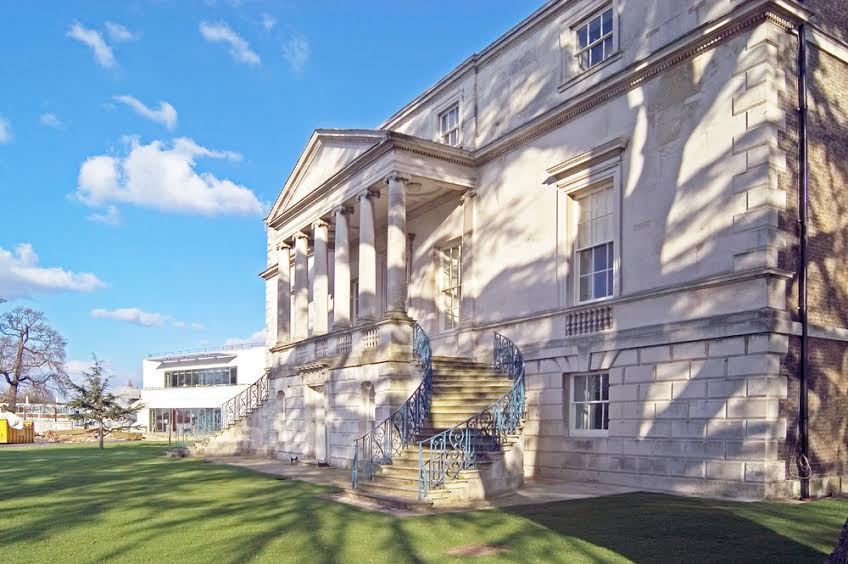
The tenth international biennial conference of the Gender and Education Association, Feminisms, Power and Pedagogy, will be hosted by the School of Education and the Paulo Freire Institute (PFI)-UK & Research in Inequalities, Societies and Education (RISE), at the University of Roehampton, London, UK.

We are seeking contributions that engage with questions of power and pedagogy, broadly defined, in relation to gender and other ‘differences that make a difference’ (such as nation, geography, race, class, sexuality and dis/ability), on local, national and global levels. Feminisms are also defined broadly to include a range of ways of understanding gender and power and how these concepts relate to other inequalities. Similarly education and pedagogy include not only the formal, apparent pedagogies offered in educational institutions, such as schools and universities, and the hidden curricula of such organisations, but also the informal and often unnoticed pedagogies of, for example, material and popular cultures and pedagogies deployed by activists in NGOs and political movements. We are especially keen for this conference to be a forum for feminist engagements with education and pedagogy from across the world.

Keynote speakers:

Dr Katarina Eriksson Barajas, Linköping University, Sweden

Prof. Penny Jane Burke, University of Roehampton, UK

Prof. Marília Carvalho, Universidade de São Paulo, Brazil

Prof. Farzana Shain, Keele University, UK

Prof. Lois Weis, State University of New York, USA

Plenary panel: Activists in Conversation

We are very excited to announce our plenary panel of activists to take place on the first day of the conference. This will be a conversation between feminist activists working in and outside academia, about how activism can educate, what academics and activists can learn from each other, and how they can support each other.

The speakers are: 

Nelly Ali, a doctoral student, blogger and effective activist for street children everywhere, but specially in Egypt: http://www.bbk.ac.uk/geds/our-research/phd-students/nelly-ali and www.nellyali.wordpress.com.

Lucy Lake, chief executive of CAMFED: https://camfed.org/about/team/lucy-lake/.

Fahma Mohamed, Integrate Bristol, who spearheaded and is still active in the campaign to combat Female Genital Mutilation (FGM): http://integratebristol.org.uk/# for Integrate Bristol’s website and http://integratebristol.org.uk/2014/02/22/fahma-appeals-to-michael-gove-junior-trustee-of-integrate-bristol-launches-massive-campaign-with-the-guardian-and-change-org/.

Amaranta Thompson, Director of Development and Operations with the International Women’s Initiative: http://www.internationalwomensinitiative.org/#!management-team/c220n.

Key questions:

The conference aims to address the following key questions from feminist perspectives:

How can feminist theories of gender, education and pedagogy benefit from scholars from different parts of the world working together?

How do feminist activists around the world work to promote equality?

How can activists and academics work together to develop and promote equality through feminist and other approaches to pedagogy?

How can we build our understandings of education and/or pedagogy through critical analyses of power relations drawing on, for instance, feminist, subaltern, critical race and postcolonial theories?

How does power operate and influence educational and pedagogic processes, at local, national and global levels?

How do the political, economic and organisation contexts for the production of knowledge impact on the knowledge produced by feminist researchers and others, and what are the implications for social justice?

How can feminist and other approaches to education and pedagogy (e.g. Freirean, subaltern, critical race and postcolonial) reinforce, enrich and build on each other?

All papers, symposia and workshops should engage with educational/pedagogic issues, broadly defined. Within this broad context, examples of what the proposals for papers and symposia may cover include: feminist perspectives from different worldviews and political and theoretical perspectives; feminisms, social movements and pedagogies; the emergence and structuring of gender and education as a field of study in a range of national contexts; masculinities and femininities in education and/or pedagogy; popular culture, pedagogy and gender; policy, politics and practice in education; and neo-liberalism, globalisation and gender. However, this is in no way a comprehensive list and participants should not feel constrained by our suggestions, as we will finalise the conference streams in light of the papers, symposia and workshops accepted.

While contributions will critically engage with feminist theories, they may do so from a variety of fields and subject areas (e.g. gender studies, education, sociology, history, philosophy, linguistics, etc.) and theoretical perspectives. We invite proposals for individual papers and/or symposia from academics, students, policy makers and activists.

GEA featured symposia and workshops:

Featured symposia acknowledge the commitment of GEA to honour and showcase current and outstanding research and/or activism relating to gender and other differences that make a difference in education, broadly defined.  Symposia may consist of one or more two-hour sessions. If organised in a conventional format, each session should consist of a minimum of four and a maximum of six papers (including a discussant if any). We would also be interested in receiving proposals for symposia or workshops that do not follow this conventional format but are more innovative in their organisation. To be featured symposia or workshops, the proposal must show that it has widespread appeal, and explores contemporary and/or historical issues relevant to the aims and purposes of GEA. Please note that each submission will be assessed separately against each of the criteria (relevance to the work of GEA, outstanding research and/or activism). Normally however the symposium/workshop proposer should identify a convenor/chair/facilitator and may identify a discussant for the session. Non-conventional formats should be described and justified in the overview of the symposium or workshop.

Fahma Mohamed and Habiba Said, of Integrate Bristol, will be running a workshop at the conference on teaching about FGM in school and we are in the process of arranging other workshops. If you would like to offer a workshop, please contact Debbie.Epstein@roehampton.ac.uk to discuss this.

Proposals:

Proposals for individual papers, symposia and/or workshops should be sent to Julia.Noyce@roehampton.ac.uk for blind-peer review by 10 January 2015. Proposals for papers should give an abstract of no more than 250 words. Proposals for symposia consisting of four to six papers (or double sessions consisting of eight to 12) should give an overall summary of the theme of the symposium proposed in 250 words or less and brief abstracts (up to 150 words) of the individual papers to be included in it.

Please save your proposal for an individual paper with author name followed by ‘GEA_2015’ (e.g. NAME_ GEA_2015) with a brief biography and contact details on a separate page. For symposia, please give the symposium organiser’s name followed by ‘GEA_2015’ and contact details, plus the names and brief biographies of all contributors on a separate page.

You will be informed whether your paper/symposium/workshop has been accepted by 31 January 2015.

Free conference workshop on getting published:

A free pre-conference workshop for doctoral students attending the conference on getting published in international refereed journals, run by the editors of Gender and Education, will also be held on the afternoon of 23 June. Space permitting, this will also open to other early career researchers who are in their first academic posts or have not got an academic job but preference will be given to research students who are not in academic jobs and who have not yet published in international refereed journals. If you wish to attend this workshop, please indicate this on your booking form. Acceptance will be on a first come first served basis.

Conference fees:

In addition to the conference fee, all delegates will need to pay for one year’s membership of GEA (£30) to begin on 23 June 2015 for those joining for the first time. If you are already a member, this year will be added on to the end of your existing membership. If you are a life member, please contact Julia Noyce by email.

Early bird fees (to be booked by 31 March 2015):

Early bird rates are available for bookings made before 20 March 2015. It is probable that after that date there will be no further residential bookings available. We cannot guarantee accommodation for bookings made before 20 March, but have reserved a large number of rooms so hope there will be enough for everyone wanting accommodation.

Please note that residential bookings include accommodation on the night of 23 June 2015 and breakfast on 24 June as the conference will start no later than 9.30 am.

£275 – Early Bird conference booking fee (non residential package, inclusive of lunches and dinners)

£375 – Early Bird conference booking fee (full residential package, inclusive of three nights accommodation, breakfasts, lunches and dinners but please note that those in residence on Tuesday 23 June will need to sort out their own dinner)

£400 – Early Bird conference booking fee (full residential package, inclusive of three nights accommodation with ensuite, breakfasts, lunches and dinners but please note that those in residence on Tuesday 23 June will need to sort out their own dinner)

£110 – Early Bird conference booking fee (daily rate, inclusive of lunch and dinner)

Standard booking fees (from 1 April 2015):

£305 – Standard conference booking fee (non residential package, inclusive of lunches and dinners)

£405 – Standard conference booking fee (full residential package, inclusive of three nights accommodation, breakfasts, lunches and dinners but please note that those in residence on Tuesday 23 June will need to sort out their own dinner)

£430 – Standard conference booking fee (full residential package, inclusive of three nights accommodation with ensuite, breakfasts, lunches and dinners but please note that those in residence on Tuesday 23 June will need to sort out their own dinner)

£125 – Early Bird conference booking fee (daily rate, inclusive of lunch and dinner)

Accommodation is provided on campus but is limited. It will be available on a first come first served basis.

We have made arrangements with an excellent local nursery to accept children up to the age of 5 (subject to availability of places) from 8.00am-6.00pm during the conference at a daily charge of £58. Please contact Julia Noyce for details. See, also, bursaries, below.

Bursaries:

We will be offering a limited number of bursaries to those who are giving a paper, are unwaged (including doctoral students on studentships) and whose institutions will not support them to come to the conference.

Full conference fee waiver. This will be available to those coming from other countries and who meet the conditions above. They will be awarded on a competitive basis, as judged through a process of blind refereeing.

Fee waiver of £100. This will be available to those from within the UK who meet the conditions above.

An additional fee waiver of £100 towards any extra costs of caring provision (e.g. for children or frail/ill adults) incurred by coming to the conference.

If you wish to apply for any of these three bursaries, please submit a short paragraph with your abstract explaining why you need such a fee waiver in order to attend the conference. Katja Jonsas (Katja.Jonsas@roehampton.ac.uk) and Kate Hoskins (Kate.Hoskins@roehampton.ac.uk) will be looking after bursary applications and will let you know before the Early Bird date whether you have been successful in gaining fee waiver or not. If you have any queries about bursaries, please contact one of them. Please do not make your booking until you have heard from them as you will need to indicate on your booking form that you are in receipt of a fee waiver.

Booking your place:

To book your place at the conference please go to the Roehampton ‘online store’ where you will find a link to the GEA conference. To book your place please visit the online store url.  

Important information about visas:

Please note that we do not send letters of invitation out to all conference participants though we will, of course, provide receipts. However, should you require a letter to support your visa application, we will provide this once you have booked and paid for your place. We can then send a letter to state that you are intending to take part in the conference, and that you have paid. If for any reason your visa application is unsuccessful, we will refund your fee as long as you let us know by email no later than 29 May 2015.

For further information and updates, please visit the conference webpage

10th Biennial Conference of the Gender and Education Association

Feminisms, Power and Pedagogy: 10th Biennial Conference of the Gender and Education Association

University of Roehampton 24-26 June 2015

The tenth international biennial conference of the Gender and Education Association, Feminisms, Power and Pedagogy, will be hosted by the School of Education and Paulo Freire Institute (PFI)-UK & Research in Inequalities, Societies and Education (RISE), at the University of Roehampton, London, UK.

We are seeking contributions that engage with questions of power and pedagogy, broadly defined, in relation to gender and other ‘differences that make a difference’ (such as nation, geography, race, class, sexuality and dis/ability), on local, national and global levels.

Keynote speakers:
Dr Katarina Eriksson Barajas, Linköping University, Sweden
Prof. Penny Jane Burke, University of Roehampton, UK
Prof. Marília Carvalho, Universidade de São Paulo, Brazil
Prof. Farzana Shain, Keele University, UK
Prof. Lois Weis, State University of New York, USA

Submission deadline extended to 10 January 2015
Notification for successful submissions: 31 January 2015 

CONFERENCE THEMES 
PROPOSALS
FREE CONFERENCE WORKSHOP ON GETTING PUBLISHED 
VISAS and FEES AND BURSARIES
TO BOOK YOUR PLACE PLEASE VISIT http://estore.roehampton.ac.uk


Educating young people about sex: Addressing issues of gender, sexuality and diversity, 11-13 April, 2014, Brno, Czech Republic

The international conference, Educating young people about sex: addressing issues of gender, sexuality and diversity takes place on 11-13 April in Brno, Czech Republic. The conference is part-funded by the GEA and is jointly organised by Vanita Sundaram (University of York), Lucie Jarkovska (Masaryk University) and Analia Meo (University of Buenos Aires) and aims to bring together scholars, activists and practitioners from a range of contexts to discuss key issues around sexuality, education and gender. Delegates will attend from Australia, New Zealand, Norway, Poland, Portugal and the UK among other countries.

The conference keynote speakers are Dagmar Herzog, Claire Maxwell and Deborah Youdell who will be talking about topics as fascinating and diverse as historical and national reflections on child sexual abuse cases, the need to foreground gender in sexuality and relationships education, and the politics of sex education. Three of the conference delegates will write blogs about their experiences of the event and we look forward to hearing their reflections on the possibilities for sex and relationships education.