This post is part of our new Countdown to Conference (C2C) series. We would love to feature a brief blog post from you too! Visit our main Countdown to Conference page for details!
C2C: On teaching, research, and activism
by Briony O’Keeffe
Attendance at the GEA conference will offer me the opportunity to gain exposure to a broad array of academic research around gender and education, and to contemplate how to best use that research ‘on the ground’. In short, the key themes of the conference – to work through temporal, spatial, material and disciplinary borders – make the attendance of practicing teachers at the event critical.
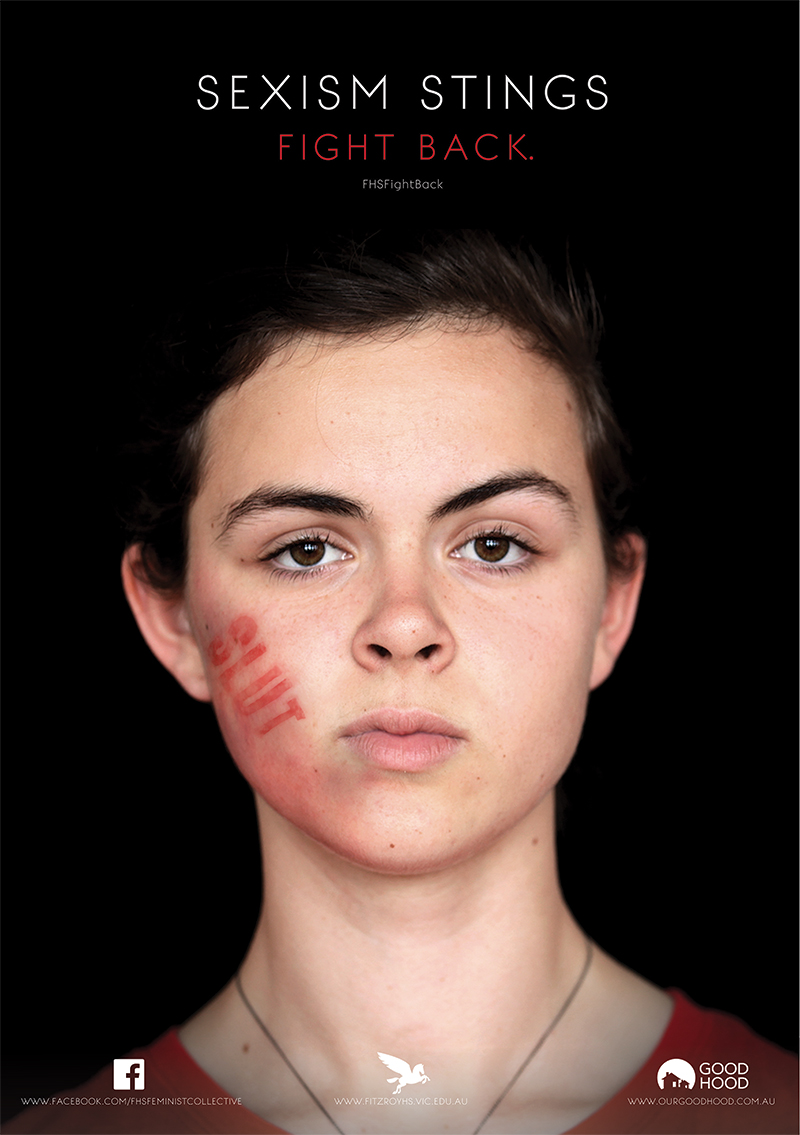
 In 2013 I founded a Feminist Collective group at Fitzroy High School in Melbourne, Australia, alongside my students. It very quickly transformed into a timetabled subject, which I continue to teach twice a week for 90 minutes. As a consequence of the class – and informed directly by the activist mentality within it – I wrote a feminist teaching resource for secondary school educators entitled ‘Fightback: Addressing Everyday Sexism in Australian Schools’. The resource is intended to provide educators with a set of tools to address issues ranging from systemic sexism to masculinist language to the discourses surrounding young women’s bodies, with the ultimate goal of addressing the gendered norms that underpin the very high rates of violence against women in Australia.
My research does not occur within a traditional academic setting, but informs my daily practice in the classroom, which is inarguably a critical site within which to explore, theorise and implement cutting edge research on gender and education. Though I am not currently undertaking a PhD (one of the consequences of taking time off to have a child) I participated in a research project in 2016 with Deakin University researchers examining the efficacy and relevance of Sex Education for secondary school students. That project was undertaken in partnership with my Feminist Collective class. In 2017 Deakin University has sought funding to extend that research, with myself as a co-researcher working alongside Dr. Deborah Ollis and Dr. Leanne Coll to explore how sexuality education can have an impact on reducing the rates of violence against women. Drs Ollis, Coll and myself have submitted an abstract for the conference relating to our collaboration in 2016.
My current teaching practice suffers somewhat from existing within a vacuum. Though it’s possible to access research, it’s difficult to engage directly with academics. This is a consequence of geography, but also of finances: there is little to no funding available for teacher practitioners to attend conferences, and women working part-time in the teaching system are further disadvantaged. Attendance at the GEA conference will enable me to establish ongoing collaborative relationships with others working in this field and to give the research presented a practical application by reflecting on how to embed it in my daily teaching practice. That practicality also extends to the work I am doing as a key member of the Education Committee of a proposed Women’s Museum for Victoria, Australia, where I am responsible for writing and curating curriculum content. The need to remain fluid, flexible, and critically informed whilst writing that curriculum is key: I see the conference as an important stepping-stone in terms of continuing my personal theoretical journey with regard to feminist educational theory.
In addition, Fitzroy High School has recently been awarded leading school status with regard to implementing state-mandated curriculum focused on reducing violence against women, the impending implementation of which was one of the outcomes of the recent Victorian Royal Commission into Family Violence. I have been invited to sit on the committee overseeing the whole-school approach to ‘Respectful Relationships’ curriculum this year, and can see a clear connection between that role and future pathways in terms of my career – I am interested in exploring opportunities both within and outside the classroom with regard to demanding equity in educational policy and practice, and the conference will allow me the opportunity to consider ‘where to next’ in terms of addressing what the GEA identifies as the ‘fissures that persist and enfold between practice, policy, theory and activism’.
If you are attending conference, let us know on Twitter using the hashtag: #GEAconf2017